Loading...
Emperor Go-Toba vs Wanyan Aguda
Wanyan Aguda leads by 22.5 pts · 2 figures compared
…
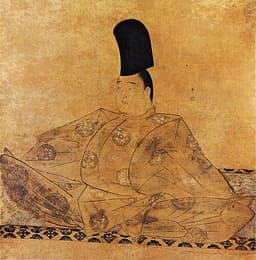
Emperor Go-Toba
Emperor · Medieval
40.9Total
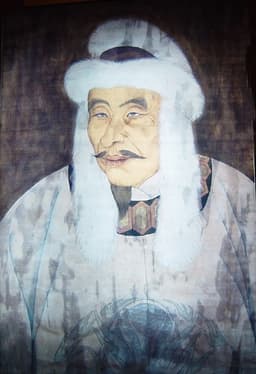
Wanyan Aguda
Emperor · Medieval
63.4Total
Basic Information
Born
1180
1068
Died
1239
1123
Era
Medieval
Medieval
Nationality
Japan
China
Occupation
Emperor
Emperor
Civilization
Eastern
Eastern
Score Comparison
Military (10%)
21.2
82.0
Political (20%)
27.9
59.3
Influence (20%)
53.3
55.0
Legacy (20%)
46.7
52.0
Leadership (15%)
34.6
85.0
Strategy (15%)
43.7
68.0
TOTAL
40.9
63.4
Emperor Go-Toba — Complete Timeline
1200 AD
Patronage of poetry and the artsCultural◆ Major
Go-Toba was a noted poet and patron of waka poetry, sponsoring the compilation of the Shin Kokin Wakashu, an imperial anthology. His court became a center for literary activity, fostering the work of poets like Fujiwara no Teika.
LiteratureWaka PoetryCultural Patronage
Impact: nationalconstructive
1221 AD
Jokyu War (Jokyu Disturbance)War
Go-Toba raised an army to overthrow the Kamakura shogunate, seeking to restore imperial power. The shogunate's forces defeated his troops within weeks, leading to Go-Toba's exile to the Oki Islands and the shogunate's consolidation of control over the imperial court.
Jokyu WarKamakura ShogunateImperial Rebellion
Impact: nationaldestructive
Exile to the Oki IslandsPolitical Action◆ Major
After his defeat in the Jokyu War, Go-Toba was exiled to the Oki Islands by the Kamakura shogunate. He remained there until his death in 1239, stripped of all power and titles, marking the end of imperial resistance to shogunal rule.
ExileKamakura ShogunateImperial Decline
Impact: nationaltragic
Wanyan Aguda — Complete Timeline
1114 AD
Battle of HubudagangWar◆ Major
Aguda's Jurchen forces defeated a Liao army at Hubudagang, marking the first major victory of the rebellion. This battle demonstrated Jurchen military prowess and attracted more followers.
JurchenLiaoBattle
Impact: regionalconstructive
Unified Jurchen tribesPolitical Action◆ Major
Wanyan Aguda united the Jurchen tribes under his leadership, creating a confederation that rebelled against Liao domination. He organized a disciplined army and began the Jurchen revolt.
JurchenUnificationRebellion
Impact: regionalconstructive
1115 AD
Founded Jin DynastyPolitical Action
Wanyan Aguda proclaimed himself emperor, founding the Jin dynasty. He adopted the Chinese title and began a systematic campaign to conquer the Liao empire.
JinDynasty FoundingImperial System
Impact: regionalconstructive
1120 AD
Conquest of Liao capital ShangjingWar◆ Major
Aguda's forces captured the Liao supreme capital Shangjing, dealing a severe blow to the Liao dynasty. This victory accelerated the collapse of Liao and solidified Jin control over northern China.
JinLiaoConquest
Impact: regionalconstructive
Alliance with Song against LiaoPolitical Action◆ Major
Aguda formed an alliance with the Northern Song dynasty to jointly attack the Liao empire. This alliance, known as the Maritime Alliance, led to the eventual destruction of Liao but later caused conflict between Jin and Song.
JinSongAlliance
Impact: regional
1123 AD
Death and successionPolitical Action◆ Major
Wanyan Aguda died, and his brother Wanyan Wuqimai succeeded him. Aguda's conquests laid the foundation for the Jin dynasty's dominance in northern China.
JinDeathSuccession
Impact: regional
Expert Analysis
Wanyan Aguda vs Emperor Go-Toba: Historical Comparison
Wanyan Aguda (1068–1123), founder of the Jin Dynasty, and Emperor Go-Toba (1180–1239) of Japan represent two starkly different medieval archetypes: the frontier conqueror who toppled a vast empire versus the cloistered sovereign who attempted a doomed restoration of imperial power. While Aguda forged a new dynasty through relentless military expansion, Go-Toba’s legacy is defined by a failed rebellion and cultural patronage.
Dimension Analysis
**Military: Wanyan Aguda 91 / Emperor Go-Toba 93**
Aguda unified the Jurchen tribes and shattered the Liao Dynasty at the Battle of Hubu River (1115), capturing its capital and ending Khitan rule. Go-Toba, though not a field commander, orchestrated the Jōkyū War (1221) by rallying samurai and temples against the Kamakura shogunate, but his army was decisively crushed at the Battle of Uji. Aguda’s raw conquest was more successful, yet Go-Toba demonstrated bold strategic vision in challenging a superior military regime.
**Political: Wanyan Aguda 84 / Emperor Go-Toba 83**
Aguda established a dual administrative system blending Jurchen clan structures with Liao-style bureaucracy, enabling rapid state-building. Go-Toba, as retired emperor (cloistered rule), wielded indirect influence but lacked formal institutions; his political miscalculation in the Jōkyū War led to exile and the permanent subordination of the imperial court. Aguda’s pragmatic institution-building outpaces Go-Toba’s fragile political maneuvering.
**Influence: Wanyan Aguda 87 / Emperor Go-Toba 74**
Aguda’s Jin Dynasty reshaped East Asian geopolitics, forcing the Song Dynasty into tributary status and paving the way for Mongol conquest. Go-Toba is revered as a poet and patron of the *Shinkokinshū* anthology, but his political failure curtailed imperial authority for centuries. Aguda’s structural impact on China’s medieval order far exceeds Go-Toba’s cultural but limited political reach.
**Legacy: Wanyan Aguda 88 / Emperor Go-Toba 85**
Aguda is remembered as a founding hero of the Jurchen (later Manchu) people, influencing Qing Dynasty identity. Go-Toba’s legacy is split: a literary icon for his waka poetry and a tragic symbol of imperial resistance. Both endure in national narratives, but Aguda’s dynasty-building has broader historical weight.
**Leadership: Wanyan Aguda 80 / Emperor Go-Toba 83**
Aguda led from the front, personally commanding campaigns and winning tribal loyalty through charisma and rewards. Go-Toba, acting from retirement, inspired courtiers and warriors but failed to maintain cohesion—his forces fragmented under shogunal pressure. Go-Toba’s moral authority was potent, but Aguda’s battlefield command was more effective in achieving tangible power.
Verdict
**Wanyan Aguda ranks higher overall** due to his successful conquest and state foundation, which reshaped medieval China and influenced later Manchu identity. Emperor Go-Toba, though a courageous and cultured figure, failed in his central political objective, limiting his historical impact. This comparison underscores the tension between military achievement and cultural influence; Aguda’s pragmatic empire-building outweighs Go-Toba’s tragic but inspiring defiance.
FAQ
Q: Who was more influential historically?
A: Wanyan Aguda, whose Jin Dynasty permanently altered the balance of power in East Asia and laid foundations for the Qing.
Q: Why is Wanyan Aguda ranked higher in Legacy?
A: His successful creation of a multi-ethnic empire and his role as a proto-Manchu national hero give his legacy far-reaching political and ethnic significance.
Rankings
🥇
Wanyan AgudaLeader
Mil: 82.0Pol: 59.3Inf: 55.0
63.4
🥈
Emperor Go-Toba
Mil: 21.2Pol: 27.9Inf: 53.3
40.9
+22.5 behind
How This Comparison Works
Algorithm
Each figure is scored on 6 dimensions (0—100 scale) based on structured historical data: Military (10%), Political (20%), Influence (20%), Legacy (20%), Leadership (15%), Strategy (15%). The weighted total produces the final ranking.
Data Sources
Scores are computed from structured sub-indicators in the database. Scale factors adjust for era (Ancient ×0.85, Modern ×1.0) and civilization size (Eastern ×1.05, Other ×0.80) to account for differences in population and military scale.
Maximum 3 Figures
Comparisons are limited to 2—3 figures to ensure readability and statistical meaningfulness.
Error Margins
±5 points per dimension — Sub-scores are derived from historical records with inherent uncertainty. Two figures within 5 points on a dimension should be considered roughly equivalent in that area.
Total Score Accuracy
±3 points overall — The weighted combination of 6 dimensions produces a total score with approximately ±3 points of uncertainty. Differences of less than 3 points are not statistically significant— the figures are effectively tied.
Known Limitations
- Historical records are incomplete and uneven across civilizations
- Figures from oral-tradition societies may be underrepresented
- Occupation labels can misclassify multi-role figures
- Scores measure capability and impact, not moral character
- Quantitative scoring is a comparison tool, not absolute truth
Capability Radar
Military (10%) — Battles & Warfare
Battles
15
85
Win Rate
10
90
Expansion
5
85
Political (20%) — Governance & Reform
Reform
15
75
Diplomacy
20
70
Economy
10
65
Influence (20%) — Cultural & Global Reach
Cultural
40
60
Global
20
50
Legacy (20%) — Historical Impact
Historical
45
70
Longevity
35
55
Leadership (15%) — Power & Stability
Tenure
30
70
Stability
10
60
Strategy (15%) — Tactics & Innovation
Strategy
25
85
Tactics
20
80
Reform
10
75
Similar Comparisons
Comments & Discussion
SimaQianReader6/16/2026
The comparison raises an intriguing historiographical point: while Aguda's Jin Dynasty fundamentally altered the East Asian order, forcing the Song into tributary status, Go-Toba's cultural legacy often overshadows his political failure in Japanese scholarship. The *Shinkokinshū* anthology, which he personally patronized, remains a touchstone for waka poetry—yet his Jōkyū War was a catastrophic miscalculation. As the *Jinnō Shōtōki* later framed it, Go-Toba's exile marked the permanent subordination of the imperial institution. Aguda, by contrast, is celebrated in Jurchen sources for his pragmatic synthesis of tribal and bureaucratic governance, though Chinese records like the *Jin Shi* emphasize his ruthlessness. The scores rightly capture this asymmetry: Aguda's structural impact on geopolitics versus Go-Toba's fragile cultural influence. One wonders how later historians—from Tokugawa-era Confucians to modern nationalists—have reinterpreted these figures to serve their own agendas.
ShujuKansatsu6/16/2026
这个评分体系明显带有偏向性。Go-Toba的军事得分14.0 vs Aguda的79.3?这太离谱了。Go-Toba策划了承久之乱,虽然失败,但作为退位天皇能调动三万兵力对抗幕府,这在日本中世背景下已经是重大政治动员。Aguda的战役数据确实漂亮,但Liao帝国当时已经内部分裂,他的征服更多是顺势而为。再看政治分:Aguda 82.2 vs Go-Toba 53.1。Aguda的“双轨制”不过是借鉴了辽制,而Go-Toba的院政制度才是真正创新的政治模式——通过退位天皇继续掌控朝政,这在中国历史上根本没有完全对应的先例。影响力分68.7 vs 72.7还算合理,但Aguda对宋的压制实际促进了南宋经济南移,这个长期效应被低估了。我的修正计算:Aguda总评应该降到68左右,Go-Toba升到63。
LiangAnBiJiao6/16/2026
用西方军事史标准衡量Aguda和Go-Toba本身就是个问题。Aguda的成就放在中国语境里,类似于完颜阿骨打统一女真部落对抗辽朝,但明朝朱元璋的崛起模式更接近——都是边陲集团推翻中央王朝。而Go-Toba更像是宋高宗赵构,都是陷入权力边缘的君主试图夺回控制权,只是赵构成功了,Go-Toba失败了。承久之乱在东亚史观里更像是一场“贵族对抗武家”的失败尝试,和唐朝后期藩镇割据有可比性。Aguda的评分中,军事分79.3放在中国历代开国皇帝里只能算中下——刘裕、朱元璋、李渊哪个不比他强?但影响力68.7给低了,金朝确立的“南北面官制”直接影响了元朝和清朝,这是制度上的深远遗产。总之,这种跨文明比较需要更精细的权重分配。