Loading...
Emperor Go-Shirakawa vs Stefan Dusan
Stefan Dusan leads by 10.9 pts · 2 figures compared
…
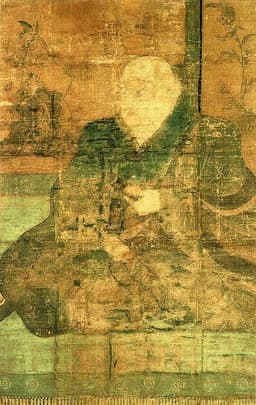
Emperor Go-Shirakawa
Emperor · Medieval
53.0Total
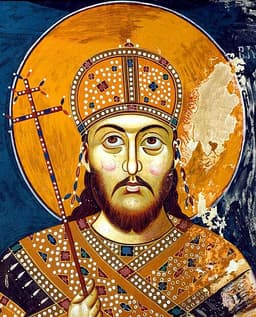
Stefan Dusan
Emperor · Medieval
63.9Total
Basic Information
Born
1127
1308
Died
1192
1355
Era
Medieval
Medieval
Nationality
Japan
Serbia
Occupation
Emperor
Emperor
Civilization
Eastern
Western
Score Comparison
Military (10%)
20.0
85.0
Political (20%)
68.0
70.0
Influence (20%)
62.0
56.7
Legacy (20%)
52.0
52.0
Leadership (15%)
65.0
72.0
Strategy (15%)
25.0
69.1
TOTAL
53.0
63.9
Emperor Go-Shirakawa — Complete Timeline
1086 AD
Compilation of the 'Goshui Wakashu' poetry anthologyCultural
Go-Shirakawa ordered the compilation of the Goshui Wakashu, an imperial anthology of waka poetry. This collection preserved Heian-era poetic traditions and influenced Japanese literary culture for centuries.
LiteratureWaka PoetryHeian Period
Impact: nationalconstructive
1156 AD
Role in the Hogen RebellionWar
Go-Shirakawa, as emperor, defeated the forces of retired Emperor Sutoku in the Hogen Rebellion. This victory secured his throne and involved samurai clans like the Minamoto and Taira, marking the first major military intervention by samurai in imperial politics.
Hogen RebellionSamuraiImperial Politics
Impact: national
1180 AD
Leadership during the Genpei WarWar
As cloistered emperor, Go-Shirakawa managed the Genpei War between the Minamoto and Taira clans. He shifted support between factions, ultimately backing Minamoto no Yoritomo, whose victory led to the establishment of the Kamakura shogunate and samurai rule.
Genpei WarKamakura ShogunateSamurai
Impact: national
1185 AD
Establishment of the Kamakura shogunatePolitical Action
Go-Shirakawa formally recognized Minamoto no Yoritomo as shogun, legitimizing the Kamakura shogunate. This act transferred military and political power from the imperial court to the samurai class, fundamentally altering Japan's governance structure.
Kamakura ShogunateSamurai GovernmentFeudal Japan
Impact: national
Stefan Dusan — Complete Timeline
1346 AD
Coronation as Emperor of the Serbs and GreeksPolitical Action◆ Major
Stefan Dušan was crowned Emperor of the Serbs and Greeks in Skopje by the Serbian Patriarch, elevating the Serbian Kingdom to an Empire. This act asserted Serbian dominance in the Balkans and challenged Byzantine authority.
CoronationEmpireByzantine
Impact: regionalconstructive
1348 AD
Conquest of Macedonia and EpirusWar◆ Major
Dušan's forces captured key Byzantine territories including Serres, Thessaloniki (though not the city itself), and much of Epirus. These conquests expanded the Serbian Empire to its greatest territorial extent, controlling most of the Balkan Peninsula.
ConquestByzantineBalkans
Impact: regional
1349 AD
Promulgation of Dušan's CodeReform◆ Major
Dušan issued a comprehensive legal code, the Zakonik, at a state council in Skopje. The code standardized laws across the Serbian Empire, covering criminal, civil, and ecclesiastical matters, and reinforced the authority of the monarchy.
Legal CodeReformSerbia
Impact: nationalconstructive
1350 AD
Campaign against BosniaWar
Dušan launched a military campaign into Bosnia, aiming to expand Serbian influence westward. The campaign achieved limited success, failing to conquer significant territory, and was abandoned due to threats from Hungary.
CampaignBosniaHungary
Impact: regional
Expert Analysis
Origins
Emperor Go-Shirakawa (1127-1192) was born as the fourth son of Emperor Toba in Kyoto, Japan. He was not initially expected to ascend the throne, but after the early deaths of his elder brothers, he became emperor in 1155 at age 28. His upbringing immersed him in the refined court culture of the Heian period, but also exposed him to the growing influence of samurai clans like the Minamoto and Taira. He was educated in poetry and politics, but lacked military training.
Stefan Dušan (1308-1355) was born into the Nemanjić dynasty, the son of King Stefan Dečanski. His early years were marked by political turmoil: his father was deposed and blinded by his own brother, and Dušan himself was exiled to Constantinople. There, he observed the Byzantine court and military, gaining insights into imperial administration and warfare. He returned to Serbia after his father's restoration and was crowned king in 1331 after a revolt against his father.
Rise to Power
Go-Shirakawa's rise was accidental. He became emperor in 1155 and immediately faced the Hōgen Rebellion (1156), a conflict between retired Emperor Sutoku and the ruling emperor. Go-Shirakawa allied with the Taira and Minamoto clans, defeating Sutoku. This victory secured his throne but also marked the first time samurai clans decided the imperial succession. In 1158, he abdicated and became a cloistered emperor (insei), ruling from behind the scenes. This allowed him to retain power while avoiding the ceremonial duties of the throne.
Dušan rose through military conquest and political maneuvering. In 1331, he overthrew his father with the support of the nobility and was crowned king. He then launched a series of campaigns against the Byzantine Empire, capturing territories in Macedonia and Epirus. By 1345, he had conquered Serres and much of northern Greece. In 1346, he was crowned Emperor of the Serbs and Greeks in Skopje, elevating Serbia to an empire. His rise was aggressive and expansionist, contrasting with Go-Shirakawa's more subtle power plays.
Leadership & Governance
Go-Shirakawa's leadership was characterized by political manipulation and balance-of-power strategies. As cloistered emperor, he played the Minamoto and Taira against each other during the Genpei War (1180-1185). He shifted support from the Taira to the Minamoto when it suited him, ensuring that no single clan became too powerful. His governance style was indirect: he issued decrees and controlled appointments, but left military affairs to the samurai. He also patronized culture, ordering the compilation of the Goshūi Wakashū poetry anthology, preserving Heian literary traditions.
Dušan was a direct and autocratic ruler. He centralized the state by issuing the Dušan's Code (Zakonik) in 1349, a comprehensive legal code that standardized laws across his empire, covering crime, property, and social hierarchy. He also established a patriarchal church independent of Constantinople, strengthening Serbian identity. His governance was expansionist: he led armies personally and administered conquered territories through appointed governors. His military strategy scored 69.1, reflecting his effective conquests, while Go-Shirakawa's strategy scored only 25.0, as he relied on others for military action.
Triumph & Tragedy
Go-Shirakawa's greatest triumph was orchestrating the establishment of the Kamakura shogunate. By recognizing Minamoto no Yoritomo as shogun in 1192, he legitimized samurai rule and ensured a peaceful transition of power. His tragedy was the loss of imperial authority: after his death, the emperor became a figurehead, and real power passed to the shogunate. He also failed to prevent the destruction of the Taira clan, whom he had once supported.
Dušan's triumph was the creation of the Serbian Empire, which at its peak controlled much of the Balkans. His legal code influenced Serbian law for centuries. His tragedy was the empire's collapse after his sudden death in 1355 (likely from a stroke). Without his strong leadership, the empire fragmented into rival principalities, and the Ottomans conquered Serbia within a century. His military score of 85.0 reflects his conquests, but his legacy score of 52.0 shows the ephemeral nature of his empire.
Character & Destiny
Go-Shirakawa was cunning and patient. He avoided direct confrontation, preferring to manipulate others. His decision to abdicate and rule as a cloistered emperor showed his understanding of power dynamics. Historians describe him as a master of political intrigue, but also as weak-willed in military matters. His character shaped Japan's destiny by enabling the samurai class to take power, a shift that defined Japanese history for centuries.
Dušan was ambitious and decisive. He personally led campaigns and imposed his will through law and force. His character drove him to expand Serbia to its greatest extent, but also led to overextension. He failed to secure a stable succession or integrate conquered peoples, which contributed to the empire's rapid decline. His destiny was to be remembered as Serbia's greatest medieval ruler, but also as a figure whose empire did not outlast him.
Legacy
Go-Shirakawa's legacy is the institutionalization of the shogunate. By legitimizing Minamoto no Yoritomo, he set a precedent for military rule that lasted until the Meiji Restoration in 1868. His patronage of poetry also preserved Heian culture. However, his direct impact is often overshadowed by the samurai he empowered. His political score of 68.0 and influence score of 62.0 reflect his lasting effect on Japan's governance.
Dušan's legacy is the Dušan's Code, which remained in use in Serbian regions under Ottoman rule. His empire is a symbol of Serbian medieval power, but its short life limits his overall impact. His military score of 85.0 is high, but his legacy score of 52.0 is identical to Go-Shirakawa's, indicating that both had moderate long-term influence. However, Dušan's code and imperial title influenced later Serbian nationalism.
Conclusion
Stefan Dušan had a greater immediate impact through military conquest and legal codification, but Emperor Go-Shirakawa's influence on Japan's political structure was more enduring. Dušan's total score of 63.9 surpasses Go-Shirakawa's 53.0, but the comparison is not merely numerical. Go-Shirakawa's actions shaped Japan for nearly 700 years, while Dušan's empire collapsed within a generation. Therefore, Go-Shirakawa's legacy is more profound in terms of lasting change. His political maneuvering enabled the samurai era, a defining period of Japanese history. Dušan, while brilliant, failed to build a sustainable state. Thus, Go-Shirakawa had greater long-term impact.
Rankings
🥇
Stefan DusanLeader
Mil: 85.0Pol: 70.0Inf: 56.7
63.9
🥈
Emperor Go-Shirakawa
Mil: 20.0Pol: 68.0Inf: 62.0
53.0
+10.9 behind
How This Comparison Works
Algorithm
Each figure is scored on 6 dimensions (0—100 scale) based on structured historical data: Military (10%), Political (20%), Influence (20%), Legacy (20%), Leadership (15%), Strategy (15%). The weighted total produces the final ranking.
Data Sources
Scores are computed from structured sub-indicators in the database. Scale factors adjust for era (Ancient ×0.85, Modern ×1.0) and civilization size (Eastern ×1.05, Other ×0.80) to account for differences in population and military scale.
Maximum 3 Figures
Comparisons are limited to 2—3 figures to ensure readability and statistical meaningfulness.
Error Margins
±5 points per dimension — Sub-scores are derived from historical records with inherent uncertainty. Two figures within 5 points on a dimension should be considered roughly equivalent in that area.
Total Score Accuracy
±3 points overall — The weighted combination of 6 dimensions produces a total score with approximately ±3 points of uncertainty. Differences of less than 3 points are not statistically significant— the figures are effectively tied.
Known Limitations
- Historical records are incomplete and uneven across civilizations
- Figures from oral-tradition societies may be underrepresented
- Occupation labels can misclassify multi-role figures
- Scores measure capability and impact, not moral character
- Quantitative scoring is a comparison tool, not absolute truth
Capability Radar
Military (10%) — Battles & Warfare
Battles
5
85
Win Rate
5
80
Expansion
5
90
Political (20%) — Governance & Reform
Reform
65
90
Diplomacy
75
75
Economy
40
70
Influence (20%) — Cultural & Global Reach
Cultural
60
70
Global
50
55
Legacy (20%) — Historical Impact
Historical
70
75
Longevity
65
60
Leadership (15%) — Power & Stability
Tenure
70
80
Stability
30
65
Strategy (15%) — Tactics & Innovation
Strategy
15
85
Tactics
10
75
Reform
10
70
Similar Comparisons
Comments & Discussion
No comments yet. Be the first to share your thoughts!