Loading...
Emperor Go-Sanjo vs Myeongjong of Joseon
Emperor Go-Sanjo leads by 5.3 pts · 2 figures compared
…
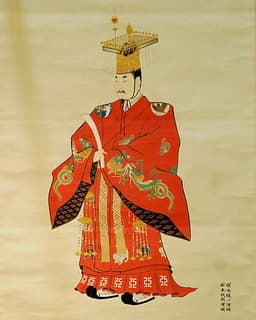
Emperor Go-Sanjo
Emperor · Medieval
44.5Total
Myeongjong of Joseon
Emperor · Medieval
39.2Total
Basic Information
Born
1034
1534
Died
1073
1567
Era
Medieval
Medieval
Nationality
Japan
Korea
Occupation
Emperor
Emperor
Civilization
Eastern
Eastern
Score Comparison
Military (10%)
52.9
20.0
Political (20%)
35.1
26.4
Influence (20%)
47.9
48.6
Legacy (20%)
41.7
39.2
Leadership (15%)
31.2
45.0
Strategy (15%)
68.6
45.0
TOTAL
44.5
39.2
Emperor Go-Sanjo — Complete Timeline
1068 AD
Attempt to rule directly without Fujiwara regentsPolitical Action◆ Major
Upon ascending the throne, Go-Sanjo sought to govern without a Fujiwara regent, breaking the tradition of Fujiwara control over the imperial succession. He appointed non-Fujiwara officials and issued edicts directly, challenging the regency system.
Fujiwara RegencyImperial AuthorityHeian Period
Impact: nationalconstructive
1069 AD
Reform of land and tax policiesReform◆ Major
Go-Sanjo implemented policies to reclaim tax-exempt lands held by temples and aristocrats, aiming to strengthen imperial finances. These reforms reduced the economic power of the Fujiwara and other noble houses, though they faced resistance.
Land ReformTaxationEconomic Policy
Impact: nationalconstructive
1072 AD
Establishment of the Insei (cloistered government) precedentPolitical Action
Go-Sanjo abdicated in favor of his son Shirakawa but continued to exert influence from retirement, laying the groundwork for the cloistered government system. This allowed retired emperors to rule behind the scenes, bypassing Fujiwara regents.
Insei SystemImperial PoliticsHeian Period
Impact: nationalconstructive
Myeongjong of Joseon — Complete Timeline
1545 AD
Accession to the thronePolitical Action◆ Major
Myeongjong became king of Joseon at age 11 following the death of his half-brother Injong. Due to his youth, his mother Queen Munjeong ruled as regent, controlling the government.
SuccessionRegencyJoseon Dynasty
Impact: national
Fourth Literati Purge (Eulsa Sahwa)Political Action◆ Major
Queen Munjeong, acting as regent, ordered the Fourth Literati Purge, executing Sarim scholars who opposed her rule. This purge eliminated many reform-minded officials and consolidated her power.
PurgeRegencyJoseon Dynasty
Impact: nationaldestructive
1565 AD
End of Queen Munjeong's regencyPolitical Action◆ Major
Myeongjong began his personal rule after his mother Queen Munjeong's death. His reign was marked by continued factional conflict and a decline in royal authority.
RegencyPersonal RuleJoseon Dynasty
Impact: national
Expert Analysis
Origins
Emperor Go-Sanjo (1034-1073) was born as the second son of Emperor Go-Suzaku, into the imperial family of Heian-period Japan. His early life was overshadowed by the Fujiwara regents, who controlled the throne through marriage and political manipulation. Go-Sanjo was not expected to become emperor, but after his elder brother Go-Reizei took the throne, Go-Sanjo was appointed crown prince. His upbringing in the imperial court exposed him to the constraints placed on the monarchy by the Fujiwara clan, particularly Fujiwara no Yorimichi. In contrast, Myeongjong of Joseon (1534-1567) was born as the third son of King Jungjong and Queen Munjeong. His early life was marked by the political turmoil of the Joseon court, where his mother, a shrewd politician, maneuvered to secure his position. Myeongjong ascended the throne at age 11 after the death of his half-brother Injong, but his youth meant his mother ruled as regent. Both rulers were thrust into power at a young age, but their formative experiences differed: Go-Sanjo was shaped by resentment against the Fujiwara, while Myeongjong was shaped by the dominance of his mother and the factional strife of the literati.
Rise to Power
Go-Sanjo became emperor in 1068 upon the death of his brother Go-Reizei. His ascension was notable because he was the first emperor in over a century not to have a Fujiwara mother, which reduced the Fujiwara's influence over him. He immediately sought to rule without a Fujiwara regent, breaking the tradition that had seen the Fujiwara clan dominate the imperial succession. His key turning point was the establishment of the Insei system: after abdicating in favor of his son Shirakawa in 1072, he continued to exert influence from retirement, setting a precedent for cloistered government. Myeongjong's rise was more passive. He became king in 1545 after Injong's sudden death, but real power was held by his mother, Queen Munjeong, who acted as regent. Her regency was marked by the Fourth Literati Purge (Eulsa Sahwa) in 1545, where Sarim scholars were executed for opposing her rule. Myeongjong did not assert his authority until his mother's death in 1565, after which he began personal rule, but by then the court was deeply factionalized.
Leadership & Governance
Go-Sanjo's leadership was characterized by direct intervention in governance, bypassing the Fujiwara regents. He implemented land and tax reforms to reclaim tax-exempt lands held by temples and aristocrats, aiming to strengthen imperial finances. These reforms reduced the economic power of the nobility and increased the crown's revenue. His political score of 35.1 reflects limited success, as the Fujiwara remained powerful, but his strategy score of 68.6 indicates his innovative approach to ruling from retirement. Myeongjong's governance was initially controlled by his mother, who used purges to consolidate power. After his mother's death, Myeongjong attempted to rule independently, but factional conflict between the Eastern and Western factions weakened his authority. His leadership score of 45.0 is higher than Go-Sanjo's 31.2, but his political score of 26.4 is lower, reflecting his inability to control the court. Go-Sanjo's reforms had a lasting impact on imperial finances, while Myeongjong's reign saw a decline in royal power due to factionalism.
Triumph & Tragedy
Go-Sanjo's greatest triumph was establishing the precedent for cloistered government, which allowed retired emperors to wield power without the constraints of the regency system. This system lasted for over a century and strengthened the imperial institution. His tragedy was that his direct rule was short-lived; he abdicated after only four years, and his reforms were partially reversed by later Fujiwara influence. Myeongjong's triumph was surviving the turbulent regency and eventually ruling in his own right. However, his tragedy was the Fourth Literati Purge, which decimated the reformist Sarim scholars and entrenched factional conflict. His reign ended with a weakened monarchy, as the yangban aristocracy grew more powerful. Both rulers faced constraints from powerful families, but Go-Sanjo's innovations had more lasting structural impact.
Character & Destiny
Go-Sanjo was determined and strategic, as shown by his willingness to abdicate to secure his son's succession while retaining influence. His personality was shaped by a desire to restore imperial authority, and his decisions reflected long-term planning. Historians note his patience and cunning in outmaneuvering the Fujiwara. Myeongjong, in contrast, was passive and indecisive, overshadowed by his mother. His character was formed in an environment of court intrigue, leading to a cautious approach that failed to assert control. His destiny was to be a figurehead, first for his mother and then for factional leaders. Go-Sanjo's character allowed him to shape his destiny, while Myeongjong's character was shaped by it.
Legacy
Go-Sanjo's legacy is the Insei system, which became a defining feature of Heian politics. His reforms also set a precedent for imperial financial independence. He is remembered as a reformer who challenged the Fujiwara monopoly on power. Myeongjong's legacy is mixed: his reign saw the consolidation of factional politics in Joseon, which contributed to later instability. He is often overshadowed by his mother and the purges. In terms of influence, Go-Sanjo scores 47.9, slightly below Myeongjong's 48.6, but his legacy score of 41.7 is higher than Myeongjong's 39.2. Go-Sanjo's institutional changes outlasted Myeongjong's personal rule.
Conclusion
Emperor Go-Sanjo had a greater impact than Myeongjong of Joseon. Despite a lower total score of 44.5 vs 39.2, Go-Sanjo's strategic innovation of cloistered government permanently altered the political landscape of Heian Japan. Myeongjong's reign, while influential in Joseon factionalism, did not create enduring institutions. Go-Sanjo's reforms and the Insei system strengthened the imperial house for generations, whereas Myeongjong's rule saw royal authority decline. Thus, Go-Sanjo's legacy is more significant in the long term.
Rankings
🥇
Emperor Go-SanjoLeader
Mil: 52.9Pol: 35.1Inf: 47.9
44.5
🥈
Myeongjong of Joseon
Mil: 20.0Pol: 26.4Inf: 48.6
39.2
+5.3 behind
How This Comparison Works
Algorithm
Each figure is scored on 6 dimensions (0—100 scale) based on structured historical data: Military (10%), Political (20%), Influence (20%), Legacy (20%), Leadership (15%), Strategy (15%). The weighted total produces the final ranking.
Data Sources
Scores are computed from structured sub-indicators in the database. Scale factors adjust for era (Ancient ×0.85, Modern ×1.0) and civilization size (Eastern ×1.05, Other ×0.80) to account for differences in population and military scale.
Maximum 3 Figures
Comparisons are limited to 2—3 figures to ensure readability and statistical meaningfulness.
Error Margins
±5 points per dimension — Sub-scores are derived from historical records with inherent uncertainty. Two figures within 5 points on a dimension should be considered roughly equivalent in that area.
Total Score Accuracy
±3 points overall — The weighted combination of 6 dimensions produces a total score with approximately ±3 points of uncertainty. Differences of less than 3 points are not statistically significant— the figures are effectively tied.
Known Limitations
- Historical records are incomplete and uneven across civilizations
- Figures from oral-tradition societies may be underrepresented
- Occupation labels can misclassify multi-role figures
- Scores measure capability and impact, not moral character
- Quantitative scoring is a comparison tool, not absolute truth
Capability Radar
Military (10%) — Battles & Warfare
Battles
45
5
Win Rate
47
5
Expansion
51
5
Political (20%) — Governance & Reform
Reform
40
20
Diplomacy
30
20
Economy
20
20
Influence (20%) — Cultural & Global Reach
Cultural
15
20
Global
10
10
Legacy (20%) — Historical Impact
Historical
30
20
Longevity
20
15
Leadership (15%) — Power & Stability
Tenure
15
30
Stability
20
25
Strategy (15%) — Tactics & Innovation
Strategy
52
5
Tactics
60
5
Reform
61
5
Similar Comparisons
Comments & Discussion
No comments yet. Be the first to share your thoughts!