Loading...
Emperor Gaozu of Han vs Marquis Wen of Wei
Emperor Gaozu of Han leads by 18.9 pts · 2 figures compared
…
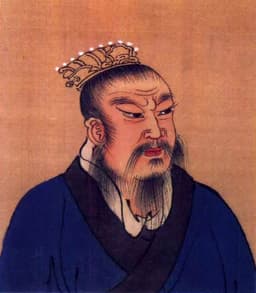
Emperor Gaozu of Han
Emperor · Ancient
69.7Total

Marquis Wen of Wei
Emperor · Ancient
50.8Total
Basic Information
Born
-256
-445
Died
-195
-396
Era
Ancient
Ancient
Nationality
China
China
Occupation
Emperor
Emperor
Civilization
Eastern
Eastern
Score Comparison
Military (10%)
78.0
47.5
Political (20%)
72.0
45.0
Influence (20%)
65.0
54.1
Legacy (20%)
65.0
48.3
Leadership (15%)
79.8
53.2
Strategy (15%)
66.3
57.5
TOTAL
69.7
50.8
Emperor Gaozu of Han — Complete Timeline
209 BC
Rebellion Against the Qin DynastyWar◆ Major
Liu Bang, a minor Qin official, led a revolt after a group of convicts he was escorting escaped. He gathered followers and joined the broader rebellion against the Qin dynasty, eventually becoming a key rebel leader.
Qin RebellionPeasant RevoltCivil War
Impact: national
202 BC
Battle of GaixiaWar
Liu Bang's Han forces, commanded by Han Xin, defeated Xiang Yu's Chu army at Gaixia. Xiang Yu committed suicide after the battle. This victory ended the Chu-Han Contention and allowed Liu Bang to proclaim himself emperor.
Chu-Han ContentionDecisive BattleHan Dynasty Founding
Impact: national
Abolition of Harsh Qin LawsReform◆ Major
Emperor Gaozu repealed the severe legal codes of the Qin dynasty, including collective punishment and harsh corporal penalties. He replaced them with a simplified legal system that reduced punishments, aiming to win popular support and stabilize the realm.
Legal ReformQin LegacyPopular Support
Impact: nationalprogressive
Proclamation of the Han DynastyPolitical Action
After defeating Xiang Yu, Liu Bang declared himself Emperor Gaozu of Han, founding the Han dynasty. He established the capital at Chang'an and began consolidating power, marking the start of one of China's longest-lasting dynasties.
Dynasty FoundingImperial ChinaChang'an
Impact: globalconstructive
Enfeoffment of Vassal KingsPolitical Action
To secure loyalty, Gaozu granted large territories to allied generals and relatives, creating semi-autonomous kingdoms. This policy initially stabilized the empire but later led to rebellions, forcing his successors to centralize power more firmly.
Feudal SystemVassalagePolitical Strategy
Impact: national
Marquis Wen of Wei — Complete Timeline
422 BC
Appointed Li Kui as ChancellorReform◆ Major
Marquis Wen of Wei appointed the Legalist reformer Li Kui as chancellor. Li Kui implemented the 'Book of Law' (Fajing), a comprehensive legal code that became a model for later Qin law, and promoted agricultural reforms to strengthen the state's economy and military.
Legalist ReformLaw CodeAgriculture
Impact: nationalconstructive
420 BC
Patronized Confucian scholarsCultural◆ Major
Marquis Wen established an academy at the Wei court, attracting Confucian scholars such as Zixia, a disciple of Confucius. This patronage helped spread Confucian teachings in Wei and contributed to the cultural flourishing of the state during his reign.
ConfucianismPatronageEducation
Impact: nationalconstructive
412 BC
Appointed Wu Qi as generalPolitical Action◆ Major
Marquis Wen appointed the military strategist Wu Qi to command Wei's armies. Wu Qi reformed the army, introduced new tactics, and led successful campaigns against Qin, capturing the Hexi region and significantly expanding Wei's territory.
Military ReformExpansionWu Qi
Impact: regionalconstructive
405 BC
Defeated Qi at the Battle of GuilingWar◆ Major
Wei forces under Wu Qi defeated a Qi army at Guiling, securing Wei's dominance over the central plains. This victory established Wei as the leading state during the early Warring States period.
BattleWei HegemonyMilitary
Impact: regional
Expert Analysis
Origins
Emperor Gaozu of Han, born Liu Bang around 256 BCE in Pei County (modern Jiangsu), came from a peasant family. His early life as a minor Qin official gave him firsthand experience of the regime's harshness. In contrast, Marquis Wen of Wei (born Wei Si, c. 472–396 BCE) was a member of the ruling house of the state of Wei, one of the Warring States. He inherited his position as marquis around 445 BCE. While Liu Bang's humble origins shaped his pragmatic approach, Marquis Wen's aristocratic background allowed him to patronize scholars and reformers.
Rise to Power
Liu Bang's rise began when he led a revolt of convicts in 209 BCE, joining the widespread rebellions against the Qin. He allied with Xiang Yu, the most powerful rebel leader, but eventually turned against him. The decisive Battle of Gaixia in 202 BCE saw Liu Bang's forces, commanded by the brilliant general Han Xin, defeat Xiang Yu. Liu Bang then proclaimed himself emperor, founding the Han dynasty. Marquis Wen came to power through inheritance around 445 BCE. He immediately appointed Li Kui as chancellor, who implemented the 'Book of Law' (Fajing), a comprehensive legal code that reformed Wei's administration. This move solidified Wen's authority and set Wei on a path of reform and expansion.
Leadership & Governance
Liu Bang's leadership style was pragmatic and adaptable. He abolished the harshest Qin laws, such as collective punishment, replacing them with a simplified code. He enfeoffed vassal kings to secure loyalty but later moved to centralize power. His governance emphasized tax reduction and local autonomy. Marquis Wen, by contrast, was a patron of both Legalist and Confucian ideas. He appointed Li Kui for legal reform and Wu Qi for military reorganization. He also established an academy at court, attracting Confucian scholars like Zixia, a disciple of Confucius. This blend of Legalist efficiency and Confucian moral governance made Wei a model state. Liu Bang's military leadership scored 78.0, reflecting his ability to unify China, while Marquis Wen's military score of 47.5 indicates his reliance on generals like Wu Qi.
Triumph & Tragedy
Liu Bang's greatest triumph was founding the Han dynasty, which lasted over 400 years. He successfully defeated Xiang Yu and consolidated rule. However, his later years were marred by paranoia: he purged many of his former allies, including Han Xin, leading to unrest. His enfeoffment policy created semi-autonomous kingdoms that later threatened central authority. Marquis Wen's triumphs include the appointment of Li Kui and Wu Qi, which turned Wei into a dominant state. His forces under Wu Qi defeated Qi at the Battle of Guiling, securing Wei's hegemony. However, his reliance on Wu Qi created tension; after Wen's death, Wu Qi was forced to flee, and Wei's power declined. Both leaders faced the tragedy of their achievements unraveling after their deaths.
Character & Destiny
Liu Bang was known for his cunning, ruthlessness, and ability to delegate. He admitted his own weaknesses, famously saying he owed his success to his advisors. His destiny was to rise from peasant to emperor, a rare feat in Chinese history. Marquis Wen was more scholarly and reform-minded, but his character as a patron of ideas limited his direct military involvement. His destiny was to create a briefly dominant state that served as a laboratory for Legalist and Confucian reforms. Liu Bang's character scored 79.8 in leadership, while Marquis Wen scored 53.2, reflecting their different approaches.
Legacy
Liu Bang's legacy is immense: he founded the Han dynasty, which set the template for Chinese imperial rule for centuries. His abolition of harsh Qin laws, promotion of Confucianism (though not fully implemented until later), and administrative reforms shaped Chinese governance. The Han dynasty's longevity and cultural achievements are directly attributed to his foundation. Marquis Wen's legacy is more limited but significant: his patronage of Li Kui and Wu Qi influenced later Legalist reforms, and his academy helped spread Confucian thought. However, his state of Wei eventually collapsed, and his reforms were not sustained. Liu Bang's influence score of 65.0 and legacy score of 65.0 far exceed Marquis Wen's 54.1 and 48.3.
Conclusion
Emperor Gaozu of Han had a far greater impact than Marquis Wen of Wei. Liu Bang's total score of 69.7 versus Marquis Wen's 50.8 reflects this disparity. While Marquis Wen's reforms were innovative and influential in the short term, Liu Bang's founding of the Han dynasty changed the course of Chinese history for centuries. His ability to rise from peasant to emperor, unify China after the Qin collapse, and establish a durable political system marks him as one of history's most consequential rulers. Marquis Wen, despite his patronage of reform, remains a footnote compared to the founder of a dynasty that defined Chinese civilization.
Rankings
🥇
Emperor Gaozu of HanLeader
Mil: 78.0Pol: 72.0Inf: 65.0
69.7
🥈
Marquis Wen of Wei
Mil: 47.5Pol: 45.0Inf: 54.1
50.8
+18.9 behind
How This Comparison Works
Algorithm
Each figure is scored on 6 dimensions (0—100 scale) based on structured historical data: Military (10%), Political (20%), Influence (20%), Legacy (20%), Leadership (15%), Strategy (15%). The weighted total produces the final ranking.
Data Sources
Scores are computed from structured sub-indicators in the database. Scale factors adjust for era (Ancient ×0.85, Modern ×1.0) and civilization size (Eastern ×1.05, Other ×0.80) to account for differences in population and military scale.
Maximum 3 Figures
Comparisons are limited to 2—3 figures to ensure readability and statistical meaningfulness.
Error Margins
±5 points per dimension — Sub-scores are derived from historical records with inherent uncertainty. Two figures within 5 points on a dimension should be considered roughly equivalent in that area.
Total Score Accuracy
±3 points overall — The weighted combination of 6 dimensions produces a total score with approximately ±3 points of uncertainty. Differences of less than 3 points are not statistically significant— the figures are effectively tied.
Known Limitations
- Historical records are incomplete and uneven across civilizations
- Figures from oral-tradition societies may be underrepresented
- Occupation labels can misclassify multi-role figures
- Scores measure capability and impact, not moral character
- Quantitative scoring is a comparison tool, not absolute truth
Capability Radar
Military (10%) — Battles & Warfare
Battles
75
45
Win Rate
70
50
Expansion
80
50
Political (20%) — Governance & Reform
Reform
85
70
Diplomacy
80
60
Economy
75
65
Influence (20%) — Cultural & Global Reach
Cultural
85
55
Global
85
30
Legacy (20%) — Historical Impact
Historical
90
60
Longevity
95
50
Leadership (15%) — Power & Stability
Tenure
70
65
Stability
72
55
Strategy (15%) — Tactics & Innovation
Strategy
78
45
Tactics
72
40
Reform
65
60
Similar Comparisons
Comments & Discussion
No comments yet. Be the first to share your thoughts!