Loading...
Emperor Gaozong of Tang vs Sikandar Lodi
Emperor Gaozong of Tang leads by 0.6 pts · 2 figures compared
…
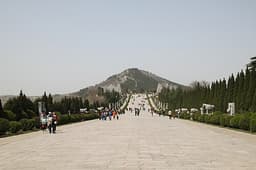
Emperor Gaozong of Tang
Emperor · Medieval
60.4Total
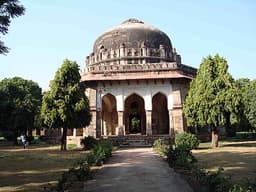
Sikandar Lodi
Emperor · Medieval
59.8Total
Basic Information
Born
628
1458
Died
683
1517
Era
Medieval
Medieval
Nationality
China
India
Occupation
Emperor
Emperor
Civilization
Eastern
Indian
Score Comparison
Military (10%)
72.5
70.0
Political (20%)
62.7
68.0
Influence (20%)
61.0
54.9
Legacy (20%)
50.0
49.2
Leadership (15%)
68.0
74.0
Strategy (15%)
57.5
55.0
TOTAL
60.4
59.8
Emperor Gaozong of Tang — Complete Timeline
657 AD
Conquest of the Western TurksWar◆ Major
Emperor Gaozong's general Su Dingfang defeated the Western Turkic Khaganate, bringing Central Asia under Tang control. This established Tang hegemony over the Silk Road and extended the empire's influence to the Caspian Sea.
ConquestExpansion
Impact: globalconstructive
660 AD
Illness and Regency of Wu ZetianPolitical Action
Emperor Gaozong suffered a stroke that left him partially incapacitated. His wife, Empress Wu Zetian, began to take an active role in governance, eventually becoming the de facto ruler. This marked the beginning of Wu Zetian's rise to power.
SuccessionRegency
Impact: regional
663 AD
Battle of BaekgangWar◆ Major
Tang and Silla forces defeated a combined Baekje-Yamato Japanese fleet at the Battle of Baekgang in Korea. This victory secured Tang control over the Korean peninsula and ended Japanese ambitions in Korea for centuries.
Naval BattleConquest
Impact: regionalconstructive
668 AD
Conquest of GoguryeoWar◆ Major
Emperor Gaozong, with the help of the Silla kingdom, conquered the Korean kingdom of Goguryeo. This victory expanded Tang territory into Manchuria and Korea, establishing a Tang protectorate over the region.
ConquestExpansion
Impact: regionalconstructive
Sikandar Lodi — Complete Timeline
1500 AD
Promotion of Trade and CommerceReform
Sikandar Lodi implemented policies to promote trade, including standardizing weights and measures and reducing customs duties. He also improved roads and security for merchants. These measures boosted the economy of the Lodi Sultanate.
Economic PolicyTradeInfrastructure
Impact: nationalconstructive
1503 AD
Suppression of the Rebellion of Barbak ShahWar
Sikandar Lodi crushed a rebellion led by his brother Barbak Shah, the governor of Jaunpur. He defeated Barbak's forces and reasserted central authority. This internal conflict weakened the Lodi dynasty's stability.
Civil WarRebellionDynastic Conflict
Impact: nationaldestructive
1504 AD
Founding of AgraCultural◆ Major
Sikandar Lodi founded the city of Agra on the banks of the Yamuna River. He moved his capital there from Delhi, building a fort and palaces. Agra later became a major Mughal city under Akbar.
City FoundingUrban PlanningCapital Shift
Impact: regionalconstructive
1506 AD
Conquest of GwaliorWar◆ Major
Sikandar Lodi led a campaign against the Tomara kingdom of Gwalior. He captured the Gwalior Fort after a long siege, defeating Raja Man Singh Tomar. This extended Lodi control into central India.
Military CampaignGwalior FortTerritorial Expansion
Impact: regionaldestructive
Expert Analysis
Origins
Emperor Gaozong of Tang (born 628 CE) was the ninth son of Emperor Taizong, the second ruler of the Tang dynasty. His mother was Empress Zhangsun. Gaozong received a Confucian education and was appointed crown prince in 636 after the death of his elder brother. He ascended the throne in 649 at age 21. His early reign was guided by advisors from his father's court, including Chu Suiliang and Fang Xuanling.
Sikandar Lodi (born unknown, circa 1450s CE) was the second ruler of the Lodi dynasty, the last dynasty of the Delhi Sultanate. He was the son of Sultan Bahlul Lodi, the founder of the dynasty. Sikandar was raised in the court and trained in military affairs. He succeeded his father in 1489 after a brief power struggle with his brother Barbak Shah.
Rise to Power
Gaozong's rise was smooth as the designated heir. However, his reign was initially dominated by his uncle, Zhangsun Wuji, and other regents. Gaozong gradually asserted authority, but his health deteriorated. In 655, he deposed his first wife, Empress Wang, and elevated his concubine Wu Zetian to empress, a move that would reshape his reign.
Sikandar Lodi rose to power by defeating his brother Barbak Shah, who had been appointed governor of Jaunpur by Bahlul Lodi. Sikandar marched against Barbak, defeated him in battle, and reasserted central authority. He then focused on consolidating the Lodi Sultanate, which had been fragmented.
Leadership & Governance
Gaozong's leadership style was delegative, increasingly reliant on his wife Wu Zetian after his stroke in 660. He continued Tang expansion, but governance was often in Wu's hands. She implemented reforms, promoted officials based on merit, and curbed the power of aristocratic families. Gaozong's personal involvement was limited after 660.
Sikandar Lodi was an active administrator. He standardized weights and measures, reduced customs duties to promote trade, and improved road networks. He also patronized learning, establishing schools and supporting Persian literature. His governance was centralized and efficient, but he was strict, punishing rebels harshly.
Triumph & Tragedy
Gaozong's triumphs include the conquest of Goguryeo in 668, ending that kingdom's independence, and the defeat of the Western Turks in 657, extending Tang rule to the Caspian Sea. The Battle of Baekgang in 663 eliminated Japanese influence in Korea. However, his tragedy was his declining health and the consequent rise of Wu Zetian, who later usurped the throne, interrupting the Tang dynasty.
Sikandar Lodi's triumph was founding Agra in 1504, which became a major city and later the capital of the Mughal Empire. He also captured Gwalior Fort in 1506 after a long siege. His tragedy was the failure to create a lasting dynasty; his son Ibrahim Lodi was defeated by Babur at Panipat in 1526, ending Lodi rule.
Character & Destiny
Gaozong was a capable ruler when healthy, but his character was marked by indecisiveness and susceptibility to influence. His dependence on Wu Zetian led to her dominance. Historians score his political acumen at 62.7, reflecting his inability to maintain personal control.
Sikandar Lodi was determined and authoritarian. He suppressed rebellions ruthlessly but also promoted economic growth. His leadership score of 74.0 indicates strong control, but his military score of 70.0 is slightly below Gaozong's 72.5, as he failed to expand the sultanate significantly beyond northern India.
Legacy
Gaozong's legacy is mixed: his territorial expansions were undone by later Tang decline, and his reign is overshadowed by Wu Zetian's. However, he is credited with maintaining Tang power. His influence score is 61.0, reflecting his role in Tang's golden age.
Sikandar Lodi's legacy is more concrete: Agra remains a major city, and his administrative reforms influenced later Mughal rulers. However, his dynasty fell quickly. His legacy score of 49.2 is lower than Gaozong's 50.0, but close.
Conclusion
Emperor Gaozong of Tang had a greater impact on history due to his conquests that reshaped East Asia and his role in the rise of Wu Zetian. Despite his personal weaknesses, Tang China under his reign reached its greatest territorial extent. Sikandar Lodi, while effective, ruled a smaller kingdom with less enduring influence. Gaozong's total score of 60.4 edges out Sikandar's 59.8, but the gap is narrow. However, the scale of Tang's achievements—conquering Goguryeo and the Western Turks—far exceeds Lodi's regional campaigns. Therefore, Gaozong's impact on global history is greater.
Rankings
🥇
Emperor Gaozong of TangLeader
Mil: 72.5Pol: 62.7Inf: 61.0
60.4
🥈
Sikandar Lodi
Mil: 70.0Pol: 68.0Inf: 54.9
59.8
+0.6 behind
How This Comparison Works
Algorithm
Each figure is scored on 6 dimensions (0—100 scale) based on structured historical data: Military (10%), Political (20%), Influence (20%), Legacy (20%), Leadership (15%), Strategy (15%). The weighted total produces the final ranking.
Data Sources
Scores are computed from structured sub-indicators in the database. Scale factors adjust for era (Ancient ×0.85, Modern ×1.0) and civilization size (Eastern ×1.05, Other ×0.80) to account for differences in population and military scale.
Maximum 3 Figures
Comparisons are limited to 2—3 figures to ensure readability and statistical meaningfulness.
Error Margins
±5 points per dimension — Sub-scores are derived from historical records with inherent uncertainty. Two figures within 5 points on a dimension should be considered roughly equivalent in that area.
Total Score Accuracy
±3 points overall — The weighted combination of 6 dimensions produces a total score with approximately ±3 points of uncertainty. Differences of less than 3 points are not statistically significant— the figures are effectively tied.
Known Limitations
- Historical records are incomplete and uneven across civilizations
- Figures from oral-tradition societies may be underrepresented
- Occupation labels can misclassify multi-role figures
- Scores measure capability and impact, not moral character
- Quantitative scoring is a comparison tool, not absolute truth
Capability Radar
Military (10%) — Battles & Warfare
Battles
55
55
Win Rate
60
60
Expansion
65
60
Political (20%) — Governance & Reform
Reform
60
50
Diplomacy
65
55
Economy
60
50
Influence (20%) — Cultural & Global Reach
Cultural
50
40
Global
45
30
Legacy (20%) — Historical Impact
Historical
55
50
Longevity
50
45
Leadership (15%) — Power & Stability
Tenure
70
65
Stability
55
45
Strategy (15%) — Tactics & Innovation
Strategy
55
55
Tactics
50
50
Reform
40
45
Similar Comparisons
Comments & Discussion
No comments yet. Be the first to share your thoughts!