Loading...
Emomali Rahmon vs Mauricio Macri
Emomali Rahmon leads by 3.1 pts · 2 figures compared
…

Emomali Rahmon
Politician · Modern
55.2Total
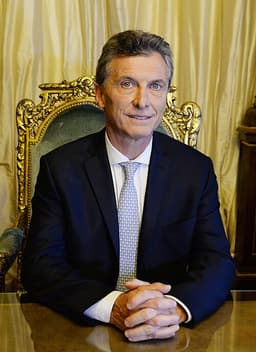
Mauricio Macri
Politician · Modern
52.1Total
Basic Information
Born
1952
1959
Died
—
—
Era
Modern
Modern
Nationality
Tajikistan
Argentina
Occupation
Politician
Politician
Civilization
Eastern
Western
Score Comparison
Military (10%)
36.6
50.0
Political (20%)
68.0
68.0
Influence (20%)
53.3
51.8
Legacy (20%)
47.5
40.0
Leadership (15%)
72.0
64.0
Strategy (15%)
53.0
43.5
TOTAL
55.2
52.1
Emomali Rahmon — Complete Timeline
1992 AD
Became President of TajikistanPolitical Action◆ Major
Emomali Rahmon was elected as Chairman of the Supreme Soviet of Tajikistan, effectively becoming the head of state during the Tajik Civil War. He later became president in 1994. His rise to power came amid a brutal civil war that pitted the government against Islamist and democratic opposition forces.
Civil WarRise to PowerPost-Soviet Transition
Impact: national
1997 AD
Ended the Tajik Civil WarPolitical Action◆ Major
Rahmon signed a peace agreement with the United Tajik Opposition, ending the five-year civil war that had killed tens of thousands. The agreement included power-sharing arrangements and amnesty for opposition fighters. This allowed Rahmon to consolidate power and begin reconstruction.
Peace AgreementCivil War EndReconciliation
Impact: nationalconstructive
2003 AD
Consolidated Authoritarian RulePolitical Action◆ Major
Rahmon held a referendum that removed term limits for the presidency, allowing him to remain in power indefinitely. He also purged political rivals and consolidated control over the security forces. This marked the transition from post-war reconstruction to authoritarian consolidation.
Constitutional AmendmentAuthoritarianismPower Consolidation
Impact: nationaldestructive
2010 AD
Implemented Infrastructure ProjectsOther◆ Major
Rahmon oversaw major infrastructure projects, including the Rogun Dam, which aimed to make Tajikistan energy independent. He also built roads and tunnels connecting the country's regions. These projects were funded by foreign investment and loans, but faced environmental and financial challenges.
InfrastructureEnergy IndependenceDevelopment
Impact: nationalconstructive
2015 AD
Suppressed 2015 Military UprisingPolitical Action◆ Major
Rahmon's government suppressed a military uprising led by former Deputy Defense Minister Abduhalim Nazarzoda. The uprising was linked to the banned Islamic Renaissance Party. The crackdown led to the arrest of opposition figures and further consolidation of Rahmon's power.
Military UprisingRepressionPolitical Opposition
Impact: nationaldestructive
Mauricio Macri — Complete Timeline
2015 AD
Removal of Currency ControlsReform◆ Major
Macri lifted capital and currency controls on his first day in office, allowing the peso to float freely. This aimed to attract foreign investment but led to a sharp devaluation and inflation spike.
Economic ReformCurrency
Impact: national
Election as President of ArgentinaPolitical Action◆ Major
Mauricio Macri won the 2015 Argentine general election, defeating Daniel Scioli. He became the first non-Peronist and non-Radical president since 1916, ending 12 years of Kirchnerist rule.
ElectionPolitical Change
Impact: national
2018 AD
Signing of the 2018 IMF AgreementPolitical Action◆ Major
Macri's government signed a $57 billion standby agreement with the International Monetary Fund, the largest in IMF history. The loan aimed to stabilize the economy amid a currency crisis but imposed austerity measures.
IMFEconomic Crisis
Impact: nationaldestructive
2019 AD
Defeat in 2019 Presidential ElectionPolitical Action◆ Major
Macri lost his re-election bid to Alberto Fern
ElectionDefeat
Impact: nationaltragic
Expert Analysis
Origins
Emomali Rahmon was born on October 5, 1952, in Danghara, Tajikistan, into a peasant family. He studied economics at Tajik State University and worked as an electrician before joining the Communist Party. His early career included managing a state farm and serving as a party official. Rahmon rose through the ranks during the Soviet era, becoming a deputy in the Supreme Soviet of Tajikistan in 1990. His modest background and lack of elite connections initially made him an unlikely leader.
Mauricio Macri was born on February 8, 1959, in Tandil, Argentina, into a wealthy family. His father, Franco Macri, was a successful Italian-Argentine businessman in construction and automotive industries. Macri studied civil engineering at the Catholic University of Argentina and later business at Columbia University. He worked in his father's company, Socma, eventually becoming CEO. His privileged upbringing provided him with extensive business and political connections, contrasting sharply with Rahmon's humble origins.
Rise to Power
Rahmon came to power during the Tajik Civil War (1992-1997). In November 1992, he was elected Chairman of the Supreme Soviet, effectively head of state, replacing the more moderate Rakhmon Nabiyev. Rahmon led the pro-government Popular Front forces, which were backed by Russia and Uzbekistan, against the Islamic-led United Tajik Opposition. By early 1993, his forces had regained control of Dushanbe. He was elected president in a 1994 election, and in 1997 signed a peace agreement with the opposition, ending the conflict that killed 50,000-100,000 people.
Macri rose to prominence in Argentine politics through a different path. He served as president of Boca Juniors football club from 1995 to 2007, gaining national recognition. In 2005, he founded the Republican Proposal (PRO) party and was elected to the Argentine Chamber of Deputies. He then became Mayor of Buenos Aires in 2007, serving until 2015. In 2015, he won the presidency in a narrow runoff against Daniel Scioli, ending 12 years of Kirchnerist rule and becoming the first non-Peronist president in over a century to complete a term.
Leadership & Governance
Rahmon's leadership style is authoritarian and centralized. He has consolidated power through constitutional reforms, including a 2003 referendum that removed term limits, allowing him to remain president since 1992. He has suppressed political opposition, cracked down on media freedom, and purged rivals, such as in the 2015 military uprising led by former Deputy Defense Minister Abduhalim Nazarzoda. His governance focuses on stability and infrastructure, notably the Rogun Dam project, which aims to achieve energy independence. Rahmon scored 72.0 in leadership and 53.0 in strategy.
Macri's governance is democratic and reform-oriented. He pursued market-friendly policies, removing currency controls on his first day in office (December 10, 2015) and reducing export taxes. His approach aimed to attract foreign investment and reduce inflation. However, economic challenges led to a recession and high inflation, forcing him to seek a $57 billion IMF loan in 2018, the largest in IMF history. Macri's leadership score is 64.0, lower than Rahmon's, due to his inability to sustain economic stability.
Triumph & Tragedy
Rahmon's greatest triumph is ending the Tajik Civil War and maintaining peace for over two decades. He oversaw infrastructure development, including roads and tunnels, and the Rogun Dam, which could transform Tajikistan's energy sector. His tragedy is the erosion of democratic institutions and human rights. Tajikistan ranks low on press freedom and political rights indices. The authoritarian consolidation has led to a lack of political succession planning, creating uncertainty.
Macri's triumph is restoring democratic institutions and ending Peronist dominance, winning a free and fair election. He successfully hosted the 2018 G20 summit in Buenos Aires. His tragedy is the economic crisis that worsened under his watch: inflation soared from 25% in 2015 to 53% in 2019, poverty increased, and his IMF deal led to austerity that hurt his popularity. He lost re-election in 2019 to Alberto Fernández.
Character & Destiny
Rahmon is pragmatic and survival-oriented, shaped by the civil war. He prioritizes stability and personal power, often at the expense of freedoms. His character is cautious and calculating, avoiding risky reforms. This has ensured his long tenure but limited Tajikistan's development. Historians note his ability to navigate regional powers (Russia, China, Iran) to secure support.
Macri is idealistic and reformist, believing in market solutions and democratic norms. His character is optimistic but sometimes naive about Argentina's economic realities. He underestimated the depth of the crisis and failed to build a broad coalition. His destiny was to be a one-term president, remembered as a transitional figure who broke the Peronist hold but failed to deliver prosperity.
Legacy
Rahmon's legacy is mixed. He is credited with peace and stability but criticized for authoritarianism. Tajikistan remains poor and dependent on remittances, but infrastructure improvements have been made. His legacy score is 47.5, reflecting limited long-term positive impact. He has set a precedent for indefinite rule, with no clear successor.
Macri's legacy is as a democratic reformer who ended 12 years of Kirchnerism but could not reverse Argentina's economic decline. He restored Argentina's credibility in international markets temporarily but left office with the economy in shambles. His legacy score is 40.0, lower than Rahmon's, due to the economic failure. However, he demonstrated that a non-Peronist could win and govern, potentially paving the way for future alternatives.
Conclusion
Emomali Rahmon had a greater impact than Mauricio Macri, based on his total score of 55.2 vs. 52.1. Rahmon's influence is more profound in his region: he ended a catastrophic civil war and maintained stability for 30 years, while Macri's reforms were reversed within four years. Although Rahmon's governance model is authoritarian, his longevity and control over a strategically located country give him an edge. Macri's failure to stabilize Argentina's economy limits his legacy. Rahmon's political score (68.0) equals Macri's, but his leadership (72.0) and strategy (53.0) surpass Macri's (64.0 and 43.5). Therefore, Rahmon is the more impactful figure.
Rankings
🥇
Emomali RahmonLeader
Mil: 36.6Pol: 68.0Inf: 53.3
55.2
🥈
Mauricio Macri
Mil: 50.0Pol: 68.0Inf: 51.8
52.1
+3.1 behind
How This Comparison Works
Algorithm
Each figure is scored on 6 dimensions (0—100 scale) based on structured historical data: Military (10%), Political (20%), Influence (20%), Legacy (20%), Leadership (15%), Strategy (15%). The weighted total produces the final ranking.
Data Sources
Scores are computed from structured sub-indicators in the database. Scale factors adjust for era (Ancient ×0.85, Modern ×1.0) and civilization size (Eastern ×1.05, Other ×0.80) to account for differences in population and military scale.
Maximum 3 Figures
Comparisons are limited to 2—3 figures to ensure readability and statistical meaningfulness.
Error Margins
±5 points per dimension — Sub-scores are derived from historical records with inherent uncertainty. Two figures within 5 points on a dimension should be considered roughly equivalent in that area.
Total Score Accuracy
±3 points overall — The weighted combination of 6 dimensions produces a total score with approximately ±3 points of uncertainty. Differences of less than 3 points are not statistically significant— the figures are effectively tied.
Known Limitations
- Historical records are incomplete and uneven across civilizations
- Figures from oral-tradition societies may be underrepresented
- Occupation labels can misclassify multi-role figures
- Scores measure capability and impact, not moral character
- Quantitative scoring is a comparison tool, not absolute truth
Capability Radar
Military (10%) — Battles & Warfare
Battles
5
27
Win Rate
5
34
Expansion
5
33
Political (20%) — Governance & Reform
Reform
55
55
Diplomacy
60
50
Economy
50
40
Influence (20%) — Cultural & Global Reach
Cultural
30
20
Global
30
30
Legacy (20%) — Historical Impact
Historical
40
25
Longevity
45
15
Leadership (15%) — Power & Stability
Tenure
85
45
Stability
65
30
Strategy (15%) — Tactics & Innovation
Strategy
5
40
Tactics
5
43
Reform
10
43
Similar Comparisons
Comments & Discussion
No comments yet. Be the first to share your thoughts!