Loading...
Junichiro Koizumi vs Mauricio Macri
Junichiro Koizumi leads by 3.2 pts · 2 figures compared
…

Junichiro Koizumi
Politician · Modern
55.3Total
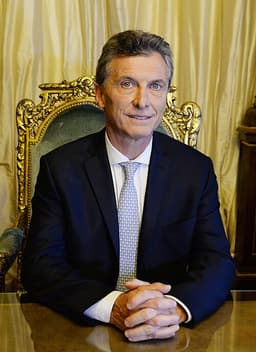
Mauricio Macri
Politician · Modern
52.1Total
Basic Information
Born
1942
1959
Died
—
—
Era
Modern
Modern
Nationality
Japan
Argentina
Occupation
Politician
Politician
Civilization
Eastern
Western
Score Comparison
Military (10%)
16.8
50.0
Political (20%)
78.0
68.0
Influence (20%)
58.3
51.8
Legacy (20%)
56.0
40.0
Leadership (15%)
72.0
64.0
Strategy (15%)
25.1
43.5
TOTAL
55.3
52.1
Junichiro Koizumi — Complete Timeline
2001 AD
Visits to Yasukuni ShrineCultural◆ Major
As prime minister, Koizumi made annual visits to Yasukuni Shrine, a Shinto shrine that honors Japan's war dead including convicted war criminals. The visits drew strong protests from China and South Korea, straining Japan's diplomatic relations in East Asia, while Koizumi defended them as a personal tribute to those who died for Japan.
DiplomacyWar MemoryReligion
Impact: regionaldestructive
2004 AD
Dispatch of Troops to IraqWar◆ Major
Koizumi's government authorized the dispatch of Japanese Self-Defense Forces to Iraq for non-combat reconstruction and humanitarian aid, marking the first such deployment to a combat zone since World War II. The decision was controversial domestically and faced legal challenges, but was framed as supporting the US-led coalition.
Military DeploymentIraq WarJapan
Impact: regional
2005 AD
Enactment of Postal Privatization LawsReform◆ Major
Following his electoral victory, Koizumi's government passed a series of laws in October 2005 to privatize Japan Post, splitting it into four entities: postal service, banking, insurance, and a holding company. The reform aimed to increase efficiency and reduce the government's role in the financial sector, though implementation was later slowed.
PrivatizationEconomic ReformJapan
Impact: nationalconstructive
Postal Privatization ElectionPolitical Action
After the upper house rejected his postal privatization bill, Prime Minister Junichiro Koizumi dissolved the lower house and called a snap election. He campaigned against his own party's rebels, winning a landslide victory and securing a mandate to privatize Japan Post, a major state-owned financial and postal service.
ElectionPrivatizationReform
Impact: nationalconstructive
Mauricio Macri — Complete Timeline
2015 AD
Removal of Currency ControlsReform◆ Major
Macri lifted capital and currency controls on his first day in office, allowing the peso to float freely. This aimed to attract foreign investment but led to a sharp devaluation and inflation spike.
Economic ReformCurrency
Impact: national
Election as President of ArgentinaPolitical Action◆ Major
Mauricio Macri won the 2015 Argentine general election, defeating Daniel Scioli. He became the first non-Peronist and non-Radical president since 1916, ending 12 years of Kirchnerist rule.
ElectionPolitical Change
Impact: national
2018 AD
Signing of the 2018 IMF AgreementPolitical Action◆ Major
Macri's government signed a $57 billion standby agreement with the International Monetary Fund, the largest in IMF history. The loan aimed to stabilize the economy amid a currency crisis but imposed austerity measures.
IMFEconomic Crisis
Impact: nationaldestructive
2019 AD
Defeat in 2019 Presidential ElectionPolitical Action◆ Major
Macri lost his re-election bid to Alberto Fern
ElectionDefeat
Impact: nationaltragic
Expert Analysis
Origins
Junichiro Koizumi was born on January 8, 1942, in Yokosuka, Japan, into a political family. His father, Junya Koizumi, served as a member of the House of Representatives and as director of the Japan Defense Agency. Koizumi studied economics at Keio University and later at University College London, though he did not graduate from the latter. His early political career began when he was elected to the House of Representatives in 1972 at age 30, representing the Liberal Democratic Party (LDP).
Mauricio Macri was born on February 8, 1959, in Tandil, Argentina, into a wealthy business family. His father, Franco Macri, was an Italian-born industrialist who founded the SOCMA Group, a major conglomerate. Macri studied civil engineering at the Pontifical Catholic University of Argentina and later attended business courses at Columbia University. He entered politics after leading the Boca Juniors football club from 1995 to 2007, gaining public visibility.
Rise to Power
Koizumi's rise within the LDP was gradual, holding various ministerial posts including Minister of Health and Welfare and Minister of Posts and Telecommunications. His reputation as a maverick grew, and in 2001 he ran for LDP presidency on a platform of structural reform, famously promising to "destroy the LDP" to reform it. He won the party presidency and became Prime Minister on April 26, 2001, defeating conservative rivals with strong grassroots support.
Macri's political ascent began with his election as Chief of Government of Buenos Aires City in 2007, after founding the Republican Proposal (PRO) party. He was re-elected in 2011 with a landslide. In 2015, he ran for president as the candidate of the Cambiemos coalition, defeating Peronist Daniel Scioli in a runoff with 51.3% of the vote. His victory ended 12 years of Kirchnerist rule and marked the first non-Peronist and non-Radical president since 1916.
Leadership & Governance
Koizumi's leadership style was assertive and media-savvy. He used televised press conferences and direct appeals to the public to bypass party opposition. His key reform was the privatization of Japan Post, which had long been a sacred cow of the LDP. In 2005, after the upper house rejected his postal privatization bill, he dissolved the lower house and called a snap election, which he won decisively. He then passed the privatization laws in October 2005, splitting Japan Post into four entities. His government also dispatched troops to Iraq for non-combat missions, breaking a post-WWII taboo. However, his annual visits to Yasukuni Shrine strained relations with China and South Korea.
Macri's governance focused on market-friendly reforms. On his first day in office, he lifted currency controls, allowing the peso to float freely, which led to a sharp devaluation. He removed export taxes on grains and signed free trade deals with the EU and Mercosur. However, inflation remained high (over 40% by 2018), and his austerity measures caused social unrest. In 2018, he signed a $57 billion IMF loan, the largest in IMF history, which stabilized the economy but deepened recession. His political score of 68.0 reflects his ability to pass reforms but failure to sustain economic growth.
Triumph & Tragedy
Koizumi's greatest triumph was the postal privatization election in 2005, where he secured a supermajority and implemented a reform that had eluded predecessors for decades. This enhanced his political score of 78.0. His tragedy was the Yasukuni visits, which damaged Japan's diplomatic relations and divided public opinion. The visits were seen as a symbol of unrepentant militarism, and they undermined his legacy of international cooperation.
Macri's triumph was ending the Kirchnerist era and restoring democratic alternation. His removal of currency controls and initial market optimism earned him praise from investors. However, his tragedy was the 2018 economic crisis, which forced him to seek IMF assistance and led to a 20% poverty rate. He lost re-election in 2019 to Alberto Fernández, receiving 40.28% of the vote, returning Peronists to power. His legacy score of 40.0 reflects the incomplete nature of his reforms.
Character & Destiny
Koizumi was known for his eccentricity and stubbornness. He styled himself as a reformer willing to break party ranks. His decision to visit Yasukuni despite opposition showed a dogmatic streak. Historians note that his political skill (score 78.0) was matched by strategic missteps in foreign policy (strategy 25.1). His leadership score of 72.0 reflects his ability to drive change but also his polarizing nature.
Macri was pragmatic and technocratic, but his business background made him appear out of touch with the poor. He lacked the political machinery of the Peronists, and his coalition was fragile. His leadership score of 64.0 indicates competent management but an inability to build lasting political capital. His strategy score of 43.5 shows that his economic policies, while sound in theory, were poorly timed and executed.
Legacy
Koizumi's legacy is mixed. He is credited with reforming Japan's postal system and breaking the LDP's old guard, but his Yasukuni visits and Iraq deployment remain controversial. His political reforms paved the way for later prime ministers but did not end LDP dominance. His influence score of 58.3 reflects his impact on Japanese politics but limited global reach.
Macri's legacy is that of a reformer who failed to consolidate gains. He restored democratic alternation but could not solve Argentina's structural problems. His IMF deal is seen as a cautionary tale. His influence score of 51.8 and legacy of 40.0 indicate a leader who made a mark but was ultimately reversed by his successor.
Conclusion
Junichiro Koizumi had a greater impact than Mauricio Macri, as evidenced by his higher total score of 55.3 vs. 52.1. Koizumi's postal privatization was a structural reform that survived his tenure, while Macri's economic reforms were largely undone. Koizumi also demonstrated superior political skill (78.0 vs. 68.0) and leadership (72.0 vs. 64.0). Although both faced limitations, Koizumi's ability to force through change against entrenched interests gives him the edge.
Rankings
🥇
Junichiro KoizumiLeader
Mil: 16.8Pol: 78.0Inf: 58.3
55.3
🥈
Mauricio Macri
Mil: 50.0Pol: 68.0Inf: 51.8
52.1
+3.2 behind
How This Comparison Works
Algorithm
Each figure is scored on 6 dimensions (0—100 scale) based on structured historical data: Military (10%), Political (20%), Influence (20%), Legacy (20%), Leadership (15%), Strategy (15%). The weighted total produces the final ranking.
Data Sources
Scores are computed from structured sub-indicators in the database. Scale factors adjust for era (Ancient ×0.85, Modern ×1.0) and civilization size (Eastern ×1.05, Other ×0.80) to account for differences in population and military scale.
Maximum 3 Figures
Comparisons are limited to 2—3 figures to ensure readability and statistical meaningfulness.
Error Margins
±5 points per dimension — Sub-scores are derived from historical records with inherent uncertainty. Two figures within 5 points on a dimension should be considered roughly equivalent in that area.
Total Score Accuracy
±3 points overall — The weighted combination of 6 dimensions produces a total score with approximately ±3 points of uncertainty. Differences of less than 3 points are not statistically significant— the figures are effectively tied.
Known Limitations
- Historical records are incomplete and uneven across civilizations
- Figures from oral-tradition societies may be underrepresented
- Occupation labels can misclassify multi-role figures
- Scores measure capability and impact, not moral character
- Quantitative scoring is a comparison tool, not absolute truth
Capability Radar
Military (10%) — Battles & Warfare
Battles
12
27
Win Rate
19
34
Expansion
17
33
Political (20%) — Governance & Reform
Reform
75
55
Diplomacy
70
50
Economy
68
40
Influence (20%) — Cultural & Global Reach
Cultural
55
20
Global
55
30
Legacy (20%) — Historical Impact
Historical
60
25
Longevity
50
15
Leadership (15%) — Power & Stability
Tenure
65
45
Stability
60
30
Strategy (15%) — Tactics & Innovation
Strategy
20
40
Tactics
29
43
Reform
31
43
Similar Comparisons
Comments & Discussion
No comments yet. Be the first to share your thoughts!