Loading...
Emile Lahoud vs Joachim Murat
Joachim Murat leads by 16.7 pts · 2 figures compared
…

Emile Lahoud
General · Modern
41.6Total
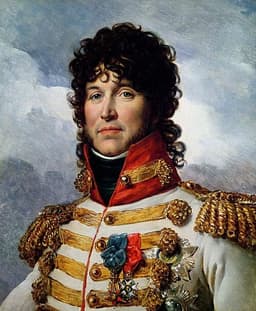
Joachim Murat
General · Modern
58.3Total
Basic Information
Born
1936
1767
Died
—
1815
Era
Modern
Modern
Nationality
Lebanon
France
Occupation
General
General
Civilization
Middle Eastern
Western
Score Comparison
Military (10%)
10.2
74.7
Political (20%)
36.5
68.0
Influence (20%)
50.2
58.3
Legacy (20%)
40.8
56.0
Leadership (15%)
65.7
40.0
Strategy (15%)
25.0
60.7
TOTAL
41.6
58.3
Emile Lahoud — Complete Timeline
1989 AD
Appointed Commander of the Lebanese ArmyPolitical Action◆ Major
Emile Lahoud was appointed Commander of the Lebanese Armed Forces in 1989, during the final year of the civil war. He oversaw the rebuilding of the army after the conflict, integrating former militiamen and restoring the military's role as a national institution, though under Syrian supervision.
Army CommandPost-WarRebuilding
Impact: nationalconstructive
1998 AD
Elected President of LebanonPolitical Action◆ Major
Emile Lahoud was elected President of Lebanon on October 15, 1998, with the backing of Syria. He was the first military officer to become president since the civil war, and his election was seen as a continuation of Syrian influence. His presidency began with promises of reform and anti-corruption campaigns.
PresidencyElectionSyrian Influence
Impact: national
2004 AD
Extended presidential term by constitutional amendmentPolitical Action◆ Major
In 2004, the Lebanese Parliament, under Syrian pressure, amended the constitution to extend President Lahoud's term by three years, despite opposition from anti-Syrian factions and the U.S. This move sparked the Cedar Revolution and increased tensions between pro- and anti-Syrian camps, leading to the assassination of Rafic Hariri in 2005.
Term ExtensionCedar RevolutionHariri Assassination
Impact: nationaldestructive
2005 AD
Presided during the Cedar Revolution and Syrian withdrawalPolitical Action
Following the assassination of Rafic Hariri in February 2005, massive protests (the Cedar Revolution) demanded Syrian withdrawal from Lebanon. President Lahoud, a Syrian ally, was forced to accept the withdrawal of Syrian troops in April 2005, ending 29 years of Syrian military presence. His authority was severely weakened.
Cedar RevolutionSyrian WithdrawalHariri
Impact: regional
2007 AD
End of presidency and political isolationPolitical Action◆ Major
Emile Lahoud's extended term ended in November 2007, but Parliament failed to elect a successor due to political deadlock between pro- and anti-Syrian blocs. He left office as a deeply polarizing figure, blamed for entrenching Syrian influence and obstructing sovereignty. He remained in Lebanon but was politically isolated.
Term EndPolitical DeadlockLegacy
Impact: national
Joachim Murat — Complete Timeline
1798 AD
Battle of the PyramidsWar◆ Major
Murat led a cavalry charge that broke the Mamluk lines near Cairo. This victory secured French control of Lower Egypt during Napoleon's Egyptian campaign.
Egyptian CampaignCavalryNapoleonic Wars
Impact: regional
1799 AD
Battle of AbukirWar◆ Major
Murat led a decisive cavalry charge that defeated the Ottoman army at Abukir, Egypt. He captured the Ottoman commander and was promoted to general of division.
Egyptian CampaignCavalryNapoleonic Wars
Impact: regional
1805 AD
Battle of AusterlitzWar◆ Major
Murat commanded the French cavalry reserve at Austerlitz. His cavalry pursued the fleeing Russian and Austrian forces after the Allied center collapsed, contributing to the decisive French victory.
Napoleonic WarsBattleCavalry
Impact: global
1808 AD
Appointed King of NaplesPolitical Action◆ Major
Napoleon appointed Murat as King of Naples, replacing Joseph Bonaparte who became King of Spain. Murat ruled the Kingdom of Naples from 1808 to 1815, implementing French administrative reforms.
Kingdom of NaplesMonarchyNapoleonic Era
Impact: regional
1813 AD
Battle of LeipzigWar◆ Major
Murat commanded the French cavalry at the Battle of Leipzig. His forces were defeated by the Allied coalition, and he later negotiated with the Allies to preserve his throne, abandoning Napoleon.
Napoleonic WarsBattleDefeatBetrayal
Impact: global
1815 AD
Hundred Days CampaignWar◆ Major
Murat declared war on Austria in an attempt to regain his throne during Napoleon's Hundred Days. He was defeated at the Battle of Tolentino and fled to France, losing his kingdom.
Hundred DaysNapoleonic WarsDefeat
Impact: regionaltragic
Execution by Firing SquadPolitical Action◆ Major
Murat was captured by Bourbon forces after attempting to land in Calabria to reclaim his throne. He was tried by a military court and executed by firing squad at the Castello di Pizzo.
ExecutionBourbon RestorationDeath
Impact: nationaltragic
Expert Analysis
Origins
Emile Lahoud was born on January 12, 1936, in Baabdat, Lebanon, into a Maronite Christian family. His father, Jamil Lahoud, was a military officer and later a politician. Lahoud graduated from the Military Academy in 1959 and trained in the United States and Britain. His early career was shaped by the Lebanese Civil War (1975-1990), during which he rose through the ranks.
Joachim Murat was born on March 25, 1767, in La Bastide-Fortunière, France, the son of an innkeeper. He studied for the priesthood but left to join the cavalry in 1787. His charisma and daring made him a natural cavalry leader. He rose rapidly during the French Revolutionary Wars, catching Napoleon's attention.
Rise to Power
Lahoud was appointed Commander of the Lebanese Armed Forces in 1989, amid the civil war's final year. He oversaw the army's rebuilding and maintained order. In 1998, with Syrian backing, he was elected President of Lebanon, becoming the first military officer in that role since independence. His presidency was defined by close ties to Damascus.
Murat's rise was meteoric. He distinguished himself at the Battle of the Pyramids in 1798, leading a cavalry charge that broke the Mamluk lines. At the Battle of Abukir in 1799, his charge captured the Ottoman commander, earning him promotion to general of division. Napoleon appointed him King of Naples in 1808, replacing Joseph Bonaparte. Murat scored 74.7 in military, far above Lahoud's 10.2.
Leadership & Governance
Lahoud's governance was authoritarian and pro-Syrian. He extended his term in 2004 via constitutional amendment under Syrian pressure, sparking opposition. His leadership score of 65.7 reflects his ability to maintain power but his political score of 36.5 shows limited autonomy. He failed to manage the Cedar Revolution in 2005, which demanded Syrian withdrawal after Hariri's assassination.
Murat's rule in Naples was reformist but erratic. He introduced the Napoleonic Code, abolished feudalism, and modernized the kingdom. However, his political score of 68.0 is tempered by his impulsive decisions, such as declaring war on Austria in 1815 during the Hundred Days, which led to his defeat at Tolentino. His strategy score of 60.7 indicates competence but not brilliance.
Triumph & Tragedy
Lahoud's greatest success was rebuilding the Lebanese army after the civil war, stabilizing the country under Syrian influence. His greatest failure was the 2004 term extension, which deepened political divisions and led to his isolation after the Cedar Revolution. He left office in 2007 without a successor, as parliament deadlocked.
Murat's triumphs include his cavalry charges at Austerlitz (1805), where he pursued the fleeing Allied forces, and at Jena (1806). His tragedy was his execution by firing squad in 1815 after trying to regain his throne. He was captured and tried, scoring low in leadership (40.0) due to his reckless ambition.
Character & Destiny
Lahoud was methodical and loyal to Syria, but his rigid adherence to Damascus cost him popular support. His character was cautious, avoiding confrontation. This led to his political marginalization after 2005.
Murat was flamboyant and courageous, but impulsive. His decision to attack Austria without Napoleon's approval doomed him. Historians note his tactical brilliance but strategic weakness. His influence score of 58.3 reflects his role as a Napoleonic marshal, but his legacy is overshadowed by Napoleon.
Legacy
Lahoud's legacy is mixed. He is remembered as a Syrian puppet who weakened Lebanese sovereignty. His military score of 10.2 reflects limited combat experience. His influence score of 50.2 stems from his role in the post-civil war order.
Murat's legacy endures as a dashing cavalry commander. His military score of 74.7 places him among Napoleon's top generals. The Murat coat of arms still appears in Naples. His political score of 68.0 shows he was more than a soldier, but his legacy score of 56.0 is lower due to his failed kingship.
Conclusion
Joachim Murat had greater impact. His total score of 58.3 dwarfs Lahoud's 41.6. Murat's battlefield achievements influenced Napoleonic warfare, while Lahoud's presidency left Lebanon weakened and divided. Murat's reforms in Naples had lasting effects, whereas Lahoud's rule was a footnote in Syrian domination. The data supports Murat as the more consequential figure.
Rankings
🥇
Joachim MuratLeader
Mil: 74.7Pol: 68.0Inf: 58.3
58.3
🥈
Emile Lahoud
Mil: 10.2Pol: 36.5Inf: 50.2
41.6
+16.7 behind
How This Comparison Works
Algorithm
Each figure is scored on 6 dimensions (0—100 scale) based on structured historical data: Military (10%), Political (20%), Influence (20%), Legacy (20%), Leadership (15%), Strategy (15%). The weighted total produces the final ranking.
Data Sources
Scores are computed from structured sub-indicators in the database. Scale factors adjust for era (Ancient ×0.85, Modern ×1.0) and civilization size (Eastern ×1.05, Other ×0.80) to account for differences in population and military scale.
Maximum 3 Figures
Comparisons are limited to 2—3 figures to ensure readability and statistical meaningfulness.
Error Margins
±5 points per dimension — Sub-scores are derived from historical records with inherent uncertainty. Two figures within 5 points on a dimension should be considered roughly equivalent in that area.
Total Score Accuracy
±3 points overall — The weighted combination of 6 dimensions produces a total score with approximately ±3 points of uncertainty. Differences of less than 3 points are not statistically significant— the figures are effectively tied.
Known Limitations
- Historical records are incomplete and uneven across civilizations
- Figures from oral-tradition societies may be underrepresented
- Occupation labels can misclassify multi-role figures
- Scores measure capability and impact, not moral character
- Quantitative scoring is a comparison tool, not absolute truth
Capability Radar
Military (10%) — Battles & Warfare
Battles
5
75
Win Rate
5
70
Expansion
5
65
Political (20%) — Governance & Reform
Reform
20
45
Diplomacy
30
50
Economy
15
40
Influence (20%) — Cultural & Global Reach
Cultural
15
55
Global
15
55
Legacy (20%) — Historical Impact
Historical
20
60
Longevity
15
50
Leadership (15%) — Power & Stability
Tenure
55
60
Stability
10
35
Strategy (15%) — Tactics & Innovation
Strategy
10
55
Tactics
10
85
Reform
15
40
Similar Comparisons
Comments & Discussion
No comments yet. Be the first to share your thoughts!