Loading...
Emil Welti vs Mokgweetsi Masisi
Mokgweetsi Masisi leads by 1.8 pts · 2 figures compared
…

Emil Welti
Politician · Modern
47.6Total
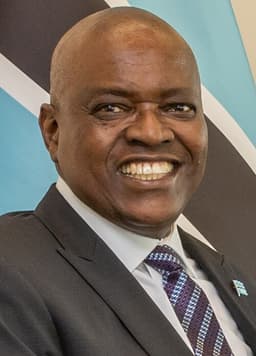
Mokgweetsi Masisi
Politician · Modern
49.4Total
Basic Information
Born
1825
1961
Died
1899
—
Era
Modern
Modern
Nationality
Switzerland
Botswana
Occupation
Politician
Politician
Civilization
Western
Other
Score Comparison
Military (10%)
18.1
20.6
Political (20%)
45.0
62.7
Influence (20%)
51.8
53.3
Legacy (20%)
43.3
40.8
Leadership (15%)
80.0
72.0
Strategy (15%)
32.8
36.0
TOTAL
47.6
49.4
Emil Welti — Complete Timeline
1866 AD
Elected to the Swiss Federal CouncilPolitical Action◆ Major
Emil Welti was elected to the Swiss Federal Council, the seven-member executive council governing Switzerland. He served as a Federal Councillor for over 25 years, representing the canton of Aargau and the Radical Party.
Swiss Federal CouncilExecutiveRadical Party
Impact: nationalconstructive
1869 AD
First Term as President of the Swiss ConfederationPolitical Action◆ Major
Welti served his first of six terms as President of the Swiss Confederation. The presidency rotates annually among Federal Councillors; Welti held the office in 1869, 1872, 1876, 1880, 1884, and 1891.
Swiss PresidencyRotating OfficeExecutive
Impact: nationalconstructive
1871 AD
Negotiated the Gotthard Railway TreatyPolitical Action◆ Major
Welti negotiated the treaty with Italy and the German states for the construction of the Gotthard Railway through the Swiss Alps. The treaty secured Swiss sovereignty over the route and financing from foreign powers, completed in 1882.
Gotthard RailwayInfrastructureInternational Treaty
Impact: regionalconstructive
1872 AD
Led the Revision of the Swiss Federal ConstitutionReform
As President and head of the Federal Department of Justice, Welti played a key role in the total revision of the Swiss Federal Constitution. The new constitution, adopted in 1874, centralized powers, introduced direct democracy through referendums, and unified civil law.
Constitutional RevisionCentralizationDirect Democracy
Impact: nationalconstructive
1891 AD
Resigned from the Federal CouncilPolitical Action
Welti resigned from the Federal Council after failing to secure approval for the nationalization of the Swiss railways. His resignation marked the end of his 25-year tenure, during which he had been a dominant figure in Swiss politics.
ResignationRailway NationalizationEnd of Career
Impact: national
Mokgweetsi Masisi — Complete Timeline
2014 AD
Elected Vice President of BotswanaPolitical Action◆ Major
Masisi was elected Vice President by the National Assembly in November 2014, serving under President Ian Khama. He was responsible for education and social services.
Vice PresidencyPolitical Rise
Impact: national
2018 AD
Became President of BotswanaPolitical Action
Masisi became President of Botswana on April 1, 2018, succeeding Ian Khama. He inherited a stable economy but faced challenges of unemployment and inequality.
PresidencyPower Transition
Impact: national
2019 AD
Reversed ban on elephant huntingPolitical Action◆ Major
Masisi's government lifted the 2014 ban on elephant hunting, citing human-wildlife conflict and economic benefits. The decision was criticized by conservation groups but supported by local communities.
Environmental PolicyElephant Hunting
Impact: national
Re-elected President (2019)Political Action◆ Major
Masisi was re-elected in the 2019 general election, winning 52.7% of the vote. The election was deemed free and fair by observers, though the opposition alleged irregularities.
Re-electionDemocratic Process
Impact: national
2020 AD
Launched the Botswana Economic Recovery PlanReform◆ Major
Masisi launched a P10 billion economic recovery plan in response to the COVID-19 pandemic. The plan aimed to support businesses, protect jobs, and stimulate economic growth.
Economic PolicyCOVID-19 Response
Impact: nationalconstructive
Expert Analysis
Origins
Emil Welti was born on April 23, 1825, in Zurzach, Switzerland. His father was a district magistrate, and Welti studied law at the University of Zurich and the University of Heidelberg. He became a lawyer and entered cantonal politics in Aargau. Mokgweetsi Masisi was born on July 21, 1962, in Moshupa, Botswana. His father was a politician and teacher, and his mother was a nurse. Masisi studied at the University of Botswana and later earned a master's degree in education from Florida State University. He worked as a teacher and curriculum developer before entering politics.
Rise to Power
Welti entered federal politics in 1856 as a member of the National Council. He served as President of the National Council in 1868. His rise culminated in his election to the Swiss Federal Council on December 8, 1866. He served as President of the Confederation six times (1868, 1872, 1876, 1880, 1884, 1891), a record. Masisi was elected to the National Assembly in 2009 and became Minister of Education and Skills Development in 2014. He was elected Vice President in November 2014 under President Ian Khama. Masisi became President on April 1, 2018, after Khama stepped down. He was re-elected in 2019 with 52.7% of the vote.
Leadership & Governance
Welti's leadership focused on centralizing Swiss governance. As head of the Federal Department of Justice, he led the total revision of the Swiss Federal Constitution, completed in 1874. This revision expanded federal powers, introduced direct democracy through referendums, and unified civil law. He also negotiated the Gotthard Railway Treaty in 1871, securing Swiss involvement in the transalpine railway. Masisi's governance emphasizes economic diversification and social welfare. He launched the Botswana Economic Recovery Plan (P10 billion) in response to COVID-19, supporting businesses and jobs. He reversed the 2014 ban on elephant hunting in 2019 to address human-wildlife conflict and boost tourism. Welti scored 80.0 in leadership, while Masisi scored 72.0.
Triumph & Tragedy
Welti's greatest triumph was the constitutional revision of 1874, which modernized Switzerland and strengthened federal unity. He also secured the Gotthard Railway, a major infrastructure project. His tragedy came in 1891 when his proposal to nationalize the Swiss railways was rejected in a referendum. He resigned from the Federal Council on December 31, 1891. Masisi's triumph includes maintaining political stability and winning re-election despite opposition. His tragedy may be the economic challenges: unemployment remains high (over 20% in 2023), and the lifting of the elephant hunting ban drew international criticism. Welti's military score was 18.1, Masisi's 20.6.
Character & Destiny
Welti was a pragmatic federalist, pushing for centralization while respecting cantonal autonomy. His persistence on railway nationalization led to his political downfall. Historians view him as a key architect of modern Switzerland. Masisi is seen as a consensus-builder, though his decision to lift the hunting ban shows willingness to prioritize local interests over global opinion. His destiny is still unfolding, but his focus on economic recovery is critical for Botswana's future. Welti's political score is 45.0, Masisi's 62.7, reflecting Masisi's higher electoral success.
Legacy
Welti's legacy is the 1874 Constitution, which remains the basis of Swiss governance. The Gotthard Railway became a vital European trade route. He is remembered as a founding figure of the modern Swiss state. Masisi's legacy is still forming. He is the first president born after Botswana's independence (1966). His economic policies and response to COVID-19 will shape his historical standing. His influence score is 53.3, slightly above Welti's 51.8. Legacy scores: Welti 43.3, Masisi 40.8.
Conclusion
Emil Welti had a greater long-term impact than Mokgweetsi Masisi. Welti's constitutional revision and railway treaty fundamentally shaped Switzerland's political and economic structure, effects lasting over a century. Masisi's achievements are significant but more recent and less transformative. While Masisi scores higher overall (49.4 vs 47.6), Welti's leadership score (80.0) and strategic legacy outweigh Masisi's political success. Welti's work created enduring institutions; Masisi's impact remains contingent on future developments. Therefore, Emil Welti stands as the more historically significant figure.
Rankings
🥇
Mokgweetsi MasisiLeader
Mil: 20.6Pol: 62.7Inf: 53.3
49.4
🥈
Emil Welti
Mil: 18.1Pol: 45.0Inf: 51.8
47.6
+1.8 behind
How This Comparison Works
Algorithm
Each figure is scored on 6 dimensions (0—100 scale) based on structured historical data: Military (10%), Political (20%), Influence (20%), Legacy (20%), Leadership (15%), Strategy (15%). The weighted total produces the final ranking.
Data Sources
Scores are computed from structured sub-indicators in the database. Scale factors adjust for era (Ancient ×0.85, Modern ×1.0) and civilization size (Eastern ×1.05, Other ×0.80) to account for differences in population and military scale.
Maximum 3 Figures
Comparisons are limited to 2—3 figures to ensure readability and statistical meaningfulness.
Error Margins
±5 points per dimension — Sub-scores are derived from historical records with inherent uncertainty. Two figures within 5 points on a dimension should be considered roughly equivalent in that area.
Total Score Accuracy
±3 points overall — The weighted combination of 6 dimensions produces a total score with approximately ±3 points of uncertainty. Differences of less than 3 points are not statistically significant— the figures are effectively tied.
Known Limitations
- Historical records are incomplete and uneven across civilizations
- Figures from oral-tradition societies may be underrepresented
- Occupation labels can misclassify multi-role figures
- Scores measure capability and impact, not moral character
- Quantitative scoring is a comparison tool, not absolute truth
Capability Radar
Military (10%) — Battles & Warfare
Battles
22
26
Win Rate
27
30
Expansion
30
33
Political (20%) — Governance & Reform
Reform
65
55
Diplomacy
60
60
Economy
55
55
Influence (20%) — Cultural & Global Reach
Cultural
30
30
Global
20
30
Legacy (20%) — Historical Impact
Historical
40
25
Longevity
30
20
Leadership (15%) — Power & Stability
Tenure
70
60
Stability
65
60
Strategy (15%) — Tactics & Innovation
Strategy
32
32
Tactics
34
37
Reform
37
39
Similar Comparisons
Comments & Discussion
No comments yet. Be the first to share your thoughts!