Loading...
This comparison has not been analyzed yet.
One-time AI generation (~1 minute). Scores and timeline are already available below.
Eduardo Duhalde vs Nigel Farage
Nigel Farage leads by 9.7 pts · 2 figures compared
…
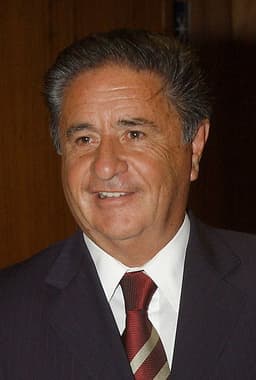
Eduardo Duhalde
Politician · Modern
44.7Total

Nigel Farage
Politician · Modern
54.4Total
Basic Information
Born
1941
1964
Died
—
—
Era
Modern
Modern
Nationality
Argentina
United Kingdom
Occupation
Politician
Politician
Civilization
Western
Western
Score Comparison
Military (10%)
50.0
48.2
Political (20%)
46.6
53.8
Influence (20%)
47.9
62.0
Legacy (20%)
39.2
50.0
Leadership (15%)
45.0
62.0
Strategy (15%)
41.8
42.1
TOTAL
44.7
54.4
Eduardo Duhalde — Complete Timeline
2002 AD
Abandoned the Convertibility Plan and devalued the pesoReform
In January 2002, Duhalde's government ended the Convertibility Plan, which had pegged the peso to the U.S. dollar. The peso was devalued by 40%, leading to a sharp economic contraction but eventually allowing for export-led recovery.
DevaluationEconomic ReformEnd of Convertibility
Impact: nationalconstructive
Implemented social assistance programs to address the crisisReform◆ Major
Duhalde's government launched the 'Unemployed Heads of Households' program (Plan Jefes y Jefas de Hogar), providing cash transfers to millions of unemployed Argentines. This helped alleviate extreme poverty and social unrest during the economic collapse.
Social ProgramPoverty AlleviationEconomic Crisis
Impact: nationalconstructive
Appointed interim President by CongressPolitical Action◆ Major
On January 1, 2002, Eduardo Duhalde was appointed interim President of Argentina by the National Congress, following the resignation of Adolfo Rodr
Interim PresidencyPeronism2001 Crisis
Impact: national
2003 AD
Called early elections and handed over power to Néstor KirchnerPolitical Action◆ Major
Duhalde called for early presidential elections in April 2003, which were won by N
ElectionTransitionEnd of Interim Presidency
Impact: nationalconstructive
Nigel Farage — Complete Timeline
1993 AD
Co-founded the UK Independence PartyPolitical Action◆ Major
Nigel Farage was a founding member of UKIP, which advocated for the United Kingdom's withdrawal from the European Union. He became the party's first leader in 1997 and built it into a significant political force.
UKIPFoundingEuroscepticism
Impact: nationalconstructive
2014 AD
Led UKIP to victory in 2014 European Parliament electionsPolitical Action◆ Major
Under Farage's leadership, UKIP won the 2014 European Parliament elections in the UK, securing 26.6% of the vote and 24 MEPs. This was the first time a party other than Labour or Conservatives won a nationwide election since 1906.
UKIPElectionEuropean Parliament
Impact: nationalconstructive
2016 AD
Campaign for Brexit referendumPolitical Action
Farage was a leading figure in the Vote Leave campaign, advocating for the UK to leave the European Union. The referendum resulted in 51.9% voting to leave, a decision that reshaped British politics and led to his resignation as UKIP leader.
BrexitReferendumEuroscepticism
Impact: globalconstructive
Resigned as UKIP leader after Brexit votePolitical Action◆ Major
Following the Brexit referendum result, Farage resigned as UKIP leader, stating he had achieved his political goal. His resignation marked the end of his direct leadership of the party he had built.
UKIPResignationBrexit
Impact: national
2019 AD
Founded Reform UKPolitical Action◆ Major
After leaving UKIP, Farage founded the Brexit Party, later renamed Reform UK. The party campaigned for a no-deal Brexit and later focused on anti-immigration and anti-lockdown policies. It won 12.5% of the vote in the 2019 general election.
Reform UKBrexit PartyFounding
Impact: nationalconstructive
This comparison has not been analyzed yet.
One-time AI generation (~1 minute). Scores and timeline are already available below.
Rankings
🥇
Nigel FarageLeader
Mil: 48.2Pol: 53.8Inf: 62.0
54.4
🥈
Eduardo Duhalde
Mil: 50.0Pol: 46.6Inf: 47.9
44.7
+9.7 behind
How This Comparison Works
Algorithm
Each figure is scored on 6 dimensions (0—100 scale) based on structured historical data: Military (10%), Political (20%), Influence (20%), Legacy (20%), Leadership (15%), Strategy (15%). The weighted total produces the final ranking.
Data Sources
Scores are computed from structured sub-indicators in the database. Scale factors adjust for era (Ancient ×0.85, Modern ×1.0) and civilization size (Eastern ×1.05, Other ×0.80) to account for differences in population and military scale.
Maximum 3 Figures
Comparisons are limited to 2—3 figures to ensure readability and statistical meaningfulness.
Error Margins
±5 points per dimension — Sub-scores are derived from historical records with inherent uncertainty. Two figures within 5 points on a dimension should be considered roughly equivalent in that area.
Total Score Accuracy
±3 points overall — The weighted combination of 6 dimensions produces a total score with approximately ±3 points of uncertainty. Differences of less than 3 points are not statistically significant— the figures are effectively tied.
Known Limitations
- Historical records are incomplete and uneven across civilizations
- Figures from oral-tradition societies may be underrepresented
- Occupation labels can misclassify multi-role figures
- Scores measure capability and impact, not moral character
- Quantitative scoring is a comparison tool, not absolute truth
Capability Radar
Military (10%) — Battles & Warfare
Battles
26
30
Win Rate
31
32
Expansion
35
37
Political (20%) — Governance & Reform
Reform
40
60
Diplomacy
45
55
Economy
30
30
Influence (20%) — Cultural & Global Reach
Cultural
10
55
Global
15
55
Legacy (20%) — Historical Impact
Historical
25
60
Longevity
10
40
Leadership (15%) — Power & Stability
Tenure
15
45
Stability
20
20
Strategy (15%) — Tactics & Innovation
Strategy
36
40
Tactics
41
39
Reform
43
43
Similar Comparisons
Comments & Discussion
No comments yet. Be the first to share your thoughts!