Loading...
Duke of Zhou vs Turenne
Duke of Zhou leads by 3.0 pts · 2 figures compared
…

Duke of Zhou
Politician · Ancient
78.8Total
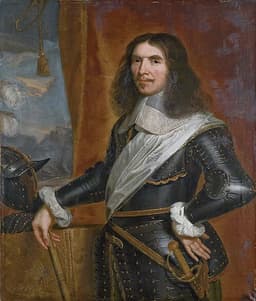
Turenne
General · Modern
75.8Total
Basic Information
Born
-1090
1611
Died
-1030
1675
Era
Ancient
Modern
Nationality
Zhou China
France
Occupation
Politician
General
Civilization
Eastern
Western
Score Comparison
Military (10%)
60.0
79.9
Political (20%)
72.0
72.0
Influence (20%)
92.0
88.0
Legacy (20%)
87.0
65.0
Leadership (15%)
78.0
77.2
Strategy (15%)
55.0
72.0
TOTAL
78.8
75.8
Duke of Zhou — Complete Timeline
1042 BC
Regency for King Cheng of ZhouPolitical Action◆ Major
After King Wu's death, the Duke of Zhou served as regent for the young King Cheng. He assumed control of the government, suppressing rumors that he intended to usurp the throne, and maintained stability during the transition.
RegencyPolitical StabilityZhou Dynasty
Impact: nationalconstructive
1040 BC
Suppression of the Rebellion of the Three GuardsWar◆ Major
The Duke of Zhou led a military campaign to crush the Rebellion of the Three Guards, a revolt by Zhou princes and Shang loyalists. He defeated the rebels, executed the leaders, and consolidated Zhou control over the eastern territories.
Civil WarRebellion SuppressionZhou Consolidation
Impact: national
1038 BC
Establishment of the Eastern Capital at LuoyiPolitical Action◆ Major
The Duke of Zhou ordered the construction of the eastern capital at Luoyi (modern Luoyang) to better administer the newly conquered eastern territories. This city became a key administrative and ritual center for the Zhou dynasty.
Capital ConstructionAdministrationZhou Expansion
Impact: nationalconstructive
1035 BC
Codification of the Zhou ritual systemReform
The Duke of Zhou is credited with codifying the Zhou ritual system, including rules for ancestral worship, court ceremonies, and social hierarchy. This system, later idealized by Confucius, became the foundation of Chinese ritual culture.
Ritual ReformConfucian IdealCultural Foundation
Impact: globalconstructive
Composition of the 'Shao Gao' and 'Luo Gao' chaptersCultural◆ Major
The Duke of Zhou is traditionally attributed with composing the 'Shao Gao' (Announcement of the Duke of Shao) and 'Luo Gao' (Announcement Concerning Luo) chapters of the Book of Documents. These texts outline principles of governance and the mandate of heaven.
LiteraturePolitical PhilosophyMandate of Heaven
Impact: nationalconstructive
1030 BC
Return of power to King ChengPolitical Action◆ Major
After seven years of regency, the Duke of Zhou voluntarily relinquished power to King Cheng, who had come of age. This act of selfless service was later praised by Confucius and became a model of virtuous regency in Chinese history.
Regency EndVirtuous ConductConfucian Model
Impact: nationalconstructive
Turenne — Complete Timeline
1639 AD
Campaign in the ValtellinaWar
Turenne commanded French forces in the Valtellina during the Thirty Years' War. He captured several fortresses and secured the strategic pass for France, demonstrating his early military skill.
Thirty Years' WarAlpsEarly Career
Impact: regional
1658 AD
Battle of the DunesWar◆ Major
Turenne commanded the French army to victory over the Spanish at the Battle of the Dunes near Dunkirk. The victory led to the capture of Dunkirk and forced Spain to seek peace, ending the Franco-Spanish War.
Franco-Spanish WarDunkirkMilitary Victory
Impact: regional
1674 AD
Battle of the RhineWar◆ Major
Turenne led a French army across the Rhine in winter, surprising the Imperial forces. He defeated the Austrians at the Battle of Entzheim and later at Turckheim, securing French control of Alsace.
Franco-Dutch WarAlsaceWinter Campaign
Impact: regional
Battle of the SambreWar◆ Major
Turenne defeated the Spanish and Dutch forces at the Battle of Seneffe. The battle was costly but prevented the Allies from invading France. It demonstrated Turenne's tactical skill in defensive warfare.
Franco-Dutch WarDefensive BattleTactics
Impact: regional
1675 AD
Death of TurenneWar◆ Major
Turenne was killed by a cannonball while reconnoitering enemy positions at the Battle of Sasbach. His death was a major loss for France. He was buried with honors in the Basilica of Saint-Denis.
Death in BattleFranco-Dutch WarMilitary Loss
Impact: nationaltragic
Expert Analysis
Origins
The Duke of Zhou, born Ji Dan, was a member of the Zhou royal family during the early Zhou dynasty (11th century BCE). He was the younger brother of King Wu of Zhou, who overthrew the Shang dynasty. After King Wu's death, the Duke served as regent for his young nephew, King Cheng. His background was rooted in the political and ritualistic traditions of ancient China, where he emerged as a paragon of Confucian virtue.
Henri de la Tour d'Auvergne, Vicomte de Turenne, was born in 1611 into a noble French family with Huguenot ties. He began his military career early, serving under his uncles, the Princes of Orange, and later in the French army. Turenne's upbringing in a martial environment and his early exposure to warfare shaped him into one of the most brilliant commanders of his era.
Rise to Power
The Duke of Zhou rose to power during a crisis of succession. After King Wu's death, the Duke assumed regency to stabilize the new Zhou dynasty. His authority was challenged by the Rebellion of the Three Guards, which he successfully suppressed. This victory solidified his position and allowed him to implement key reforms, including the codification of the Zhou ritual system and the establishment of the eastern capital at Luoyi. His political acumen and moral authority made him the de facto ruler during King Cheng's minority.
Turenne's rise was more gradual. He distinguished himself in the Thirty Years' War, earning a reputation for tactical brilliance. His loyalty to the French crown during the Fronde (a series of civil wars) earned him the trust of Louis XIV. By the mid-17th century, he was France's premier general, leading campaigns in the War of Devolution and the Franco-Dutch War. His victory at the Battle of the Dunes (1658) cemented his status as a military genius.
Leadership & Governance
The Duke of Zhou's leadership was defined by his role as a regent and administrator. He codified the Zhou ritual system, which became the foundation of Chinese social and political order for centuries. He also composed key chapters of the Book of Documents, emphasizing moral governance and the Mandate of Heaven. His approach combined military strength with ideological legitimacy, ensuring the Zhou dynasty's stability.
Turenne excelled in military leadership. He was known for his strategic flexibility, rapid marches, and ability to coordinate multiple armies. His campaigns in the Rhine and the Netherlands showcased his mastery of maneuver warfare. However, his governance was limited to military command; he did not shape political institutions. His leadership style was pragmatic and adaptable, often taking calculated risks to achieve victory.
Triumph & Tragedy
The Duke of Zhou's greatest triumph was suppressing the Rebellion of the Three Guards, which preserved the Zhou dynasty. He also established the eastern capital at Luoyi, a strategic move that extended Zhou influence. His codification of rituals provided a cultural and political blueprint for later dynasties. However, his regency was marked by accusations of usurpation, which he overcame through loyalty and effective governance.
Turenne's triumphs include the Battle of the Dunes, where he defeated the Spanish and captured Dunkirk, and his campaigns in the Rhine, which secured French borders. His death at the Battle of the Sambre in 1675, struck by a cannonball, was a tragic loss for France. He died in the midst of a victorious campaign, leaving a legacy of military innovation.
Character & Destiny
The Duke of Zhou is revered as a selfless statesman who placed the dynasty above personal ambition. He is said to have been humble and diligent, embodying the Confucian ideal of the sage-ruler. His destiny was to stabilize a fledgling dynasty and lay the groundwork for Chinese civilization. He is often compared to the Duke of Zhou in the Confucian classics, symbolizing perfect governance.
Turenne was known for his modesty, strategic genius, and loyalty. He was a Protestant who served a Catholic king, demonstrating religious tolerance. His destiny was to defend France during its rise as a European power. He died on the battlefield, a fitting end for a soldier, but his early death prevented him from achieving even greater renown.
Legacy
The Duke of Zhou's legacy is immense. He is considered a founding father of Chinese culture, with his ritual system influencing Confucianism and Chinese governance for millennia. He is venerated as a saint in Confucian tradition and remains a symbol of wise leadership. His contributions to the Book of Documents are foundational texts.
Turenne is remembered as one of the greatest military commanders in French history. His tactics influenced later generals like Napoleon. He is buried in Les Invalides, and his name is inscribed on the Arc de Triomphe. However, his legacy is primarily military, without the broad cultural impact of the Duke of Zhou.
Conclusion
Comparing the Duke of Zhou and Turenne reveals two vastly different spheres of influence. The Duke of Zhou shaped the political and moral foundations of Chinese civilization, with a legacy that endured for millennia. Turenne's military brilliance protected and expanded France but did not fundamentally alter its society. On the Historical Impact Scale, the Duke of Zhou scores 92 for ideological influence, while Turenne scores 88 for tactical innovation. Their overall scores (79 vs 76) reflect the Duke's broader impact. While Turenne was a master of war, the Duke of Zhou was a master of civilization. Thus, the Duke of Zhou has a greater historical significance.
Rankings
🥇
Duke of ZhouLeader
Mil: 60.0Pol: 72.0Inf: 92.0
78.8
🥈
Turenne
Mil: 79.9Pol: 72.0Inf: 88.0
75.8
+3.0 behind
How This Comparison Works
Algorithm
Each figure is scored on 6 dimensions (0—100 scale) based on structured historical data: Military (10%), Political (20%), Influence (20%), Legacy (20%), Leadership (15%), Strategy (15%). The weighted total produces the final ranking.
Data Sources
Scores are computed from structured sub-indicators in the database. Scale factors adjust for era (Ancient ×0.85, Modern ×1.0) and civilization size (Eastern ×1.05, Other ×0.80) to account for differences in population and military scale.
Maximum 3 Figures
Comparisons are limited to 2—3 figures to ensure readability and statistical meaningfulness.
Error Margins
±5 points per dimension — Sub-scores are derived from historical records with inherent uncertainty. Two figures within 5 points on a dimension should be considered roughly equivalent in that area.
Total Score Accuracy
±3 points overall — The weighted combination of 6 dimensions produces a total score with approximately ±3 points of uncertainty. Differences of less than 3 points are not statistically significant— the figures are effectively tied.
Known Limitations
- Historical records are incomplete and uneven across civilizations
- Figures from oral-tradition societies may be underrepresented
- Occupation labels can misclassify multi-role figures
- Scores measure capability and impact, not moral character
- Quantitative scoring is a comparison tool, not absolute truth
Capability Radar
Military (10%) — Battles & Warfare
Battles
65
85
Win Rate
70
88
Expansion
55
80
Political (20%) — Governance & Reform
Reform
95
60
Diplomacy
85
75
Economy
80
55
Influence (20%) — Cultural & Global Reach
Cultural
95
65
Global
85
70
Legacy (20%) — Historical Impact
Historical
95
80
Longevity
95
75
Leadership (15%) — Power & Stability
Tenure
70
70
Stability
90
65
Strategy (15%) — Tactics & Innovation
Strategy
75
92
Tactics
60
90
Reform
80
75
Similar Comparisons
Comments & Discussion
No comments yet. Be the first to share your thoughts!