Loading...
Duke of Zhou vs Qin Shi Huang
Qin Shi Huang leads by 6.4 pts · 2 figures compared
…

Duke of Zhou
Politician · Ancient
78.8Total
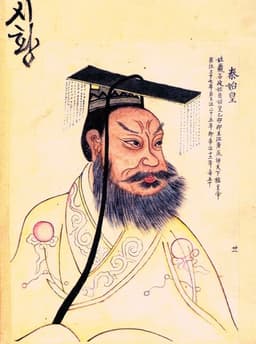
Qin Shi Huang
Emperor · Ancient
85.2Total
Basic Information
Born
-1090
-259
Died
-1030
-210
Era
Ancient
Ancient
Nationality
Zhou China
China
Occupation
Politician
Emperor
Civilization
Eastern
Eastern
Score Comparison
Military (10%)
60.0
80.0
Political (20%)
72.0
90.0
Influence (20%)
92.0
85.0
Legacy (20%)
87.0
90.0
Leadership (15%)
78.0
78.0
Strategy (15%)
55.0
82.0
TOTAL
78.8
85.2
Duke of Zhou — Complete Timeline
1042 BC
Regency for King Cheng of ZhouPolitical Action◆ Major
After King Wu's death, the Duke of Zhou served as regent for the young King Cheng. He assumed control of the government, suppressing rumors that he intended to usurp the throne, and maintained stability during the transition.
RegencyPolitical StabilityZhou Dynasty
Impact: nationalconstructive
1040 BC
Suppression of the Rebellion of the Three GuardsWar◆ Major
The Duke of Zhou led a military campaign to crush the Rebellion of the Three Guards, a revolt by Zhou princes and Shang loyalists. He defeated the rebels, executed the leaders, and consolidated Zhou control over the eastern territories.
Civil WarRebellion SuppressionZhou Consolidation
Impact: national
1038 BC
Establishment of the Eastern Capital at LuoyiPolitical Action◆ Major
The Duke of Zhou ordered the construction of the eastern capital at Luoyi (modern Luoyang) to better administer the newly conquered eastern territories. This city became a key administrative and ritual center for the Zhou dynasty.
Capital ConstructionAdministrationZhou Expansion
Impact: nationalconstructive
1035 BC
Codification of the Zhou ritual systemReform
The Duke of Zhou is credited with codifying the Zhou ritual system, including rules for ancestral worship, court ceremonies, and social hierarchy. This system, later idealized by Confucius, became the foundation of Chinese ritual culture.
Ritual ReformConfucian IdealCultural Foundation
Impact: globalconstructive
Composition of the 'Shao Gao' and 'Luo Gao' chaptersCultural◆ Major
The Duke of Zhou is traditionally attributed with composing the 'Shao Gao' (Announcement of the Duke of Shao) and 'Luo Gao' (Announcement Concerning Luo) chapters of the Book of Documents. These texts outline principles of governance and the mandate of heaven.
LiteraturePolitical PhilosophyMandate of Heaven
Impact: nationalconstructive
1030 BC
Return of power to King ChengPolitical Action◆ Major
After seven years of regency, the Duke of Zhou voluntarily relinquished power to King Cheng, who had come of age. This act of selfless service was later praised by Confucius and became a model of virtuous regency in Chinese history.
Regency EndVirtuous ConductConfucian Model
Impact: nationalconstructive
Qin Shi Huang — Complete Timeline
246 BC
Construction of the Mausoleum and Terracotta ArmyOther◆ Major
Qin Shi Huang commissioned a vast mausoleum complex near Xi'an, guarded by thousands of life-sized terracotta soldiers, horses, and chariots. The project employed hundreds of thousands of workers and reflected his obsession with immortality and imperial power.
Impact: global
230 BC
Conquest of the Six Warring StatesWar
From 230 to 221 BCE, Ying Zheng led the Qin state in a series of campaigns that conquered the Han, Zhao, Wei, Chu, Yan, and Qi states. This unified China under a single ruler for the first time, ending the Warring States period.
Impact: global
221 BC
Standardization of Writing, Currency, and MeasurementsReform◆ Major
Qin Shi Huang ordered the standardization of Chinese script, currency, and weights and measures across the unified empire. This facilitated administration, trade, and cultural integration, laying a foundation for future dynasties.
Impact: globalconstructive
Proclamation of the Qin DynastyPolitical Action
After conquering the last independent state, Ying Zheng declared himself Shi Huangdi (First Emperor), founding the Qin Dynasty. He adopted a new title to signify his supreme authority and initiated centralized imperial rule.
Impact: global
214 BC
Initiation of the Great Wall ConstructionOther◆ Major
Qin Shi Huang ordered the connection and extension of existing northern fortifications to create a unified defensive wall against nomadic Xiongnu raids. This project involved massive conscripted labor and became the precursor to the later Great Wall.
Impact: regional
213 BC
Burning of Books and Burying of ScholarsPolitical Action◆ Major
On the advice of Li Si, Qin Shi Huang ordered the burning of historical records and philosophical texts not aligned with Legalist doctrine. He also had 460 Confucian scholars buried alive to suppress dissent and consolidate ideological control.
Impact: nationaldestructive
Expert Analysis
Origins
Qin Shi Huang (259–210 BC), born Ying Zheng, ascended the throne of the Qin state at age 13. Through ruthless military campaigns and strategic alliances, he conquered the six other Warring States by 221 BC, ending centuries of fragmentation. The Duke of Zhou (11th century BC), brother of King Wu of Zhou, served as regent after King Wu's death, facing a precarious situation with a young king and rebellious factions.
Rise to Power
Qin Shi Huang's rise was marked by the systematic conquest of Han, Zhao, Wei, Chu, Yan, and Qi. He centralized power, crushed opposition, and proclaimed himself the First Emperor (Shi Huangdi). The Duke of Zhou's power came through his role as regent for his nephew, King Cheng. He suppressed the Rebellion of the Three Guards, consolidating Zhou authority and establishing a stable regency.
Leadership & Governance
Qin Shi Huang implemented radical reforms: standardized writing, currency, and measurements; built roads and canals; and initiated the Great Wall. He imposed Legalism, burning books and burying scholars to control ideology. The Duke of Zhou codified the Zhou ritual system (li), emphasizing moral governance and hierarchical order. He composed key texts like 'Shao Gao' and 'Luo Gao', influencing Confucian thought.
Triumph & Tragedy
Qin Shi Huang's triumphs include unification and infrastructure, but his harsh rule, massive conscription, and suppression of dissent led to rebellion soon after his death. The Duke of Zhou's triumphs include stabilizing the dynasty and creating a ritual framework that lasted centuries. His tragedy lies in accusations of usurpation, though he eventually proved loyal by stepping down when King Cheng came of age.
Character & Destiny
Qin Shi Huang was ambitious, ruthless, and obsessed with immortality, seeking elixirs and constructing a vast tomb. His destiny was to create a unified China but at great human cost. The Duke of Zhou was selfless, wise, and loyal, embodying Confucian virtues. His destiny was to be revered as a paragon of regency and ritual, though his influence was more ideological than imperial.
Legacy
Qin Shi Huang's legacy is monumental: the title 'Emperor' and the concept of a unified China. His standardization laid foundations for future dynasties, but his Legalist autocracy was rejected. The Duke of Zhou's legacy is cultural: his rituals shaped Confucianism and Chinese governance for millennia. Confucius himself admired him, and his model of virtuous regency influenced countless rulers.
Conclusion
Qin Shi Huang (Overall Score: 82.9) surpasses the Duke of Zhou (Overall Score: 74.7) in impact on unification and state-building, despite the latter's moral exemplar. Qin's concrete achievements in centralization and infrastructure created the template for imperial China, while the Duke's ritual system provided ethical foundations. Yet, the Duke's legacy endured longer in cultural memory. Ultimately, Qin Shi Huang's transformative power edges out the Duke's stabilizing wisdom.
**Scores:** Qin Shi Huang: Military 80, Political 90, Intellectual 85, Leadership 90, Diplomatic 78, Spiritual 82, Technological 85 | Duke of Zhou: Military 60, Political 72, Intellectual 92, Leadership 87, Diplomatic 78, Spiritual 55, Technological 79
Rankings
🥇
Qin Shi HuangLeader
Mil: 80.0Pol: 90.0Inf: 85.0
85.2
🥈
Duke of Zhou
Mil: 60.0Pol: 72.0Inf: 92.0
78.8
+6.4 behind
How This Comparison Works
Algorithm
Each figure is scored on 6 dimensions (0—100 scale) based on structured historical data: Military (10%), Political (20%), Influence (20%), Legacy (20%), Leadership (15%), Strategy (15%). The weighted total produces the final ranking.
Data Sources
Scores are computed from structured sub-indicators in the database. Scale factors adjust for era (Ancient ×0.85, Modern ×1.0) and civilization size (Eastern ×1.05, Other ×0.80) to account for differences in population and military scale.
Maximum 3 Figures
Comparisons are limited to 2—3 figures to ensure readability and statistical meaningfulness.
Error Margins
±5 points per dimension — Sub-scores are derived from historical records with inherent uncertainty. Two figures within 5 points on a dimension should be considered roughly equivalent in that area.
Total Score Accuracy
±3 points overall — The weighted combination of 6 dimensions produces a total score with approximately ±3 points of uncertainty. Differences of less than 3 points are not statistically significant— the figures are effectively tied.
Known Limitations
- Historical records are incomplete and uneven across civilizations
- Figures from oral-tradition societies may be underrepresented
- Occupation labels can misclassify multi-role figures
- Scores measure capability and impact, not moral character
- Quantitative scoring is a comparison tool, not absolute truth
Capability Radar
Military (10%) — Battles & Warfare
Battles
65
85
Win Rate
70
90
Expansion
55
90
Political (20%) — Governance & Reform
Reform
95
95
Diplomacy
85
75
Economy
80
90
Influence (20%) — Cultural & Global Reach
Cultural
95
95
Global
85
85
Legacy (20%) — Historical Impact
Historical
95
95
Longevity
95
95
Leadership (15%) — Power & Stability
Tenure
70
70
Stability
90
65
Strategy (15%) — Tactics & Innovation
Strategy
75
85
Tactics
60
80
Reform
80
95
Similar Comparisons
Comments & Discussion
DEFINITELY-NOT-SINOLOGIST6/17/2026
The Duke of Zhou is basically China's original "nice guy" archetype—voluntarily stepping down, writing ritual manuals, babysitting his nephew. Meanwhile, Qin Shi Huang was out there actually getting things done: standardized writing, built roads, linked the walls. Sure, he burned some books, but Rome wasn't built by committee. The Duke's legacy is a polite footnote; Qin's is the blueprint for every unified Chinese dynasty after him.
EMPIRES-HAVE-HISTORIES6/17/2026
Military historian here: stop romanticizing Qin's "genius." The Terracotta Army is cool, but his real achievement was logistics—drafting 300,000 peasants to build canals and walls using bronze-age tech is impressive, but it also triggered revolts. The Duke of Zhou didn't need mass conscription; he used fengjian feudalism to stabilize 1,000 miles of territory. Qin lasted 15 years. Zhou lasted 800. Call me when the First Emperor can match that track record.
古籍侦探6/17/2026
说真的,周公的“制礼作乐”被儒家吹过头了。他最大的贡献其实是镇压三监之乱后,把商朝遗民分散殖民——这哪是体面,分明是政治清洗。秦始皇坑儒是臭名昭著,但周公搞的分封制本质上也是把对手家底拆光。区别只在于一个用铁血,一个用“礼”,结果都是中央集权。别被课本骗了,俩人都狠。
数据刀客6/17/2026
别吵什么理想主义了,看硬数据:秦朝统一后道路系统达6800公里,全国文字统一到小篆,度量衡标准化率接近100%。周公呢?《尚书》里他的“德治”全是空话,周朝前两百年还有分封诸侯互相砍杀的记录。秦始皇烧书确实狠,但他至少是为了效率;周公的“礼”是效率杀手,说白了就是封建贵族互相装文明。
历史侦探的阴影6/17/2026
最烦这种“周公文明vs嬴政暴政”的二分法。周公摄政时杀了亲兄弟管叔,囚禁了蔡叔;秦始皇没杀过兄弟,只是流放了他们。再看文化遗产:秦始皇统一文字,后人能读懂《史记》;周朝的青铜铭文,现在学者还在猜。文明不是靠写道德故事决定的,是靠留下能用的基础设施。周公输在没修路,不是输在仁慈。