Loading...
Duke of Zhou vs Toyotomi Hideyoshi
Toyotomi Hideyoshi leads by 3.2 pts · 2 figures compared
…

Duke of Zhou
Politician · Ancient
78.8Total
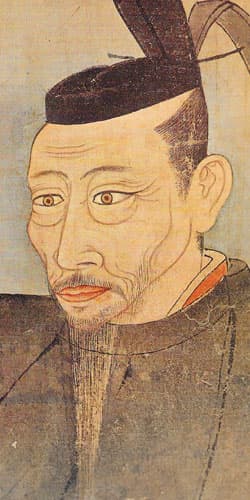
Toyotomi Hideyoshi
General · Modern
82.0Total
Basic Information
Born
-1090
1537
Died
-1030
1598
Era
Ancient
Modern
Nationality
Zhou China
Japan
Occupation
Politician
General
Civilization
Eastern
Eastern
Score Comparison
Military (10%)
60.0
79.9
Political (20%)
72.0
78.0
Influence (20%)
92.0
88.0
Legacy (20%)
87.0
80.0
Leadership (15%)
78.0
82.0
Strategy (15%)
55.0
80.4
TOTAL
78.8
82.0
Duke of Zhou — Complete Timeline
1042 BC
Regency for King Cheng of ZhouPolitical Action◆ Major
After King Wu's death, the Duke of Zhou served as regent for the young King Cheng. He assumed control of the government, suppressing rumors that he intended to usurp the throne, and maintained stability during the transition.
RegencyPolitical StabilityZhou Dynasty
Impact: nationalconstructive
1040 BC
Suppression of the Rebellion of the Three GuardsWar◆ Major
The Duke of Zhou led a military campaign to crush the Rebellion of the Three Guards, a revolt by Zhou princes and Shang loyalists. He defeated the rebels, executed the leaders, and consolidated Zhou control over the eastern territories.
Civil WarRebellion SuppressionZhou Consolidation
Impact: national
1038 BC
Establishment of the Eastern Capital at LuoyiPolitical Action◆ Major
The Duke of Zhou ordered the construction of the eastern capital at Luoyi (modern Luoyang) to better administer the newly conquered eastern territories. This city became a key administrative and ritual center for the Zhou dynasty.
Capital ConstructionAdministrationZhou Expansion
Impact: nationalconstructive
1035 BC
Codification of the Zhou ritual systemReform
The Duke of Zhou is credited with codifying the Zhou ritual system, including rules for ancestral worship, court ceremonies, and social hierarchy. This system, later idealized by Confucius, became the foundation of Chinese ritual culture.
Ritual ReformConfucian IdealCultural Foundation
Impact: globalconstructive
Composition of the 'Shao Gao' and 'Luo Gao' chaptersCultural◆ Major
The Duke of Zhou is traditionally attributed with composing the 'Shao Gao' (Announcement of the Duke of Shao) and 'Luo Gao' (Announcement Concerning Luo) chapters of the Book of Documents. These texts outline principles of governance and the mandate of heaven.
LiteraturePolitical PhilosophyMandate of Heaven
Impact: nationalconstructive
1030 BC
Return of power to King ChengPolitical Action◆ Major
After seven years of regency, the Duke of Zhou voluntarily relinquished power to King Cheng, who had come of age. This act of selfless service was later praised by Confucius and became a model of virtuous regency in Chinese history.
Regency EndVirtuous ConductConfucian Model
Impact: nationalconstructive
Toyotomi Hideyoshi — Complete Timeline
1583 AD
Battle of ShizugatakeWar◆ Major
Hideyoshi defeated his rival Shibata Katsuie at the Battle of Shizugatake, solidifying his control over central Japan. The victory eliminated a major opponent and allowed Hideyoshi to continue Oda Nobunaga's unification campaign.
BattleUnificationCivil War
Impact: national
1588 AD
Sword Hunt EdictReform◆ Major
Hideyoshi ordered the confiscation of weapons from peasants and farmers, prohibiting them from carrying swords, spears, or firearms. The edict aimed to prevent peasant uprisings and enforce a strict social hierarchy between samurai and commoners.
Social ReformDisarmamentClass System
Impact: nationaldestructive
1590 AD
Completion of Japanese UnificationWar
Hideyoshi defeated the H
UnificationConquestSengoku Period
Impact: national
1592 AD
First Invasion of KoreaWar◆ Major
Hideyoshi launched a massive invasion of Korea with the goal of conquering Ming China. Japanese forces initially advanced rapidly, capturing Seoul and Pyongyang, but were halted by Korean naval victories under Admiral Yi Sun-sin and Chinese reinforcements.
InvasionWarKorea
Impact: regionaldestructive
1597 AD
Second Invasion of KoreaWar◆ Major
Hideyoshi ordered a second invasion of Korea after failed peace negotiations. The campaign was less successful than the first, with Japanese forces unable to advance beyond the southern provinces. The invasion ended with Hideyoshi's death in 1598.
InvasionWarKorea
Impact: regionaldestructive
Expert Analysis
Origins
Toyotomi Hideyoshi (1537-1598) was born a peasant's son in Nakamura, Owari Province, during Japan's chaotic Sengoku period. His humble beginnings shaped his pragmatic and ambitious nature. He rose through the ranks as a sandal-bearer for Oda Nobunaga, eventually becoming one of his most trusted generals. In contrast, the Duke of Zhou (11th century BCE) was a royal prince, the fourth son of King Wen of Zhou and brother of King Wu. Born into the ruling house, he was steeped in Confucian ideals of propriety and governance. His origins provided him with legitimacy and a mandate to rule, whereas Hideyoshi had to earn every shred of authority through military prowess and political cunning.
Rise to Power
Hideyoshi's rise is a testament to meritocracy. After Nobunaga's death in 1582, Hideyoshi avenged his lord at the Battle of Shizugatake, defeating rival Akechi Mitsuhide. He then outmaneuvered other contenders like Tokugawa Ieyasu, securing control over central Japan. By 1590, he completed the unification of Japan through a combination of military campaigns and strategic alliances. The Duke of Zhou's rise was more conventional: after King Wu's death, he served as regent for his young nephew King Cheng. He solidified his authority by crushing the Rebellion of the Three Guards, led by his own brothers who opposed his regency. His rise was not about personal ambition but about preserving the dynasty and ensuring stability.
Leadership & Governance
Hideyoshi was a visionary but ruthless leader. He implemented the Sword Hunt Edict (1588), disarming peasants to prevent uprisings, and conducted land surveys to centralize tax collection. He also enacted social stratification, freezing class mobility. His governance was pragmatic, focusing on consolidation and expansion. The Duke of Zhou, by contrast, is celebrated for codifying the Zhou ritual system (li), which emphasized hierarchy, filial piety, and moral conduct. He established the Eastern Capital at Luoyi to administer the realm and composed key texts like the 'Shao Gao' and 'Luo Gao' chapters of the Book of Documents. His leadership was ideological, shaping Chinese political philosophy for millennia. Hideyoshi's governance was authoritarian and expansionist; the Duke's was moral and institutional.
Triumph & Tragedy
Hideyoshi's greatest triumph was unifying Japan after centuries of war. However, his tragic flaw was hubris. He launched two invasions of Korea (1592-1598) in a failed attempt to conquer China, draining Japan's resources and leading to his dynasty's collapse after his death. The Duke of Zhou's triumph was stabilizing the nascent Zhou dynasty and creating a lasting governance model. His tragedy is less personal: his regency was criticized by contemporaries who questioned his motives, and he had to suppress his own brothers. Yet he is remembered as a paragon of virtue, while Hideyoshi's legacy is tainted by his overreach.
Character & Destiny
Hideyoshi was charismatic, shrewd, and relentless. His peasant origins gave him a common touch, but also a desperate need for validation, leading to grandiose projects. His destiny was to rise from nothing to become Japan's absolute ruler, but his inability to secure a lasting succession led to the Tokugawa shogunate. The Duke of Zhou was selfless, wise, and disciplined. He famously offered to die in place of King Cheng when the king fell ill, demonstrating his loyalty. His destiny was to be the model regent, whose ideals would be revered by Confucius and later Chinese civilization. Hideyoshi's character drove him to conquer; the Duke's character drove him to serve.
Legacy
Hideyoshi's legacy is mixed. He unified Japan and laid foundations for the Edo period, but his Korean invasions caused immense suffering and left Japan isolated. The Sword Hunt and class system persisted for centuries. The Duke of Zhou's legacy is overwhelmingly positive. He is a cultural icon of wisdom and virtue, credited with creating the ritual system that underpinned Chinese society for over 2,000 years. Confucius himself looked to the Duke as a role model. Hideyoshi's impact was immediate and tangible; the Duke's was philosophical and enduring.
Conclusion
In comparing these two figures, the score gap of 3.2 points favoring Hideyoshi reflects his higher military and political scores (M=80, P=78) versus the Duke's lower martial prowess (M=60) but superior ideological influence (I=92 vs 88). Hideyoshi's unification of Japan was a concrete achievement, but his reckless ambition and failed invasions diminish his overall effectiveness. The Duke of Zhou, though less militarily dominant, created a system that shaped an entire civilization. On balance, Hideyoshi's numerical advantage is justified by his transformative impact on Japan's political landscape, but the Duke's moral and philosophical contributions make him the more profound historical figure. Hideyoshi wins on raw power and action; the Duke wins on wisdom and lasting legacy. The choice depends on whether one values immediate results or enduring principles.
Rankings
🥇
Toyotomi HideyoshiLeader
Mil: 79.9Pol: 78.0Inf: 88.0
82.0
🥈
Duke of Zhou
Mil: 60.0Pol: 72.0Inf: 92.0
78.8
+3.2 behind
How This Comparison Works
Algorithm
Each figure is scored on 6 dimensions (0—100 scale) based on structured historical data: Military (10%), Political (20%), Influence (20%), Legacy (20%), Leadership (15%), Strategy (15%). The weighted total produces the final ranking.
Data Sources
Scores are computed from structured sub-indicators in the database. Scale factors adjust for era (Ancient ×0.85, Modern ×1.0) and civilization size (Eastern ×1.05, Other ×0.80) to account for differences in population and military scale.
Maximum 3 Figures
Comparisons are limited to 2—3 figures to ensure readability and statistical meaningfulness.
Error Margins
±5 points per dimension — Sub-scores are derived from historical records with inherent uncertainty. Two figures within 5 points on a dimension should be considered roughly equivalent in that area.
Total Score Accuracy
±3 points overall — The weighted combination of 6 dimensions produces a total score with approximately ±3 points of uncertainty. Differences of less than 3 points are not statistically significant— the figures are effectively tied.
Known Limitations
- Historical records are incomplete and uneven across civilizations
- Figures from oral-tradition societies may be underrepresented
- Occupation labels can misclassify multi-role figures
- Scores measure capability and impact, not moral character
- Quantitative scoring is a comparison tool, not absolute truth
Capability Radar
Military (10%) — Battles & Warfare
Battles
65
85
Win Rate
70
88
Expansion
55
80
Political (20%) — Governance & Reform
Reform
95
95
Diplomacy
85
80
Economy
80
90
Influence (20%) — Cultural & Global Reach
Cultural
95
85
Global
85
70
Legacy (20%) — Historical Impact
Historical
95
90
Longevity
95
85
Leadership (15%) — Power & Stability
Tenure
70
85
Stability
90
75
Strategy (15%) — Tactics & Innovation
Strategy
75
92
Tactics
60
90
Reform
80
95
Similar Comparisons
Comments & Discussion
No comments yet. Be the first to share your thoughts!