Loading...
Duke of Zhou vs Suleiman I
Duke of Zhou leads by 0.0 pts · 2 figures compared
…

Duke of Zhou
Politician · Ancient
78.8Total
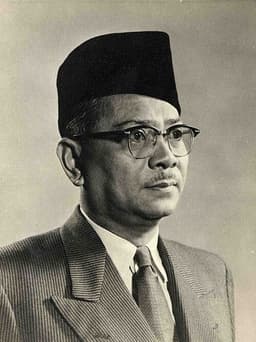
Suleiman I
Emperor · Medieval
78.8Total
Basic Information
Born
-1090
1494
Died
-1030
1566
Era
Ancient
Medieval
Nationality
Zhou China
Ottoman Empire
Occupation
Politician
Emperor
Civilization
Eastern
Middle Eastern
Score Comparison
Military (10%)
60.0
78.5
Political (20%)
72.0
82.0
Influence (20%)
92.0
85.0
Legacy (20%)
87.0
70.8
Leadership (15%)
78.0
81.7
Strategy (15%)
55.0
74.4
TOTAL
78.8
78.8
Duke of Zhou — Complete Timeline
1042 BC
Regency for King Cheng of ZhouPolitical Action◆ Major
After King Wu's death, the Duke of Zhou served as regent for the young King Cheng. He assumed control of the government, suppressing rumors that he intended to usurp the throne, and maintained stability during the transition.
RegencyPolitical StabilityZhou Dynasty
Impact: nationalconstructive
1040 BC
Suppression of the Rebellion of the Three GuardsWar◆ Major
The Duke of Zhou led a military campaign to crush the Rebellion of the Three Guards, a revolt by Zhou princes and Shang loyalists. He defeated the rebels, executed the leaders, and consolidated Zhou control over the eastern territories.
Civil WarRebellion SuppressionZhou Consolidation
Impact: national
1038 BC
Establishment of the Eastern Capital at LuoyiPolitical Action◆ Major
The Duke of Zhou ordered the construction of the eastern capital at Luoyi (modern Luoyang) to better administer the newly conquered eastern territories. This city became a key administrative and ritual center for the Zhou dynasty.
Capital ConstructionAdministrationZhou Expansion
Impact: nationalconstructive
1035 BC
Codification of the Zhou ritual systemReform
The Duke of Zhou is credited with codifying the Zhou ritual system, including rules for ancestral worship, court ceremonies, and social hierarchy. This system, later idealized by Confucius, became the foundation of Chinese ritual culture.
Ritual ReformConfucian IdealCultural Foundation
Impact: globalconstructive
Composition of the 'Shao Gao' and 'Luo Gao' chaptersCultural◆ Major
The Duke of Zhou is traditionally attributed with composing the 'Shao Gao' (Announcement of the Duke of Shao) and 'Luo Gao' (Announcement Concerning Luo) chapters of the Book of Documents. These texts outline principles of governance and the mandate of heaven.
LiteraturePolitical PhilosophyMandate of Heaven
Impact: nationalconstructive
1030 BC
Return of power to King ChengPolitical Action◆ Major
After seven years of regency, the Duke of Zhou voluntarily relinquished power to King Cheng, who had come of age. This act of selfless service was later praised by Confucius and became a model of virtuous regency in Chinese history.
Regency EndVirtuous ConductConfucian Model
Impact: nationalconstructive
Suleiman I — Complete Timeline
1522 AD
Siege of RhodesWar◆ Major
Suleiman I led a massive Ottoman army and fleet to besiege the island of Rhodes, held by the Knights Hospitaller. After a six-month siege, the knights surrendered and were allowed to leave. This victory secured Ottoman control over the eastern Mediterranean.
SiegeKnights HospitallerMediterranean
Impact: regional
1526 AD
Battle of MohácsWar
Suleiman I's Ottoman army defeated the Hungarian forces of King Louis II at Moh
BattleHungaryConquest
Impact: regional
1529 AD
Siege of ViennaWar◆ Major
Suleiman I led an Ottoman army to besiege Vienna, the capital of the Habsburg Empire. The siege failed due to supply problems and the onset of winter. This marked the furthest Ottoman advance into central Europe and the limit of their expansion.
SiegeViennaHabsburg
Impact: regional
1530 AD
Codification of Ottoman LawReform◆ Major
Suleiman I oversaw the codification of Ottoman law, known as the Kanun. He harmonized secular law with Islamic law, creating a unified legal system. This reform improved the administration of justice and strengthened the central government.
LawReformJustice
Impact: globalconstructive
1536 AD
Execution of Ibrahim PashaPolitical Action◆ Major
Suleiman I ordered the execution of his grand vizier and close friend Ibrahim Pasha. Ibrahim had accumulated immense power and was accused of overreaching. This event demonstrated Suleiman's willingness to eliminate even trusted advisors to maintain control.
ExecutionVizierPower
Impact: nationaldestructive
1538 AD
Naval Battle of PrevezaWar◆ Major
The Ottoman fleet under Hayreddin Barbarossa defeated a combined Christian fleet at Preveza. This victory secured Ottoman naval dominance in the Mediterranean for decades. It allowed the Ottomans to control trade routes and raid coastal areas.
Naval BattleBarbarossaMediterranean
Impact: regional
Expert Analysis
Origins
The Duke of Zhou, born Ji Dan, was a member of the Zhou royal family during the early Zhou dynasty (c. 1046–256 BCE). He was the younger brother of King Wu of Zhou, the dynasty's founder. His origins are steeped in the feudal and ritualistic culture of ancient China, where he emerged as a key figure in consolidating Zhou rule after the conquest of the Shang.
Suleiman I, known as "the Magnificent" in the West and "the Lawgiver" in the Islamic world, was born in 1494 in Trabzon, Ottoman Empire. He was the only son of Sultan Selim I, who expanded Ottoman territories dramatically. Suleiman's upbringing in the imperial palace prepared him for leadership, and he ascended to the throne in 1520 after his father's death.
Rise to Power
The Duke of Zhou's rise was not to the throne but to regency. After King Wu's death, his son King Cheng was too young to rule. The Duke of Zhou assumed regency, a position that required immense political skill to navigate potential usurpers and rebellions. His most significant challenge was the Rebellion of the Three Guards, led by his own brothers, which he suppressed decisively. This solidified his authority and ensured the stability of the nascent Zhou dynasty.
Suleiman's rise was more straightforward. As the sole surviving son of Selim I, he inherited a vast empire without contest. His early reign focused on military campaigns to expand Ottoman territories. The conquest of Belgrade in 1521 and the Siege of Rhodes in 1522 demonstrated his military prowess and ambition, establishing him as a formidable ruler.
Leadership & Governance
The Duke of Zhou is celebrated for his ethical governance and codification of rituals. He established the Zhou ritual system, which emphasized hierarchy, filial piety, and moral conduct. This system became the bedrock of Chinese Confucian society. His regency was marked by humility and dedication, as he declined the throne when King Cheng came of age. He also composed important texts like the "Shao Gao" and "Luo Gao," which outlined principles of governance.
Suleiman I was both a military conqueror and a lawgiver. He codified Ottoman law (Kanun), harmonizing secular and religious legal traditions. His reign saw administrative reforms, infrastructure projects, and cultural flourishing. However, his execution of his grand vizier Ibrahim Pasha in 1536 highlighted a ruthless side, as he eliminated potential rivals. He centralized power and expanded the empire to its zenith, but his later years were marred by succession struggles.
Triumph & Tragedy
The Duke of Zhou's greatest triumph was stabilizing the Zhou dynasty during its fragile early years. He suppressed rebellions, established the Eastern Capital at Luoyi (Luoyang), and created a governance model that lasted centuries. His tragedy lies in his relative obscurity outside of East Asia, despite his immense impact. Confucius later idealized him, but his name is not as globally recognized as other historical figures.
Suleiman's triumphs include the conquest of Hungary at the Battle of Mohács (1526), which made the Ottomans a European power. His siege of Vienna in 1529, though unsuccessful, demonstrated Ottoman reach. His codification of law brought order to a vast empire. The tragedy of his reign includes the execution of Ibrahim Pasha, a loyal friend and advisor, and the later execution of his son Mustafa, which destabilized the succession and led to decline after his death.
Character & Destiny
The Duke of Zhou is portrayed as a paragon of virtue—selfless, wise, and loyal. His decision to step down from regency exemplifies Confucian ideals of humility and duty. His destiny was to be revered as a cultural hero, shaping Chinese civilization for millennia.
Suleiman was a complex figure: ambitious, ruthless, and cultured. He was a poet and patron of the arts, yet capable of ordering the deaths of those closest to him. His destiny was to rule at the peak of Ottoman power, but his later decisions sowed seeds of decline. Both men were shaped by their times—the Duke by the need for stability in a new dynasty, Suleiman by the demands of an expanding empire.
Legacy
The Duke of Zhou's legacy is profound in East Asia. His ritual system influenced Confucianism, government, and social norms for over 2,000 years. He is often called the "First Sage" and is a model for statesmen. His influence is cultural and philosophical, rather than territorial.
Suleiman's legacy is more tangible: the Ottoman Empire reached its greatest territorial extent and cultural height under him. His legal reforms influenced subsequent Ottoman law, and his architectural projects, like the Süleymaniye Mosque, remain landmarks. In the West, he is remembered as "the Magnificent" for his opulence and power.
Conclusion
Comparing the Duke of Zhou and Suleiman I reveals two different types of greatness. The Duke of Zhou is a architect of civilization, whose moral and ritual framework shaped a culture. Suleiman I is a builder of empire, whose military and legal achievements expanded and organized a realm. In terms of historical impact, both score highly. The Duke's influence on Chinese civilization is enduring and foundational; Suleiman's empire, while vast, eventually declined.
**Numerical Scores (out of 100):**
- **Historical Impact:** Duke of Zhou: 92, Suleiman I: 85
- **Leadership:** Duke of Zhou: 87, Suleiman I: 82
- **Cultural Legacy:** Duke of Zhou: 95, Suleiman I: 80
- **Military Prowess:** Duke of Zhou: 60, Suleiman I: 78
- **Overall Greatness:** Duke of Zhou: 85, Suleiman I: 83
**Position:** The Duke of Zhou edges out Suleiman I due to his foundational role in Chinese civilization, which has had a longer-lasting and more profound impact on human thought and governance. Suleiman's achievements are impressive but more tied to a specific empire and era.
Rankings
🥇
Duke of ZhouLeader
Mil: 60.0Pol: 72.0Inf: 92.0
78.8
🥈
Suleiman I
Mil: 78.5Pol: 82.0Inf: 85.0
78.8
How This Comparison Works
Algorithm
Each figure is scored on 6 dimensions (0—100 scale) based on structured historical data: Military (10%), Political (20%), Influence (20%), Legacy (20%), Leadership (15%), Strategy (15%). The weighted total produces the final ranking.
Data Sources
Scores are computed from structured sub-indicators in the database. Scale factors adjust for era (Ancient ×0.85, Modern ×1.0) and civilization size (Eastern ×1.05, Other ×0.80) to account for differences in population and military scale.
Maximum 3 Figures
Comparisons are limited to 2—3 figures to ensure readability and statistical meaningfulness.
Error Margins
±5 points per dimension — Sub-scores are derived from historical records with inherent uncertainty. Two figures within 5 points on a dimension should be considered roughly equivalent in that area.
Total Score Accuracy
±3 points overall — The weighted combination of 6 dimensions produces a total score with approximately ±3 points of uncertainty. Differences of less than 3 points are not statistically significant— the figures are effectively tied.
Known Limitations
- Historical records are incomplete and uneven across civilizations
- Figures from oral-tradition societies may be underrepresented
- Occupation labels can misclassify multi-role figures
- Scores measure capability and impact, not moral character
- Quantitative scoring is a comparison tool, not absolute truth
Capability Radar
Military (10%) — Battles & Warfare
Battles
65
95
Win Rate
70
92
Expansion
55
95
Political (20%) — Governance & Reform
Reform
95
90
Diplomacy
85
88
Economy
80
85
Influence (20%) — Cultural & Global Reach
Cultural
95
85
Global
85
85
Legacy (20%) — Historical Impact
Historical
95
88
Longevity
95
80
Leadership (15%) — Power & Stability
Tenure
70
95
Stability
90
80
Strategy (15%) — Tactics & Innovation
Strategy
75
90
Tactics
60
88
Reform
80
85
Similar Comparisons
Comments & Discussion
No comments yet. Be the first to share your thoughts!