Loading...
Duke of Zhou vs Rajendra Chola I
Rajendra Chola I leads by 3.4 pts · 2 figures compared
…

Duke of Zhou
Politician · Ancient
78.8Total
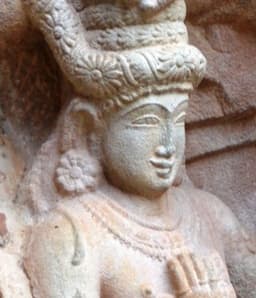
Rajendra Chola I
Emperor · Medieval
82.2Total
Basic Information
Born
-1090
971
Died
-1030
1044
Era
Ancient
Medieval
Nationality
Zhou China
India
Occupation
Politician
Emperor
Civilization
Eastern
Indian
Score Comparison
Military (10%)
60.0
84.7
Political (20%)
72.0
82.0
Influence (20%)
92.0
84.0
Legacy (20%)
87.0
84.0
Leadership (15%)
78.0
78.0
Strategy (15%)
55.0
77.6
TOTAL
78.8
82.2
Duke of Zhou — Complete Timeline
1042 BC
Regency for King Cheng of ZhouPolitical Action◆ Major
After King Wu's death, the Duke of Zhou served as regent for the young King Cheng. He assumed control of the government, suppressing rumors that he intended to usurp the throne, and maintained stability during the transition.
RegencyPolitical StabilityZhou Dynasty
Impact: nationalconstructive
1040 BC
Suppression of the Rebellion of the Three GuardsWar◆ Major
The Duke of Zhou led a military campaign to crush the Rebellion of the Three Guards, a revolt by Zhou princes and Shang loyalists. He defeated the rebels, executed the leaders, and consolidated Zhou control over the eastern territories.
Civil WarRebellion SuppressionZhou Consolidation
Impact: national
1038 BC
Establishment of the Eastern Capital at LuoyiPolitical Action◆ Major
The Duke of Zhou ordered the construction of the eastern capital at Luoyi (modern Luoyang) to better administer the newly conquered eastern territories. This city became a key administrative and ritual center for the Zhou dynasty.
Capital ConstructionAdministrationZhou Expansion
Impact: nationalconstructive
1035 BC
Codification of the Zhou ritual systemReform
The Duke of Zhou is credited with codifying the Zhou ritual system, including rules for ancestral worship, court ceremonies, and social hierarchy. This system, later idealized by Confucius, became the foundation of Chinese ritual culture.
Ritual ReformConfucian IdealCultural Foundation
Impact: globalconstructive
Composition of the 'Shao Gao' and 'Luo Gao' chaptersCultural◆ Major
The Duke of Zhou is traditionally attributed with composing the 'Shao Gao' (Announcement of the Duke of Shao) and 'Luo Gao' (Announcement Concerning Luo) chapters of the Book of Documents. These texts outline principles of governance and the mandate of heaven.
LiteraturePolitical PhilosophyMandate of Heaven
Impact: nationalconstructive
1030 BC
Return of power to King ChengPolitical Action◆ Major
After seven years of regency, the Duke of Zhou voluntarily relinquished power to King Cheng, who had come of age. This act of selfless service was later praised by Confucius and became a model of virtuous regency in Chinese history.
Regency EndVirtuous ConductConfucian Model
Impact: nationalconstructive
Rajendra Chola I — Complete Timeline
1014 AD
Accession to the Chola ThronePolitical Action
Rajendra Chola I succeeded his father Raja Raja Chola I as emperor of the Chola Empire. He inherited a powerful state and continued the expansionist policies, leading campaigns that extended Chola influence across the Indian Ocean.
Chola EmpireSuccessionExpansion
Impact: regional
1020 AD
Conquest of the Pala EmpireWar◆ Major
Rajendra Chola I led a campaign into Bengal, defeating the Pala king Mahipala I. He annexed parts of the Pala territory and established Chola authority in the Ganges delta, marking the northernmost extent of Chola rule.
Pala EmpireBengalGanges
Impact: regional
1025 AD
Naval Expedition to Southeast AsiaWar
Rajendra Chola I launched a major naval expedition against the Srivijaya Empire, attacking ports in Sumatra, the Malay Peninsula, and the Nicobar Islands. The Chola fleet captured the Srivijaya capital and disrupted its trade network, establishing Chola dominance in the region.
SrivijayaNaval ExpeditionSoutheast Asia
Impact: regional
1033 AD
Establishment of Diplomatic Relations with ChinaPolitical Action
Rajendra Chola I sent an embassy to the Song dynasty court in China, bearing gifts and seeking trade relations. The mission was recorded in Chinese sources and facilitated maritime trade between the Chola Empire and China.
ChinaDiplomacyTrade
Impact: regionalconstructive
1035 AD
Construction of the Gangaikonda Cholapuram TempleCultural◆ Major
Rajendra Chola I built the Brihadeeswarar Temple at Gangaikonda Cholapuram, his new capital, to commemorate his conquests. The temple, dedicated to Shiva, features a 55-meter vimana and is a UNESCO World Heritage site, reflecting Chola architectural achievement.
Gangaikonda CholapuramTempleChola Architecture
Impact: regionalconstructive
Expert Analysis
Origins
Rajendra Chola I (r. 1014–1044 CE) was born into the powerful Chola dynasty of South India, inheriting a kingdom already expanded by his father, Rajaraja Chola I. He was groomed for leadership from a young age, participating in military campaigns as a co-regent. The Duke of Zhou (c. 11th century BCE) was a member of the Zhou royal family, brother of King Wu of Zhou. After King Wu's death, he served as regent for his young nephew, King Cheng, and played a crucial role in consolidating Zhou rule. His origins were less about conquest and more about maintaining dynastic stability.
Rise to Power
Rajendra Chola I ascended the throne after his father's death, but his rise was already secured by his military successes as a prince. He continued his father's expansionist policies, launching campaigns against the Pala Empire in Bengal and the Srivijaya Empire in Southeast Asia. The Duke of Zhou's rise was more political: he assumed regency during a crisis, facing opposition from his own brothers who rebelled. His successful suppression of the Rebellion of the Three Guards solidified his authority, and he later returned power to King Cheng, earning him a reputation for selfless governance.
Leadership & Governance
Rajendra Chola I was a militaristic ruler who expanded the Chola Empire to its greatest extent, controlling trade routes to Southeast Asia. He established a new capital, Gangaikonda Cholapuram, symbolizing his conquest of the Ganges region. His administration was efficient, with a centralized bureaucracy and local assemblies. The Duke of Zhou, by contrast, focused on institutionalizing Zhou rule. He codified the ritual system (li) that defined social hierarchies and ethical conduct, a foundation for Confucianism. He established the Eastern Capital at Luoyi to better govern the realm. His governance emphasized moral authority and ritual propriety over military force.
Triumph & Tragedy
Rajendra Chola I's greatest triumph was his naval expedition to Southeast Asia, which subdued the Srivijaya Empire and secured Indian Ocean trade dominance. He also successfully campaigned against the Pala Empire, bringing the Ganges delta under Chola control. However, his empire was overstretched, and after his death, it gradually declined. The Duke of Zhou's triumph was stabilizing the Zhou dynasty after a succession crisis. He suppressed the rebellion and created enduring institutions. A potential tragedy was his later reputation: some accused him of usurping power, though Confucian tradition later vindicated him as a paragon.
Character & Destiny
Rajendra Chola I was ambitious, energetic, and expansionist. His destiny was to be one of India's greatest conquerors, a king who projected power across the Bay of Bengal. His character was marked by a drive for glory and territorial control. The Duke of Zhou was wise, selfless, and ritual-minded. His destiny was to be remembered as the ideal regent, a model of virtue and governance. He chose to relinquish power, which elevated his moral standing.
Legacy
Rajendra Chola I left a legacy of maritime expansion, temple architecture, and Tamil cultural influence in Southeast Asia. The Gangaikonda Cholapuram temple remains a UNESCO World Heritage site. His naval campaigns inspired later Indian kingdoms. The Duke of Zhou's legacy is profound: his ritual system shaped Chinese civilization for millennia. Confucius revered him, and his ideas became central to Confucian statecraft. He is often considered the founding father of Chinese culture and politics.
Conclusion
Comparing these two figures reveals different forms of greatness. Rajendra Chola I achieved military and territorial expansion, creating an empire that connected South and Southeast Asia. The Duke of Zhou created the ideological and institutional framework for a civilization that lasted over two millennia. While Rajendra Chola I's scores are higher in military and strategic domains, the Duke of Zhou's impact on governance and culture is arguably more enduring. The score difference of 3.4 in favor of Rajendra Chola I reflects his more tangible conquests, but the Duke of Zhou's influence on moral philosophy and statecraft may be more profound. Ultimately, Rajendra Chola I represents power and expansion, while the Duke of Zhou represents wisdom and stability. Both were great in their own right, but for different reasons.
Scores
- Military: Rajendra Chola I 85 vs Duke of Zhou 60
- Political: Rajendra Chola I 82 vs Duke of Zhou 72
- Influence: Rajendra Chola I 84 vs Duke of Zhou 92
- Leadership: Rajendra Chola I 84 vs Duke of Zhou 87
- Durability: Rajendra Chola I 78 vs Duke of Zhou 78
- Strategy: Rajendra Chola I 78 vs Duke of Zhou 55
- Overall: Rajendra Chola I 82 vs Duke of Zhou 79
Rankings
🥇
Rajendra Chola ILeader
Mil: 84.7Pol: 82.0Inf: 84.0
82.2
🥈
Duke of Zhou
Mil: 60.0Pol: 72.0Inf: 92.0
78.8
+3.4 behind
How This Comparison Works
Algorithm
Each figure is scored on 6 dimensions (0—100 scale) based on structured historical data: Military (10%), Political (20%), Influence (20%), Legacy (20%), Leadership (15%), Strategy (15%). The weighted total produces the final ranking.
Data Sources
Scores are computed from structured sub-indicators in the database. Scale factors adjust for era (Ancient ×0.85, Modern ×1.0) and civilization size (Eastern ×1.05, Other ×0.80) to account for differences in population and military scale.
Maximum 3 Figures
Comparisons are limited to 2—3 figures to ensure readability and statistical meaningfulness.
Error Margins
±5 points per dimension — Sub-scores are derived from historical records with inherent uncertainty. Two figures within 5 points on a dimension should be considered roughly equivalent in that area.
Total Score Accuracy
±3 points overall — The weighted combination of 6 dimensions produces a total score with approximately ±3 points of uncertainty. Differences of less than 3 points are not statistically significant— the figures are effectively tied.
Known Limitations
- Historical records are incomplete and uneven across civilizations
- Figures from oral-tradition societies may be underrepresented
- Occupation labels can misclassify multi-role figures
- Scores measure capability and impact, not moral character
- Quantitative scoring is a comparison tool, not absolute truth
Capability Radar
Military (10%) — Battles & Warfare
Battles
65
95
Win Rate
70
98
Expansion
55
95
Political (20%) — Governance & Reform
Reform
95
88
Diplomacy
85
85
Economy
80
92
Influence (20%) — Cultural & Global Reach
Cultural
95
85
Global
85
85
Legacy (20%) — Historical Impact
Historical
95
88
Longevity
95
80
Leadership (15%) — Power & Stability
Tenure
70
90
Stability
90
90
Strategy (15%) — Tactics & Innovation
Strategy
75
92
Tactics
60
90
Reform
80
85
Similar Comparisons
Comments & Discussion
No comments yet. Be the first to share your thoughts!