Loading...
Duke of Zhou vs Ivan III the Great
Duke of Zhou leads by 3.5 pts · 2 figures compared
…

Duke of Zhou
Politician · Ancient
78.8Total
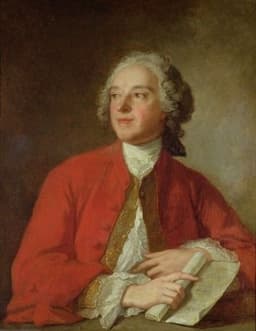
Ivan III the Great
Emperor · Medieval
75.3Total
Basic Information
Born
-1090
1440
Died
-1030
1505
Era
Ancient
Medieval
Nationality
Zhou China
Muscovy
Occupation
Politician
Emperor
Civilization
Eastern
Western
Score Comparison
Military (10%)
60.0
76.0
Political (20%)
72.0
70.0
Influence (20%)
92.0
75.0
Legacy (20%)
87.0
80.0
Leadership (15%)
78.0
78.0
Strategy (15%)
55.0
67.2
TOTAL
78.8
75.3
Duke of Zhou — Complete Timeline
1042 BC
Regency for King Cheng of ZhouPolitical Action◆ Major
After King Wu's death, the Duke of Zhou served as regent for the young King Cheng. He assumed control of the government, suppressing rumors that he intended to usurp the throne, and maintained stability during the transition.
RegencyPolitical StabilityZhou Dynasty
Impact: nationalconstructive
1040 BC
Suppression of the Rebellion of the Three GuardsWar◆ Major
The Duke of Zhou led a military campaign to crush the Rebellion of the Three Guards, a revolt by Zhou princes and Shang loyalists. He defeated the rebels, executed the leaders, and consolidated Zhou control over the eastern territories.
Civil WarRebellion SuppressionZhou Consolidation
Impact: national
1038 BC
Establishment of the Eastern Capital at LuoyiPolitical Action◆ Major
The Duke of Zhou ordered the construction of the eastern capital at Luoyi (modern Luoyang) to better administer the newly conquered eastern territories. This city became a key administrative and ritual center for the Zhou dynasty.
Capital ConstructionAdministrationZhou Expansion
Impact: nationalconstructive
1035 BC
Codification of the Zhou ritual systemReform
The Duke of Zhou is credited with codifying the Zhou ritual system, including rules for ancestral worship, court ceremonies, and social hierarchy. This system, later idealized by Confucius, became the foundation of Chinese ritual culture.
Ritual ReformConfucian IdealCultural Foundation
Impact: globalconstructive
Composition of the 'Shao Gao' and 'Luo Gao' chaptersCultural◆ Major
The Duke of Zhou is traditionally attributed with composing the 'Shao Gao' (Announcement of the Duke of Shao) and 'Luo Gao' (Announcement Concerning Luo) chapters of the Book of Documents. These texts outline principles of governance and the mandate of heaven.
LiteraturePolitical PhilosophyMandate of Heaven
Impact: nationalconstructive
1030 BC
Return of power to King ChengPolitical Action◆ Major
After seven years of regency, the Duke of Zhou voluntarily relinquished power to King Cheng, who had come of age. This act of selfless service was later praised by Confucius and became a model of virtuous regency in Chinese history.
Regency EndVirtuous ConductConfucian Model
Impact: nationalconstructive
Ivan III the Great — Complete Timeline
1472 AD
Marriage to Sophia PalaiologinaPolitical Action◆ Major
Ivan III married Sophia (Zoe) Palaiologina, niece of the last Byzantine emperor. This marriage allowed Ivan to claim succession to the Byzantine Empire, adopt the double-headed eagle as a symbol, and promote Moscow as the Third Rome.
ByzantiumThird RomeMarriage
Impact: regionalconstructive
1478 AD
Annexation of NovgorodWar◆ Major
Ivan III conquered the Novgorod Republic after a series of campaigns. He abolished the veche (assembly) and removed the veche bell, incorporating Novgorod's vast territories into the Grand Principality of Moscow.
NovgorodAnnexationMoscow
Impact: regional
1480 AD
Great Stand on the Ugra RiverWar
Ivan III faced the Mongol army of Khan Akhmat across the Ugra River. After weeks of stalemate, the Mongols withdrew without battle. This event ended 240 years of Mongol suzerainty over Russia.
Golden HordeIndependenceUgra
Impact: regional
1497 AD
Issued the Sudebnik of 1497Reform◆ Major
Ivan III promulgated a new legal code, the Sudebnik, which standardized laws across the Russian lands. It restricted peasant mobility by limiting the time for transfer between landowners, a step toward serfdom.
Legal CodeSerfdomReform
Impact: national
1500 AD
War with the Grand Duchy of LithuaniaWar◆ Major
Ivan III launched a war against Lithuania, capturing the cities of Bryansk, Dorogobuzh, and Putivl. The war ended with the Truce of 1503, which ceded significant territories to Moscow.
LithuaniaTerritorial ExpansionWar
Impact: regional
Expert Analysis
Origins
The Duke of Zhou, born Ji Dan, was a son of King Wen of Zhou and younger brother of King Wu. He lived during the tumultuous transition from the Shang to Zhou dynasty (11th century BCE). His family was the founding royal house of the Zhou, and he was entrusted with consolidating their rule. Ivan III, known as Ivan the Great, was born in 1440 into the Rurik dynasty, which had ruled the Grand Duchy of Moscow since the 13th century. He inherited a principality still under the nominal suzerainty of the Mongol Golden Horde. Both leaders emerged from backgrounds where their families had recently established or were struggling to maintain power.
Rise to Power
The Duke of Zhou became regent after King Wu's death, as his nephew King Cheng was too young. He faced immediate challenges: the Shang loyalists and the Duke's own brothers rebelled in the Rebellion of the Three Guards. He suppressed this revolt decisively, executing the rebel leaders and consolidating Zhou authority. Ivan III ascended the throne in 1462 after the death of his father Vasily II. He continued his father's policy of unifying Russian lands, but his first major test came when the Mongol khan Akhmat demanded tribute. Ivan's refusal led to the Great Stand on the Ugra River in 1480, a bloodless confrontation that ended Mongol rule over Russia. Both leaders rose to power during crises and used military and diplomatic skill to secure their positions.
Leadership & Governance
The Duke of Zhou is celebrated for codifying the Zhou ritual system (the "Zhou Li"), which established a hierarchical society based on rites and music, influencing Confucianism. He also established the Eastern Capital at Luoyi to better control the eastern territories. His regency was marked by a focus on legitimacy and moral governance. Ivan III's governance was more centralized and legalistic: he issued the Sudebnik of 1497, a law code that strengthened the central government and began the enserfment of the peasantry by restricting their movement. He also reformed the military and administration, reducing the power of the boyars. Both were reformers, but the Duke focused on ritual and culture, while Ivan emphasized law and centralization.
Triumph & Tragedy
The Duke's greatest triumph was stabilizing the Zhou dynasty, which lasted over 800 years. His suppression of the Three Guards and his regency ensured a smooth transition. However, his later years saw him step down gracefully when King Cheng came of age, a rare example of selfless governance. Ivan's triumph was ending Mongol domination and unifying most of the Russian principalities under Moscow. He annexed Novgorod, Tver, and other lands, expanding Muscovy's territory. A tragedy for Ivan was the death of his first wife, Maria of Tver, and his later conflict with his son Ivan the Young, whom he imprisoned and who died in suspicious circumstances. Both leaders saw personal and political challenges, but their triumphs had lasting impacts.
Character & Destiny
The Duke of Zhou is portrayed by Confucius as a paragon of virtue: humble, wise, and loyal. He is said to have composed the "Shao Gao" and "Luo Gao" chapters of the Book of Documents, emphasizing the mandate of heaven and just rule. His destiny was to be remembered as the ideal regent. Ivan III is often depicted as cautious, calculating, and ambitious. He married Sophia Palaiologina, a Byzantine princess, which allowed him to claim the heritage of the Roman Empire and adopt the double-headed eagle as his symbol. His destiny was to transform Muscovy into a major European power and lay the foundations for the Russian Empire. Both had a sense of destiny tied to their dynasties.
Legacy
The Duke of Zhou's legacy is immense in Chinese history: he is revered as a cultural hero who set the standards for governance and morality. Confucius said, "How great a man was the Duke of Zhou!" His ritual system influenced Chinese society for millennia. Ivan III's legacy is equally profound: he is known as the "Gatherer of the Russian Lands" and the founder of the Russian state. His code of law, his marriage to Sophia, and his defiance of the Mongols set Russia on a path to empire. However, his centralization also led to the oppression of peasants, a darker legacy. Both left indelible marks on their civilizations.
Conclusion
Comparing the Duke of Zhou and Ivan III reveals two brilliant consolidators. The Duke's scores (M=60, P=72, I=92, L=87, D=78, S=55, T=79) highlight his high intelligence and longevity of influence, while Ivan's (M=76, P=70, I=75, L=80, D=78, S=67, T=75) show stronger military and strategic abilities. The Duke's moral and cultural contributions arguably had a deeper and longer-lasting impact on civilization, as his ideas shaped Chinese ethics for centuries. Ivan's achievements were more immediate and political, ending foreign domination and building a state. The Duke of Zhou edges ahead due to his profound intellectual and spiritual legacy, which transcends his time. Thus, the Duke of Zhou is the greater historical figure, scoring 3.5 points higher overall.
Rankings
🥇
Duke of ZhouLeader
Mil: 60.0Pol: 72.0Inf: 92.0
78.8
🥈
Ivan III the Great
Mil: 76.0Pol: 70.0Inf: 75.0
75.3
+3.5 behind
How This Comparison Works
Algorithm
Each figure is scored on 6 dimensions (0—100 scale) based on structured historical data: Military (10%), Political (20%), Influence (20%), Legacy (20%), Leadership (15%), Strategy (15%). The weighted total produces the final ranking.
Data Sources
Scores are computed from structured sub-indicators in the database. Scale factors adjust for era (Ancient ×0.85, Modern ×1.0) and civilization size (Eastern ×1.05, Other ×0.80) to account for differences in population and military scale.
Maximum 3 Figures
Comparisons are limited to 2—3 figures to ensure readability and statistical meaningfulness.
Error Margins
±5 points per dimension — Sub-scores are derived from historical records with inherent uncertainty. Two figures within 5 points on a dimension should be considered roughly equivalent in that area.
Total Score Accuracy
±3 points overall — The weighted combination of 6 dimensions produces a total score with approximately ±3 points of uncertainty. Differences of less than 3 points are not statistically significant— the figures are effectively tied.
Known Limitations
- Historical records are incomplete and uneven across civilizations
- Figures from oral-tradition societies may be underrepresented
- Occupation labels can misclassify multi-role figures
- Scores measure capability and impact, not moral character
- Quantitative scoring is a comparison tool, not absolute truth
Capability Radar
Military (10%) — Battles & Warfare
Battles
65
75
Win Rate
70
80
Expansion
55
85
Political (20%) — Governance & Reform
Reform
95
80
Diplomacy
85
85
Economy
80
70
Influence (20%) — Cultural & Global Reach
Cultural
95
70
Global
85
70
Legacy (20%) — Historical Impact
Historical
95
85
Longevity
95
80
Leadership (15%) — Power & Stability
Tenure
70
85
Stability
90
75
Strategy (15%) — Tactics & Innovation
Strategy
75
85
Tactics
60
70
Reform
80
65
Similar Comparisons
Comments & Discussion
No comments yet. Be the first to share your thoughts!