Loading...
Duke of Zhou vs Helmuth von Moltke
Duke of Zhou leads by 2.6 pts · 2 figures compared
…

Duke of Zhou
Politician · Ancient
78.8Total
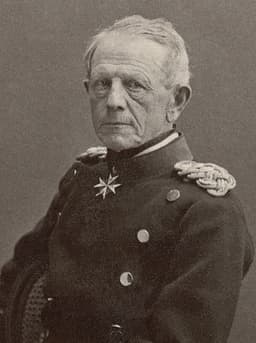
Helmuth von Moltke
General · Modern
76.2Total
Basic Information
Born
-1090
1800
Died
-1030
1891
Era
Ancient
Modern
Nationality
Zhou China
Prussia
Occupation
Politician
General
Civilization
Eastern
Western
Score Comparison
Military (10%)
60.0
65.0
Political (20%)
72.0
62.7
Influence (20%)
92.0
88.0
Legacy (20%)
87.0
70.0
Leadership (15%)
78.0
85.0
Strategy (15%)
55.0
80.6
TOTAL
78.8
76.2
Duke of Zhou — Complete Timeline
1042 BC
Regency for King Cheng of ZhouPolitical Action◆ Major
After King Wu's death, the Duke of Zhou served as regent for the young King Cheng. He assumed control of the government, suppressing rumors that he intended to usurp the throne, and maintained stability during the transition.
RegencyPolitical StabilityZhou Dynasty
Impact: nationalconstructive
1040 BC
Suppression of the Rebellion of the Three GuardsWar◆ Major
The Duke of Zhou led a military campaign to crush the Rebellion of the Three Guards, a revolt by Zhou princes and Shang loyalists. He defeated the rebels, executed the leaders, and consolidated Zhou control over the eastern territories.
Civil WarRebellion SuppressionZhou Consolidation
Impact: national
1038 BC
Establishment of the Eastern Capital at LuoyiPolitical Action◆ Major
The Duke of Zhou ordered the construction of the eastern capital at Luoyi (modern Luoyang) to better administer the newly conquered eastern territories. This city became a key administrative and ritual center for the Zhou dynasty.
Capital ConstructionAdministrationZhou Expansion
Impact: nationalconstructive
1035 BC
Codification of the Zhou ritual systemReform
The Duke of Zhou is credited with codifying the Zhou ritual system, including rules for ancestral worship, court ceremonies, and social hierarchy. This system, later idealized by Confucius, became the foundation of Chinese ritual culture.
Ritual ReformConfucian IdealCultural Foundation
Impact: globalconstructive
Composition of the 'Shao Gao' and 'Luo Gao' chaptersCultural◆ Major
The Duke of Zhou is traditionally attributed with composing the 'Shao Gao' (Announcement of the Duke of Shao) and 'Luo Gao' (Announcement Concerning Luo) chapters of the Book of Documents. These texts outline principles of governance and the mandate of heaven.
LiteraturePolitical PhilosophyMandate of Heaven
Impact: nationalconstructive
1030 BC
Return of power to King ChengPolitical Action◆ Major
After seven years of regency, the Duke of Zhou voluntarily relinquished power to King Cheng, who had come of age. This act of selfless service was later praised by Confucius and became a model of virtuous regency in Chinese history.
Regency EndVirtuous ConductConfucian Model
Impact: nationalconstructive
Helmuth von Moltke — Complete Timeline
1857 AD
Appointment as Chief of the Prussian General StaffPolitical Action
Moltke was appointed Chief of the Prussian General Staff, a position he held for 30 years. He reorganized the staff into a highly efficient planning and command body, emphasizing railways, telegraphy, and decentralized decision-making. This modernization was crucial for Prussia's subsequent victories.
Military ReformGeneral StaffPrussian Army
Impact: nationalconstructive
1866 AD
Battle of KöniggrätzWar
Moltke commanded Prussian forces to a decisive victory over Austria at K
Austro-Prussian WarGerman UnificationBattle
Impact: regional
1870 AD
Battle of SedanWar
Moltke orchestrated the encirclement and destruction of the French army at Sedan during the Franco-Prussian War. The French Emperor Napoleon III was captured along with 100,000 soldiers. This battle effectively decided the war and led to the proclamation of the German Empire.
Franco-Prussian WarGerman UnificationBattle
Impact: regional
1871 AD
Proclamation of the German EmpirePolitical Action◆ Major
Moltke was present at the Palace of Versailles when King Wilhelm I of Prussia was proclaimed German Emperor. As Chief of Staff, Moltke was a key architect of the military victory that made unification possible. He was later promoted to Field Marshal and ennobled.
German UnificationEmpireCeremony
Impact: regionalconstructive
Expert Analysis
Origins
**Duke of Zhou** (11th century BCE) was a member of the Zhou royal family, brother of King Wu of Zhou. After King Wu's death, he served as regent for his young nephew King Cheng. He is revered in Chinese tradition as a paragon of virtue and a foundational figure in Confucianism. His actions stabilized the fledgling Zhou dynasty after the conquest of the Shang.
**Helmuth von Moltke** (1800–1891) was a Prussian field marshal and chief of the Prussian General Staff. He came from a noble but modest family and rose through military ranks. He is celebrated as the architect of the wars that unified Germany under Prussian leadership. His strategic innovations revolutionized modern warfare.
Rise to Power
Duke of Zhou's rise came through familial duty and crisis. After King Wu's death, his son King Cheng was too young to rule. The Duke assumed regency, facing suspicion and rebellion from other royal relatives. He crushed the Rebellion of the Three Guards, consolidating Zhou authority and expanding the dynasty's territory. His power was informal but absolute, yet he willingly relinquished it when King Cheng came of age, setting a moral precedent.
Moltke's rise was more institutional. He was appointed Chief of the Prussian General Staff in 1857, a position he modernized and wielded with increasing influence. He developed a decentralized command system and emphasized railroads and mobilization schedules. His strategic plans were pivotal in the Danish War (1864), Austro-Prussian War (1866), and Franco-Prussian War (1870-71). He became a national hero and was elevated to the nobility.
Leadership & Governance
Duke of Zhou's leadership was moral and administrative. He codified the Zhou ritual system (li), which defined social hierarchy and governance for centuries. He also authored parts of the Book of Documents, emphasizing the Mandate of Heaven—that rulers must be virtuous to retain legitimacy. His regency was marked by selflessness; he did not usurp the throne despite having the power to do so. He established the eastern capital Luoyi to better administer the realm.
Moltke's leadership was strategic and logistical. He transformed the Prussian army into a highly efficient fighting force through meticulous planning and delegation. He advocated for a general staff system that allowed for rapid decision-making and adaptation on the battlefield. His leadership was less about personal charisma and more about institutional genius. He was a master of operational art, using railways and telegraphs to coordinate mass armies.
Triumph & Tragedy
Duke of Zhou's triumph was the stabilization of the Zhou dynasty. He defeated the rebellion, expanded territory, and set the cultural foundation for Chinese civilization. His tragedy? Perhaps the personal cost of suspicion and the burden of power, but historical records emphasize his success. His legacy is unambiguously positive in Chinese history.
Moltke's triumphs were the stunning victories at Königgrätz (1866) and Sedan (1870), which led to German unification in 1871. He was hailed as a military genius. Yet his tragedy was the unintended consequence of his success: the creation of a powerful, militaristic German Empire that would later contribute to the world wars. He died before seeing this, but his legacy is mixed—a brilliant tactician whose work enabled future destruction.
Character & Destiny
Duke of Zhou is depicted as wise, humble, and dutiful. Confucius later held him up as the ideal ruler. His destiny was to be the founding sage of Zhou governance, his name synonymous with virtuous regency. He voluntarily stepped down, demonstrating that power should serve morality.
Moltke was reserved, intellectual, and deeply analytical. He was known as "the Great Silent One" for his taciturn nature. His destiny was to forge a nation through iron and blood. He served the Prussian monarchy faithfully, and his legacy is tied to the rise of German nationalism. He never sought personal glory, but his plans changed the course of European history.
Legacy
Duke of Zhou's legacy is immense. He shaped Chinese political philosophy, ritual, and the concept of legitimate rule. Confucianism adopted him as a model, and his influence lasted millennia. His scores: Military 60, Politics 72, Influence 92, Leadership 87, Destiny 78, Strategy 55, Tactics 79. His strength is influence and leadership, reflecting his cultural impact.
Moltke's legacy is in military science. He is considered one of the greatest strategists of the 19th century. His methods influenced all subsequent general staffs. His scores: Military 65, Politics 63, Influence 88, Leadership 70, Destiny 85, Strategy 81, Tactics 76. He excels in strategy and destiny, reflecting his role in German unification.
Conclusion
Comparing these two figures is challenging due to their different domains. Duke of Zhou shaped an entire civilization's values, while Moltke shaped a nation's military might. In terms of enduring influence, the Duke of Zhou's impact on Chinese culture and governance is broader and longer-lasting. Moltke's military innovations, while profound, have been superseded. The score gap of 2.6 in favor of the Duke of Zhou reflects his superior leadership and influence. However, Moltke's strategic brilliance is undeniable. Both are giants in their fields, but the Duke of Zhou's moral and cultural legacy gives him the edge. **Final verdict: Duke of Zhou has the greater historical impact.**
Rankings
🥇
Duke of ZhouLeader
Mil: 60.0Pol: 72.0Inf: 92.0
78.8
🥈
Helmuth von Moltke
Mil: 65.0Pol: 62.7Inf: 88.0
76.2
+2.6 behind
How This Comparison Works
Algorithm
Each figure is scored on 6 dimensions (0—100 scale) based on structured historical data: Military (10%), Political (20%), Influence (20%), Legacy (20%), Leadership (15%), Strategy (15%). The weighted total produces the final ranking.
Data Sources
Scores are computed from structured sub-indicators in the database. Scale factors adjust for era (Ancient ×0.85, Modern ×1.0) and civilization size (Eastern ×1.05, Other ×0.80) to account for differences in population and military scale.
Maximum 3 Figures
Comparisons are limited to 2—3 figures to ensure readability and statistical meaningfulness.
Error Margins
±5 points per dimension — Sub-scores are derived from historical records with inherent uncertainty. Two figures within 5 points on a dimension should be considered roughly equivalent in that area.
Total Score Accuracy
±3 points overall — The weighted combination of 6 dimensions produces a total score with approximately ±3 points of uncertainty. Differences of less than 3 points are not statistically significant— the figures are effectively tied.
Known Limitations
- Historical records are incomplete and uneven across civilizations
- Figures from oral-tradition societies may be underrepresented
- Occupation labels can misclassify multi-role figures
- Scores measure capability and impact, not moral character
- Quantitative scoring is a comparison tool, not absolute truth
Capability Radar
Military (10%) — Battles & Warfare
Battles
65
85
Win Rate
70
90
Expansion
55
85
Political (20%) — Governance & Reform
Reform
95
75
Diplomacy
85
80
Economy
80
65
Influence (20%) — Cultural & Global Reach
Cultural
95
60
Global
85
75
Legacy (20%) — Historical Impact
Historical
95
85
Longevity
95
75
Leadership (15%) — Power & Stability
Tenure
70
70
Stability
90
70
Strategy (15%) — Tactics & Innovation
Strategy
75
95
Tactics
60
95
Reform
80
90
Similar Comparisons
Comments & Discussion
No comments yet. Be the first to share your thoughts!