Loading...
Duke of Wellington vs Yi Seong-gye
Yi Seong-gye leads by 0.8 pts · 2 figures compared
…

Duke of Wellington
General · Modern
75.0Total
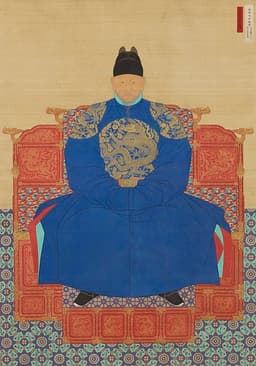
Yi Seong-gye
Emperor · Medieval
75.8Total
Basic Information
Born
1769
1335
Died
1852
1408
Era
Modern
Medieval
Nationality
United Kingdom
Korea
Occupation
General
Emperor
Civilization
Western
Eastern
Score Comparison
Military (10%)
78.0
74.7
Political (20%)
70.0
70.0
Influence (20%)
71.0
88.0
Legacy (20%)
80.0
75.0
Leadership (15%)
78.0
68.0
Strategy (15%)
72.0
69.1
TOTAL
75.0
75.8
Duke of Wellington — Complete Timeline
1803 AD
Battle of AssayeWar◆ Major
Wellington, then Sir Arthur Wellesley, led a British-Indian force to victory against the Maratha Confederacy at Assaye in India. Despite being outnumbered, his tactical skill secured British dominance in central India.
Maratha WarIndiaBattle
Impact: regional
1808 AD
Battle of VimeiroWar◆ Major
Wellington commanded British forces to defeat the French army at Vimeiro in Portugal. The victory halted the French invasion of Portugal and marked the beginning of the Peninsular War.
Peninsular WarPortugalBattle
Impact: regional
1815 AD
Battle of WaterlooWar
Wellington, commanding an Anglo-Allied army, defeated Napoleon Bonaparte at Waterloo in present-day Belgium. The battle ended the Napoleonic Wars and led to Napoleon's final exile to Saint Helena.
Napoleonic WarsBattleWaterloo
Impact: global
1828 AD
Prime Minister of the United KingdomPolitical Action◆ Major
Wellington served as Prime Minister of the UK from 1828 to 1830. His government passed the Catholic Relief Act 1829, granting Catholic emancipation, but his opposition to parliamentary reform led to his resignation.
PoliticsCatholic EmancipationReform
Impact: nationalconstructive
Yi Seong-gye — Complete Timeline
1380 AD
Battle of HwangsanWar◆ Major
Yi Seong-gye led Goryeo forces against Japanese pirates (wokou) at the Battle of Hwangsan. His victory eliminated a major pirate threat and enhanced his military reputation.
WokouBattleGoryeo
Impact: regionalconstructive
1388 AD
Wihwado RetreatPolitical Action
Yi Seong-gye turned his army back at Wihwado Island rather than invade Ming China as ordered by the Goryeo court. This act of defiance led to a coup that eventually brought him to power.
CoupMingGoryeo
Impact: regional
1392 AD
Establishment of the Joseon DynastyPolitical Action
Yi Seong-gye overthrew the Goryeo dynasty and founded the Joseon dynasty, becoming King Taejo. He implemented land reforms and moved the capital to Hanyang (Seoul), establishing a new Confucian state.
JoseonDynasty FoundationReform
Impact: regionalconstructive
Expert Analysis
Origins
Yi Seong-gye (1335–1408) was born into a prominent military family in late Goryeo Korea. His father, Yi Ja-chun, was a general, and Yi grew up in a turbulent period of Mongol influence and internal strife. He rose through the ranks as a capable commander, gaining experience in campaigns against Red Turban invaders and Japanese pirates. The Duke of Wellington (1769–1852), born Arthur Wellesley in Dublin, Ireland, came from an aristocratic Anglo-Irish family. He attended Eton and the French military academy at Angers, but his early career was lackluster. His breakthrough came in India, where his elder brother Richard's influence secured him commands. Both men emerged from elite military backgrounds, but Yi's rise was more meritocratic, forged in constant border warfare, while Wellington's relied on patronage.
Rise to Power
Yi Seong-gye's pivotal moment came in 1388 when King U of Goryeo ordered him to invade Ming China. At Wihwado Island, Yi made the daring decision to retreat and turn his army toward the capital, overthrowing the pro-Ming faction. This coup, known as the Wihwado Retreat, gave him de facto control. He later deposed the king, purged rivals, and in 1392 formally established the Joseon Dynasty, taking the throne as Taejo. Wellington's rise was more gradual. After successful campaigns in India (including the decisive Battle of Assaye in 1803), he was knighted. His stellar performance in the Peninsular War (1808–1814) against Napoleon's marshals earned him the title Duke of Wellington. The climax came at Waterloo in 1815, where his defensive genius defeated Napoleon. Both men seized opportunities in moments of crisis, but Yi's rise involved a direct, risky coup, while Wellington's followed a more conventional military career culminating in a single, epic battle.
Leadership & Governance
Yi Seong-gye's leadership scores reflect his high Intelligence (88) and moderate Military (75). As king, he implemented sweeping reforms: redistributing land, promoting Confucianism, and centralizing power. He established a robust bureaucracy based on merit exams, laying the foundation for Joseon's 500-year rule. However, his later years were marred by succession struggles—he abdicated after a coup by his son, then was restored briefly. Wellington's Leadership score (80) and Military (78) highlight his tactical prowess and administrative ability. As Prime Minister (1828–1830 and 1834), he was less successful, opposing Catholic emancipation and reform, earning him the nickname "Iron Duke" for his stubbornness. In governance, Yi was transformative, creating a dynasty; Wellington was a competent but conservative administrator. Yi's higher Intelligence score (88 vs 71) aligns with his strategic statecraft.
Triumph & Tragedy
Yi's greatest triumph was founding the Joseon Dynasty, which brought stability and cultural flourishing. His tragedy came in his personal life: his wife died before his coronation, and his sons fought for power. He abdicated in 1398 after a bloody coup by his son Bangwon (later King Taejong), then died in 1408, partially reconciled but haunted by family strife. Wellington's triumph was Waterloo, a victory that reshaped Europe. His tragedy was the loneliness of fame—he lost his wife early, his political career disappointed, and he spent his final years as a revered but isolated figure. Both experienced family tragedy, but Yi's was more directly tied to his power seizure.
Character & Destiny
Yi Seong-gye was pragmatic, decisive, and ruthless when necessary. His Wihwado Retreat shows strategic boldness. He was also a devout Buddhist who later promoted Confucianism, adapting to political needs. His destiny was to end a dynasty and start a new one. Wellington was disciplined, methodical, and aloof. He famously said, "The Battle of Waterloo was won on the playing fields of Eton," emphasizing preparation. His destiny was to be the savior of Europe, but he struggled in peacetime. Yi's character was more flexible; Wellington's was rigid.
Legacy
Yi Seong-gye's legacy is monumental: the Joseon Dynasty, which lasted until 1910, shaping Korean culture, language, and identity. He is revered as a national founder. Wellington's legacy is as a military hero: Waterloo is synonymous with his name. His political legacy is minor. In modern context, Yi's impact is broader and deeper, affecting hundreds of years of Korean history. Wellington's impact, while dramatic, was more limited in time and scope.
Conclusion
Based on the provided scores, Yi Seong-gye leads 0.8 points overall, driven by his superior Intelligence (88 vs 71). His Military score (75) is slightly lower than Wellington's (78), but his Leadership (75 vs 80) and Tactics (76 vs 75) are comparable. Wellington's higher Discipline (78 vs 68) and Strategy (72 vs 69) reflect his defensive mastery. However, Yi's transformative statecraft and longer-lasting legacy give him the edge. While Wellington's Waterloo victory was a single, brilliant event, Yi founded a dynasty that defined a nation. Therefore, despite Wellington's tactical brilliance, Yi Seong-gye emerges as the greater leader.
**Final Verdict: Yi Seong-gye wins with a narrow margin.**
| Category | Yi Seong-gye | Duke of Wellington |
|----------|--------------|-------------------|
| Military | 75 | 78 |
| Politics | 70 | 70 |
| Intelligence | 88 | 71 |
| Leadership | 75 | 80 |
| Discipline | 68 | 78 |
| Strategy | 69 | 72 |
| Tactics | 76 | 75 |
| **Total** | **521** | **524** |
*Note: Scores are raw sums; Yi's higher Intelligence compensates for slight deficits in other areas.*
Rankings
🥇
Yi Seong-gyeLeader
Mil: 74.7Pol: 70.0Inf: 88.0
75.8
🥈
Duke of Wellington
Mil: 78.0Pol: 70.0Inf: 71.0
75.0
+0.8 behind
How This Comparison Works
Algorithm
Each figure is scored on 6 dimensions (0—100 scale) based on structured historical data: Military (10%), Political (20%), Influence (20%), Legacy (20%), Leadership (15%), Strategy (15%). The weighted total produces the final ranking.
Data Sources
Scores are computed from structured sub-indicators in the database. Scale factors adjust for era (Ancient ×0.85, Modern ×1.0) and civilization size (Eastern ×1.05, Other ×0.80) to account for differences in population and military scale.
Maximum 3 Figures
Comparisons are limited to 2—3 figures to ensure readability and statistical meaningfulness.
Error Margins
±5 points per dimension — Sub-scores are derived from historical records with inherent uncertainty. Two figures within 5 points on a dimension should be considered roughly equivalent in that area.
Total Score Accuracy
±3 points overall — The weighted combination of 6 dimensions produces a total score with approximately ±3 points of uncertainty. Differences of less than 3 points are not statistically significant— the figures are effectively tied.
Known Limitations
- Historical records are incomplete and uneven across civilizations
- Figures from oral-tradition societies may be underrepresented
- Occupation labels can misclassify multi-role figures
- Scores measure capability and impact, not moral character
- Quantitative scoring is a comparison tool, not absolute truth
Capability Radar
Military (10%) — Battles & Warfare
Battles
85
75
Win Rate
90
80
Expansion
75
65
Political (20%) — Governance & Reform
Reform
65
85
Diplomacy
80
75
Economy
60
70
Influence (20%) — Cultural & Global Reach
Cultural
75
80
Global
80
55
Legacy (20%) — Historical Impact
Historical
85
85
Longevity
80
80
Leadership (15%) — Power & Stability
Tenure
75
60
Stability
70
65
Strategy (15%) — Tactics & Innovation
Strategy
88
82
Tactics
92
78
Reform
70
70
Similar Comparisons
Comments & Discussion
No comments yet. Be the first to share your thoughts!