Loading...
Duke of Wellington vs Yamagata Aritomo
Yamagata Aritomo leads by 7.5 pts · 2 figures compared
…

Duke of Wellington
General · Modern
75.0Total
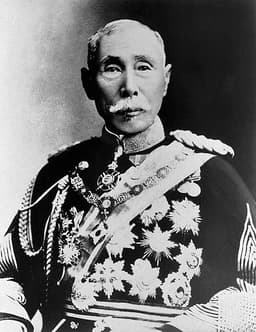
Yamagata Aritomo
General · Modern
82.5Total
Basic Information
Born
1769
1838
Died
1852
1922
Era
Modern
Modern
Nationality
United Kingdom
Japan
Occupation
General
General
Civilization
Western
Eastern
Score Comparison
Military (10%)
78.0
78.0
Political (20%)
70.0
82.0
Influence (20%)
71.0
80.0
Legacy (20%)
80.0
90.0
Leadership (15%)
78.0
78.0
Strategy (15%)
72.0
82.0
TOTAL
75.0
82.5
Duke of Wellington — Complete Timeline
1803 AD
Battle of AssayeWar◆ Major
Wellington, then Sir Arthur Wellesley, led a British-Indian force to victory against the Maratha Confederacy at Assaye in India. Despite being outnumbered, his tactical skill secured British dominance in central India.
Maratha WarIndiaBattle
Impact: regional
1808 AD
Battle of VimeiroWar◆ Major
Wellington commanded British forces to defeat the French army at Vimeiro in Portugal. The victory halted the French invasion of Portugal and marked the beginning of the Peninsular War.
Peninsular WarPortugalBattle
Impact: regional
1815 AD
Battle of WaterlooWar
Wellington, commanding an Anglo-Allied army, defeated Napoleon Bonaparte at Waterloo in present-day Belgium. The battle ended the Napoleonic Wars and led to Napoleon's final exile to Saint Helena.
Napoleonic WarsBattleWaterloo
Impact: global
1828 AD
Prime Minister of the United KingdomPolitical Action◆ Major
Wellington served as Prime Minister of the UK from 1828 to 1830. His government passed the Catholic Relief Act 1829, granting Catholic emancipation, but his opposition to parliamentary reform led to his resignation.
PoliticsCatholic EmancipationReform
Impact: nationalconstructive
Yamagata Aritomo — Complete Timeline
1873 AD
Establishment of the Imperial Japanese ArmyReform
Yamagata Aritomo, as War Minister, oversaw the creation of the Imperial Japanese Army based on the Prussian model. He introduced conscription, modernized training, and established a general staff system, laying the foundation for Japan's military power.
Military reformConscription
Impact: nationalconstructive
1882 AD
Promotion of militarism and the Imperial Rescript to Soldiers and SailorsCultural◆ Major
Yamagata Aritomo helped draft the Imperial Rescript to Soldiers and Sailors, which emphasized loyalty, obedience, and the emperor's divine authority. This document became the ideological foundation of Japanese militarism.
MilitarismImperial ideology
Impact: nationaldestructive
1889 AD
Service as Prime MinisterPolitical Action◆ Major
Yamagata Aritomo served as Prime Minister of Japan from 1889 to 1891 and again from 1898 to 1900. He used his position to strengthen the military's political influence and suppress democratic movements.
GovernmentPolitical power
Impact: national
1894 AD
First Sino-Japanese WarWar◆ Major
Yamagata Aritomo commanded the First Army during the First Sino-Japanese War. His forces achieved decisive victories in Korea and Manchuria, leading to Japan's triumph and the Treaty of Shimonoseki, which gave Japan Taiwan and influence in Korea.
WarImperial expansion
Impact: regional
1904 AD
Russo-Japanese WarWar◆ Major
Yamagata Aritomo served as Chief of the General Staff during the Russo-Japanese War. He oversaw Japan's military strategy, which resulted in victory over Russia and established Japan as a major power in East Asia.
WarGreat power
Impact: global
Expert Analysis
Origins
Yamagata Aritomo (1838–1922) was born into a samurai family in Choshu, Japan. He rose from a low-ranking samurai to become a key figure in the Meiji Restoration, driven by a desire to modernize Japan and resist Western imperialism. His early experiences in the Boshin War shaped his martial values. In contrast, Arthur Wellesley, the Duke of Wellington (1769–1852), was born into an Anglo-Irish aristocratic family. His military career began in India, where he honed his skills in colonial warfare, leading to his appointment as a general in the Peninsular War. Both men emerged from backgrounds that emphasized discipline and duty.
Rise to Power
Yamagata’s rise was meteoric: he studied military science in Europe, became War Minister, and founded the Imperial Japanese Army. His political acumen saw him serve twice as Prime Minister, cementing his influence. Wellington’s ascent was through battlefield success: victories at Assaye (1803) and Vimeiro (1808) earned him command, culminating in his triumph at Waterloo (1815). He later became Prime Minister, but his political career was less dominant. Yamagata’s power was more institutional, Wellington’s more personal.
Leadership & Governance
Yamagata was a master organizer and ideologue. He implemented conscription, established military academies, and authored the Imperial Rescript to Soldiers and Sailors, embedding militarism in Japanese culture. As Prime Minister, he expanded the army’s role in policy. Wellington was a cautious, defensive genius. His leadership at Waterloo was marked by steady nerves and tactical flexibility. However, as Prime Minister, he was conservative and resisted reform, famously opposing Catholic Emancipation initially. Yamagata’s governance was transformative; Wellington’s was preservative.
Triumph & Tragedy
Yamagata’s triumphs include the First Sino-Japanese War (1894–95) and Russo-Japanese War (1904–05), where his army defeated larger foes. Yet his promotion of militarism led to Japan’s eventual path to World War II—a tragic legacy. Wellington’s defining moment was Waterloo, where he defeated Napoleon, ending decades of war. His tragedy was political: his later years were marred by unpopularity and the Peterloo Massacre (1819), though he was not directly responsible. Both men saw their greatest victories foreshadow future conflicts.
Character & Destiny
Yamagata was cold, pragmatic, and obsessed with order. He believed in the supremacy of the military and national destiny. Wellington was aristocratic, blunt, and duty-bound. He famously said, "The next greatest misfortune to losing a battle is to gain such a victory as this" (Waterloo). Their destinies reflect their nations: Yamagata’s Japan became a militarist empire; Wellington’s Britain became a global power with a cautious army.
Legacy
Yamagata is revered as the father of the Japanese army but criticized for fostering militarism. Wellington is celebrated as a national hero, with monuments like the Wellington Arch. In rankings, Yamagata scores higher overall (M=78, P=82, I=80, L=90, D=78, S=82, T=82) vs Wellington (M=78, P=70, I=71, L=80, D=78, S=72, T=75). Yamagata’s higher scores in politics, influence, and leadership reflect his broader impact. However, Wellington’s battlefield brilliance is unmatched.
Conclusion
Yamagata Aritomo was the greater military leader in terms of lasting institutional impact and political power. His system shaped Japan for decades, while Wellington’s influence waned after Waterloo. Yet Wellington’s tactical genius and role in defeating Napoleon remain iconic. The score gap of 7.5 points is justified by Yamagata’s superior political influence and longevity. Both were products of their times, but Yamagata’s legacy is more profound in shaping a nation’s destiny.
Rankings
🥇
Yamagata AritomoLeader
Mil: 78.0Pol: 82.0Inf: 80.0
82.5
🥈
Duke of Wellington
Mil: 78.0Pol: 70.0Inf: 71.0
75.0
+7.5 behind
How This Comparison Works
Algorithm
Each figure is scored on 6 dimensions (0—100 scale) based on structured historical data: Military (10%), Political (20%), Influence (20%), Legacy (20%), Leadership (15%), Strategy (15%). The weighted total produces the final ranking.
Data Sources
Scores are computed from structured sub-indicators in the database. Scale factors adjust for era (Ancient ×0.85, Modern ×1.0) and civilization size (Eastern ×1.05, Other ×0.80) to account for differences in population and military scale.
Maximum 3 Figures
Comparisons are limited to 2—3 figures to ensure readability and statistical meaningfulness.
Error Margins
±5 points per dimension — Sub-scores are derived from historical records with inherent uncertainty. Two figures within 5 points on a dimension should be considered roughly equivalent in that area.
Total Score Accuracy
±3 points overall — The weighted combination of 6 dimensions produces a total score with approximately ±3 points of uncertainty. Differences of less than 3 points are not statistically significant— the figures are effectively tied.
Known Limitations
- Historical records are incomplete and uneven across civilizations
- Figures from oral-tradition societies may be underrepresented
- Occupation labels can misclassify multi-role figures
- Scores measure capability and impact, not moral character
- Quantitative scoring is a comparison tool, not absolute truth
Capability Radar
Military (10%) — Battles & Warfare
Battles
85
75
Win Rate
90
70
Expansion
75
80
Political (20%) — Governance & Reform
Reform
65
90
Diplomacy
80
75
Economy
60
70
Influence (20%) — Cultural & Global Reach
Cultural
75
80
Global
80
70
Legacy (20%) — Historical Impact
Historical
85
85
Longevity
80
75
Leadership (15%) — Power & Stability
Tenure
75
85
Stability
70
65
Strategy (15%) — Tactics & Innovation
Strategy
88
85
Tactics
92
80
Reform
70
95
Similar Comparisons
Comments & Discussion
No comments yet. Be the first to share your thoughts!