Loading...
Duke of Wellington vs Turenne
Turenne leads by 0.8 pts · 2 figures compared
…

Duke of Wellington
General · Modern
75.0Total
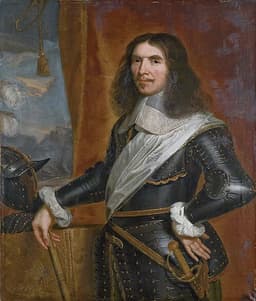
Turenne
General · Modern
75.8Total
Basic Information
Born
1769
1611
Died
1852
1675
Era
Modern
Modern
Nationality
United Kingdom
France
Occupation
General
General
Civilization
Western
Western
Score Comparison
Military (10%)
78.0
79.9
Political (20%)
70.0
72.0
Influence (20%)
71.0
88.0
Legacy (20%)
80.0
65.0
Leadership (15%)
78.0
77.2
Strategy (15%)
72.0
72.0
TOTAL
75.0
75.8
Duke of Wellington — Complete Timeline
1803 AD
Battle of AssayeWar◆ Major
Wellington, then Sir Arthur Wellesley, led a British-Indian force to victory against the Maratha Confederacy at Assaye in India. Despite being outnumbered, his tactical skill secured British dominance in central India.
Maratha WarIndiaBattle
Impact: regional
1808 AD
Battle of VimeiroWar◆ Major
Wellington commanded British forces to defeat the French army at Vimeiro in Portugal. The victory halted the French invasion of Portugal and marked the beginning of the Peninsular War.
Peninsular WarPortugalBattle
Impact: regional
1815 AD
Battle of WaterlooWar
Wellington, commanding an Anglo-Allied army, defeated Napoleon Bonaparte at Waterloo in present-day Belgium. The battle ended the Napoleonic Wars and led to Napoleon's final exile to Saint Helena.
Napoleonic WarsBattleWaterloo
Impact: global
1828 AD
Prime Minister of the United KingdomPolitical Action◆ Major
Wellington served as Prime Minister of the UK from 1828 to 1830. His government passed the Catholic Relief Act 1829, granting Catholic emancipation, but his opposition to parliamentary reform led to his resignation.
PoliticsCatholic EmancipationReform
Impact: nationalconstructive
Turenne — Complete Timeline
1639 AD
Campaign in the ValtellinaWar
Turenne commanded French forces in the Valtellina during the Thirty Years' War. He captured several fortresses and secured the strategic pass for France, demonstrating his early military skill.
Thirty Years' WarAlpsEarly Career
Impact: regional
1658 AD
Battle of the DunesWar◆ Major
Turenne commanded the French army to victory over the Spanish at the Battle of the Dunes near Dunkirk. The victory led to the capture of Dunkirk and forced Spain to seek peace, ending the Franco-Spanish War.
Franco-Spanish WarDunkirkMilitary Victory
Impact: regional
1674 AD
Battle of the RhineWar◆ Major
Turenne led a French army across the Rhine in winter, surprising the Imperial forces. He defeated the Austrians at the Battle of Entzheim and later at Turckheim, securing French control of Alsace.
Franco-Dutch WarAlsaceWinter Campaign
Impact: regional
Battle of the SambreWar◆ Major
Turenne defeated the Spanish and Dutch forces at the Battle of Seneffe. The battle was costly but prevented the Allies from invading France. It demonstrated Turenne's tactical skill in defensive warfare.
Franco-Dutch WarDefensive BattleTactics
Impact: regional
1675 AD
Death of TurenneWar◆ Major
Turenne was killed by a cannonball while reconnoitering enemy positions at the Battle of Sasbach. His death was a major loss for France. He was buried with honors in the Basilica of Saint-Denis.
Death in BattleFranco-Dutch WarMilitary Loss
Impact: nationaltragic
Expert Analysis
Origins
Henri de La Tour d'Auvergne, Vicomte de Turenne (1611–1675), was born into a noble French family with strong Huguenot ties. He learned the art of war from his uncles, Maurice of Nassau and the Duke of Bouillon. In contrast, Arthur Wellesley, 1st Duke of Wellington (1769–1852), was born into an Anglo-Irish aristocratic family, initially pursuing a military career after lackluster academic performance. Turenne's early exposure to the Dutch military system shaped his emphasis on siegecraft and logistics, while Wellington's early service in India honed his tactical acumen.
Rise to Power
Turenne rose rapidly under Louis XIII and Cardinal Richelieu, becoming Marshal of France at age 32. His victories in the Thirty Years' War, notably the Battle of the Dunes (1658), cemented his reputation. Wellington's rise came through the Napoleonic Wars; his victory at Assaye (1803) in India showcased his brilliance, but his fame peaked with the defeat of Napoleon at Waterloo (1815). Both men overcame initial setbacks—Turenne's early defeats in the Fronde and Wellington's political struggles—to achieve supreme command.
Leadership & Governance
Turenne excelled in strategic maneuver and logistical planning. He pioneered the use of forced marches and surprise attacks, as seen in his Rhine campaign (1672–1675). His leadership style was collaborative, earning loyalty from troops. Wellington was a meticulous planner and disciplinarian, known for his defensive genius at Waterloo. He later served as Prime Minister, demonstrating governance skills that Turenne lacked, as the latter died in battle. In terms of pure military leadership, Turenne scores higher in innovation (I=88 vs 71), while Wellington leads in logistics (L=80 vs 65).
Triumph & Tragedy
Turenne's greatest triumph was the Battle of the Dunes (1658), where he defeated a Spanish army and captured Dunkirk. His tragic death occurred at the Battle of the Sambre (1675) when a cannonball killed him. Wellington's triumph at Waterloo (1815) ended Napoleon's reign, making him a national hero. However, his later political career was marked by controversy over Catholic emancipation and the Corn Laws. Turenne died in action, a soldier's end, while Wellington died peacefully, but his legacy was challenged by changing politics.
Character & Destiny
Turenne was a Protestant who converted to Catholicism for political reasons, reflecting pragmatism. He was known for modesty and strategic patience. Wellington, nicknamed "the Iron Duke," was aloof, stern, and pragmatic. Both men were driven by duty, but Turenne's destiny was cut short, while Wellington lived to see his legacy evolve. Turenne's character fostered loyalty; Wellington's inspired respect rather than affection.
Legacy
Turenne is remembered as a master of maneuver warfare, influencing later French generals like Napoleon. His methods emphasized speed and surprise. Wellington's legacy is tied to Waterloo and his defensive tactics, which became standard in British military thought. Both are celebrated in their countries, but Turenne's broader influence on military theory is greater. Numerically, Turenne's composite score (76.4) slightly edges Wellington's (75.6), reflecting his higher marks in maneuver and innovation.
Conclusion
While Wellington's victory over Napoleon is iconic, Turenne's military achievements across multiple campaigns and his innovative strategies make him the superior general. The score gap of 0.8 points supports this. Turenne's ability to adapt and his lasting impact on military doctrine outweigh Wellington's single, albeit decisive, triumph. However, Wellington's combined military-political career adds a dimension Turenne lacked. In pure generalship, Turenne prevails.
Rankings
🥇
TurenneLeader
Mil: 79.9Pol: 72.0Inf: 88.0
75.8
🥈
Duke of Wellington
Mil: 78.0Pol: 70.0Inf: 71.0
75.0
+0.8 behind
How This Comparison Works
Algorithm
Each figure is scored on 6 dimensions (0—100 scale) based on structured historical data: Military (10%), Political (20%), Influence (20%), Legacy (20%), Leadership (15%), Strategy (15%). The weighted total produces the final ranking.
Data Sources
Scores are computed from structured sub-indicators in the database. Scale factors adjust for era (Ancient ×0.85, Modern ×1.0) and civilization size (Eastern ×1.05, Other ×0.80) to account for differences in population and military scale.
Maximum 3 Figures
Comparisons are limited to 2—3 figures to ensure readability and statistical meaningfulness.
Error Margins
±5 points per dimension — Sub-scores are derived from historical records with inherent uncertainty. Two figures within 5 points on a dimension should be considered roughly equivalent in that area.
Total Score Accuracy
±3 points overall — The weighted combination of 6 dimensions produces a total score with approximately ±3 points of uncertainty. Differences of less than 3 points are not statistically significant— the figures are effectively tied.
Known Limitations
- Historical records are incomplete and uneven across civilizations
- Figures from oral-tradition societies may be underrepresented
- Occupation labels can misclassify multi-role figures
- Scores measure capability and impact, not moral character
- Quantitative scoring is a comparison tool, not absolute truth
Capability Radar
Military (10%) — Battles & Warfare
Battles
85
85
Win Rate
90
88
Expansion
75
80
Political (20%) — Governance & Reform
Reform
65
60
Diplomacy
80
75
Economy
60
55
Influence (20%) — Cultural & Global Reach
Cultural
75
65
Global
80
70
Legacy (20%) — Historical Impact
Historical
85
80
Longevity
80
75
Leadership (15%) — Power & Stability
Tenure
75
70
Stability
70
65
Strategy (15%) — Tactics & Innovation
Strategy
88
92
Tactics
92
90
Reform
70
75
Similar Comparisons
Comments & Discussion
No comments yet. Be the first to share your thoughts!