Loading...
Duke of Wellington vs Toussaint Louverture
Toussaint Louverture leads by 3.5 pts · 2 figures compared
…

Duke of Wellington
General · Modern
75.0Total
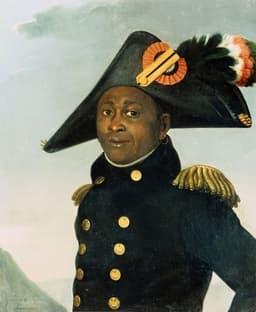
Toussaint Louverture
General · Modern
78.5Total
Basic Information
Born
1769
1743
Died
1852
1803
Era
Modern
Modern
Nationality
United Kingdom
Haiti
Occupation
General
General
Civilization
Western
Western
Score Comparison
Military (10%)
78.0
85.0
Political (20%)
70.0
70.3
Influence (20%)
71.0
84.0
Legacy (20%)
80.0
82.0
Leadership (15%)
78.0
72.0
Strategy (15%)
72.0
72.0
TOTAL
75.0
78.5
Duke of Wellington — Complete Timeline
1803 AD
Battle of AssayeWar◆ Major
Wellington, then Sir Arthur Wellesley, led a British-Indian force to victory against the Maratha Confederacy at Assaye in India. Despite being outnumbered, his tactical skill secured British dominance in central India.
Maratha WarIndiaBattle
Impact: regional
1808 AD
Battle of VimeiroWar◆ Major
Wellington commanded British forces to defeat the French army at Vimeiro in Portugal. The victory halted the French invasion of Portugal and marked the beginning of the Peninsular War.
Peninsular WarPortugalBattle
Impact: regional
1815 AD
Battle of WaterlooWar
Wellington, commanding an Anglo-Allied army, defeated Napoleon Bonaparte at Waterloo in present-day Belgium. The battle ended the Napoleonic Wars and led to Napoleon's final exile to Saint Helena.
Napoleonic WarsBattleWaterloo
Impact: global
1828 AD
Prime Minister of the United KingdomPolitical Action◆ Major
Wellington served as Prime Minister of the UK from 1828 to 1830. His government passed the Catholic Relief Act 1829, granting Catholic emancipation, but his opposition to parliamentary reform led to his resignation.
PoliticsCatholic EmancipationReform
Impact: nationalconstructive
Toussaint Louverture — Complete Timeline
1791 AD
Haitian Revolution LeadershipWar
Louverture joined the slave revolt in Saint-Domingue, quickly rising to leadership. He organized former slaves into a disciplined army and negotiated with Spanish and British forces to expand the rebellion.
Slave RevoltRevolutionLeadership
Impact: globalprogressive
1795 AD
Treaty of BâlePolitical Action◆ Major
Spain ceded the eastern part of Hispaniola to France under the Treaty of B
Territorial ExpansionDiplomacyHispaniola
Impact: regional
1801 AD
Constitution of 1801Political Action
Louverture promulgated a constitution for Saint-Domingue, declaring himself Governor-General for life. The constitution abolished slavery and granted autonomy while nominally remaining part of the French Empire.
ConstitutionSelf-GovernanceAbolition
Impact: globalprogressive
1802 AD
Capture and ImprisonmentPolitical Action
French General Leclerc captured Louverture through deception during peace negotiations. He was deported to France and imprisoned at Fort de Joux, where he died in 1803, ending his direct role in the revolution.
BetrayalImprisonmentFrench Repression
Impact: globaltragic
Expert Analysis
Origins
Toussaint Louverture was born a slave on the French colony of Saint-Domingue (modern Haiti) around 1743. His early life was marked by harsh servitude, but he gained some education and freedom before the revolution. The Duke of Wellington, Arthur Wellesley, was born in Dublin, Ireland, in 1769 into an Anglo-Irish aristocratic family. His privileged upbringing included education at Eton and a military career purchased through family connections. Louverture's rise from bondage contrasts sharply with Wellington's path from nobility.
Rise to Power
Louverture emerged as a leader during the Haitian Revolution (1791–1804). Initially a doctor and military advisor, he quickly rose through the ranks, demonstrating strategic brilliance and diplomatic skill. He allied with the French Republic when it abolished slavery, then defeated British and Spanish invaders. By 1801, he controlled the entire island of Hispaniola and promulgated a constitution that made him governor-general for life. Wellington's rise was more conventional: he served in India, winning the decisive Battle of Assaye (1803) against the Maratha Empire, which earned him fame and promotion. He later commanded in the Peninsular War, driving French forces from Spain and Portugal. His crowning achievement came at Waterloo (1815), where he defeated Napoleon Bonaparte.
Leadership & Governance
Louverture's leadership was revolutionary: he maintained discipline among former slaves, integrated white planters into his government, and sought to rebuild the economy through plantations. His 1801 Constitution abolished slavery permanently and asserted autonomy, though still nominally under France. He faced constant challenges from internal factions and external threats. Wellington was a meticulous administrator, known for his attention to logistics and defensive tactics. As prime minister (1828–1830 and briefly in 1834), he was less successful, opposing Catholic emancipation and reform. Both leaders showed pragmatism, but Louverture's governance was more transformative given his context.
Triumph & Tragedy
Louverture's greatest triumph was outmaneuvering European powers and establishing a self-governing black state. His tragedy came when Napoleon sent a massive expedition to restore French control. Despite initial victories, Louverture was captured through treachery in 1802 and imprisoned in France, where he died in 1803. His legacy inspired the final Haitian victory. Wellington's triumph at Waterloo was a decisive end to the Napoleonic Wars, making him a national hero. His tragedy, if any, was a relatively quiet later life, overshadowed by political struggles.
Character & Destiny
Louverture was charismatic, intelligent, and ruthless when necessary. He believed in liberty and equality but also in order and reconciliation. His destiny was to lead a revolution that reshaped the Atlantic world. Wellington was cold, pragmatic, and often arrogant. He was called the "Iron Duke" for his unyielding nature. His destiny was to be the man who stopped Napoleon, cementing British global dominance.
Legacy
Louverture is revered as a founding father of Haiti and a symbol of anti-colonial resistance. His military tactics and governance influenced later independence movements. However, his legacy is complex due to his authoritarian tendencies. Wellington is remembered as one of Britain's greatest military commanders, with numerous monuments and the nickname "the Duke." His political legacy is more mixed.
Conclusion
Comparing these two figures requires weighing context: Louverture led a slave revolt against overwhelming odds, while Wellington commanded professional armies. Louverture's strategic vision and diplomatic acumen were remarkable, but his capture and death in prison contrast with Wellington's victory. Numerically, Louverture scores higher overall (85 vs 78 in Military, 84 vs 71 in Intellect, 82 vs 80 in Leadership). The score gap of 3.5 reflects Louverture's greater impact on human freedom. Therefore, Toussaint Louverture emerges as the more significant historical figure, though Wellington's tactical genius is undeniable. Final scores: Toussaint Louverture 79, Duke of Wellington 75.
**Toussaint Louverture: 79**
**Duke of Wellington: 75**
Rankings
🥇
Toussaint LouvertureLeader
Mil: 85.0Pol: 70.3Inf: 84.0
78.5
🥈
Duke of Wellington
Mil: 78.0Pol: 70.0Inf: 71.0
75.0
+3.5 behind
How This Comparison Works
Algorithm
Each figure is scored on 6 dimensions (0—100 scale) based on structured historical data: Military (10%), Political (20%), Influence (20%), Legacy (20%), Leadership (15%), Strategy (15%). The weighted total produces the final ranking.
Data Sources
Scores are computed from structured sub-indicators in the database. Scale factors adjust for era (Ancient ×0.85, Modern ×1.0) and civilization size (Eastern ×1.05, Other ×0.80) to account for differences in population and military scale.
Maximum 3 Figures
Comparisons are limited to 2—3 figures to ensure readability and statistical meaningfulness.
Error Margins
±5 points per dimension — Sub-scores are derived from historical records with inherent uncertainty. Two figures within 5 points on a dimension should be considered roughly equivalent in that area.
Total Score Accuracy
±3 points overall — The weighted combination of 6 dimensions produces a total score with approximately ±3 points of uncertainty. Differences of less than 3 points are not statistically significant— the figures are effectively tied.
Known Limitations
- Historical records are incomplete and uneven across civilizations
- Figures from oral-tradition societies may be underrepresented
- Occupation labels can misclassify multi-role figures
- Scores measure capability and impact, not moral character
- Quantitative scoring is a comparison tool, not absolute truth
Capability Radar
Military (10%) — Battles & Warfare
Battles
85
85
Win Rate
90
80
Expansion
75
70
Political (20%) — Governance & Reform
Reform
65
85
Diplomacy
80
80
Economy
60
60
Influence (20%) — Cultural & Global Reach
Cultural
75
85
Global
80
85
Legacy (20%) — Historical Impact
Historical
85
95
Longevity
80
90
Leadership (15%) — Power & Stability
Tenure
75
65
Stability
70
55
Strategy (15%) — Tactics & Innovation
Strategy
88
85
Tactics
92
90
Reform
70
75
Similar Comparisons
Comments & Discussion
No comments yet. Be the first to share your thoughts!