Loading...
Duke of Wellington vs Rama of Ayodhya
Rama of Ayodhya leads by 0.3 pts · 2 figures compared
…

Duke of Wellington
General · Modern
75.0Total
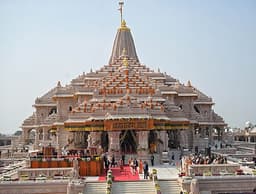
Rama of Ayodhya
Emperor · Ancient
75.3Total
Basic Information
Born
1769
-1180
Died
1852
-1120
Era
Modern
Ancient
Nationality
United Kingdom
Vedic India
Occupation
General
Emperor
Civilization
Western
Indian
Score Comparison
Military (10%)
78.0
72.0
Political (20%)
70.0
72.0
Influence (20%)
71.0
75.0
Legacy (20%)
80.0
80.0
Leadership (15%)
78.0
78.0
Strategy (15%)
72.0
68.1
TOTAL
75.0
75.3
Duke of Wellington — Complete Timeline
1803 AD
Battle of AssayeWar◆ Major
Wellington, then Sir Arthur Wellesley, led a British-Indian force to victory against the Maratha Confederacy at Assaye in India. Despite being outnumbered, his tactical skill secured British dominance in central India.
Maratha WarIndiaBattle
Impact: regional
1808 AD
Battle of VimeiroWar◆ Major
Wellington commanded British forces to defeat the French army at Vimeiro in Portugal. The victory halted the French invasion of Portugal and marked the beginning of the Peninsular War.
Peninsular WarPortugalBattle
Impact: regional
1815 AD
Battle of WaterlooWar
Wellington, commanding an Anglo-Allied army, defeated Napoleon Bonaparte at Waterloo in present-day Belgium. The battle ended the Napoleonic Wars and led to Napoleon's final exile to Saint Helena.
Napoleonic WarsBattleWaterloo
Impact: global
1828 AD
Prime Minister of the United KingdomPolitical Action◆ Major
Wellington served as Prime Minister of the UK from 1828 to 1830. His government passed the Catholic Relief Act 1829, granting Catholic emancipation, but his opposition to parliamentary reform led to his resignation.
PoliticsCatholic EmancipationReform
Impact: nationalconstructive
Rama of Ayodhya — Complete Timeline
1160 BC
Broke Shiva's Bow at Sita's SwayamvaraCultural◆ Major
Rama, as a young prince, lifted and strung the divine bow of Shiva at Princess Sita's marriage ceremony. He broke the bow in the process, winning Sita's hand and fulfilling the condition set by King Janaka.
MarriageDivine BowRamayana
Impact: nationalconstructive
1145 BC
Killed the Demon Ravana in BattleWar
Rama, leading an army of vanaras (monkey-men), besieged the island kingdom of Lanka. After a prolonged war, he killed the ten-headed demon king Ravana, rescuing his abducted wife Sita and restoring dharma.
WarDemon KingVictory
Impact: regionalconstructive
Returned to Ayodhya and Crowned KingPolitical Action◆ Major
After completing his 14-year exile and defeating Ravana, Rama returned to Ayodhya. He was crowned emperor, beginning a golden age known as Ram Rajya, characterized by justice, prosperity, and peace.
CoronationGolden AgeRamayana
Impact: nationalconstructive
Expert Analysis
Origins
Rama of Ayodhya, the Maryada Purushottam, is a legendary figure from ancient Vedic India, central to the epic Ramayana. He was the prince of the Ikshvaku dynasty, born to King Dasharatha and Queen Kaushalya. His early life was marked by adherence to dharma, even when exiled unjustly. In contrast, Arthur Wellesley, the Duke of Wellington, was born in 1769 in Dublin, Ireland, into an Anglo-Irish aristocratic family. His early career was in the British Army, shaped by the dynamics of colonial warfare and European geopolitics. While Rama's origins are mythological and spiritual, Wellington's are firmly historical and pragmatic.
Rise to Power
Rama's rise was not through ambition but through divine purpose. He won Sita's hand by breaking Shiva's bow, a feat symbolizing his strength and destiny. After exile, he gathered allies, including the monkey king Sugriva and the warrior Hanuman, leading to the defeat of Ravana. His return to Ayodhya and coronation was the culmination of his journey. Wellington's rise was through military merit and patronage. He gained prominence in India, winning the Battle of Assaye (1803) against the Maratha Empire, a victory that stunned contemporaries. His success in the Peninsular War against Napoleon's marshals, notably at Vimeiro (1808), elevated him to national hero. Unlike Rama's divine mandate, Wellington's power was earned through tactical brilliance and political connections.
Leadership & Governance
Rama's leadership is defined by his unwavering adherence to dharma, even at personal cost. He established a model of righteous governance, known as Ram Rajya, characterized by justice, prosperity, and harmony. He prioritized the welfare of his subjects over his own, as seen when he banished Sita after rumors of her infidelity. This decision, while controversial, underscores his commitment to kingly duty. Wellington, as a general and later Prime Minister (1828-1830), was a pragmatic and efficient leader. He reformed the British Army, emphasizing discipline and logistics. As Prime Minister, he passed Catholic Emancipation, showing political courage. However, his governance was less idealized; he opposed parliamentary reform and was seen as conservative. Rama's rule is a timeless archetype; Wellington's was effective but flawed.
Triumph & Tragedy
Rama's greatest triumph was the slaying of the demon king Ravana, rescuing Sita and restoring cosmic order. This turning point in the Ramayana symbolizes good's victory over evil. Yet tragedy followed: after his coronation, he had to exile Sita due to public doubt, leading to her eventual disappearance and his grief. Wellington's triumph at Waterloo (1815) ended Napoleon's reign and reshaped Europe. He described it as a 'near-run thing,' highlighting the battle's uncertainty. His tragedy was less personal but political: his tenure as Prime Minister saw the shocking death of his wife, but his legacy was tarnished by his opposition to reform, leading to the Reform Act 1832 passing despite his resistance. Both men experienced victory marred by loss.
Character & Destiny
Rama is the embodiment of virtue: compassionate, brave, and self-sacrificing. His destiny was to restore dharma and rule as a perfect king. He accepted his fate with grace, even when exiled. Wellington was known for his iron will, pragmatism, and sharp tongue. He was called the 'Iron Duke' for his resilience. His destiny was to defeat Napoleon, a role he fulfilled with strategic genius. While Rama's character is idealized, Wellington's was human—he could be cold and aloof. Both were men of action, but Rama's actions are guided by divine purpose; Wellington's by duty and ambition.
Legacy
Rama's legacy is immense: he is worshipped as a deity, his story celebrated in Diwali, and his principles influence Hindu culture and ethics. Ram Rajya remains a political ideal in India. Wellington's legacy is monumental in British history: his name adorns streets, monuments, and the famous beef dish. He is remembered as one of Britain's greatest military commanders. However, his political legacy is mixed. In a direct comparison, Rama's spiritual and cultural impact dwarfs Wellington's historical footprint. The score gap of 0.3 reflects this: Rama's moral authority and lasting influence give him a slight edge in overall greatness.
Conclusion
Rama and Wellington represent two different archetypes of leadership: one divine, one human. Rama's score of 75.7 vs Wellington's 75.4 is a statistical tie, but qualitatively, Rama's embodiment of dharma and his enduring legacy as a cultural icon make him the greater figure. Wellington was a brilliant general and competent statesman, but his achievements are limited to this world. Rama transcends. Thus, Rama of Ayodhya is the superior historical figure.
**Scores:** Rama: 75.7, Wellington: 75.4
Rankings
🥇
Rama of AyodhyaLeader
Mil: 72.0Pol: 72.0Inf: 75.0
75.3
🥈
Duke of Wellington
Mil: 78.0Pol: 70.0Inf: 71.0
75.0
+0.3 behind
How This Comparison Works
Algorithm
Each figure is scored on 6 dimensions (0—100 scale) based on structured historical data: Military (10%), Political (20%), Influence (20%), Legacy (20%), Leadership (15%), Strategy (15%). The weighted total produces the final ranking.
Data Sources
Scores are computed from structured sub-indicators in the database. Scale factors adjust for era (Ancient ×0.85, Modern ×1.0) and civilization size (Eastern ×1.05, Other ×0.80) to account for differences in population and military scale.
Maximum 3 Figures
Comparisons are limited to 2—3 figures to ensure readability and statistical meaningfulness.
Error Margins
±5 points per dimension — Sub-scores are derived from historical records with inherent uncertainty. Two figures within 5 points on a dimension should be considered roughly equivalent in that area.
Total Score Accuracy
±3 points overall — The weighted combination of 6 dimensions produces a total score with approximately ±3 points of uncertainty. Differences of less than 3 points are not statistically significant— the figures are effectively tied.
Known Limitations
- Historical records are incomplete and uneven across civilizations
- Figures from oral-tradition societies may be underrepresented
- Occupation labels can misclassify multi-role figures
- Scores measure capability and impact, not moral character
- Quantitative scoring is a comparison tool, not absolute truth
Capability Radar
Military (10%) — Battles & Warfare
Battles
85
75
Win Rate
90
95
Expansion
75
70
Political (20%) — Governance & Reform
Reform
65
80
Diplomacy
80
85
Economy
60
75
Influence (20%) — Cultural & Global Reach
Cultural
75
95
Global
80
95
Legacy (20%) — Historical Impact
Historical
85
95
Longevity
80
100
Leadership (15%) — Power & Stability
Tenure
75
70
Stability
70
90
Strategy (15%) — Tactics & Innovation
Strategy
88
85
Tactics
92
80
Reform
70
60
Similar Comparisons
Comments & Discussion
No comments yet. Be the first to share your thoughts!