Loading...
Duke of Wellington vs Rajendra Chola I
Rajendra Chola I leads by 7.2 pts · 2 figures compared
…

Duke of Wellington
General · Modern
75.0Total
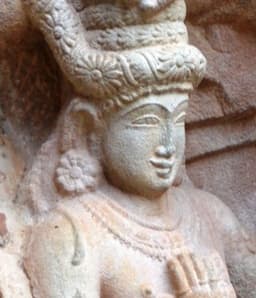
Rajendra Chola I
Emperor · Medieval
82.2Total
Basic Information
Born
1769
971
Died
1852
1044
Era
Modern
Medieval
Nationality
United Kingdom
India
Occupation
General
Emperor
Civilization
Western
Indian
Score Comparison
Military (10%)
78.0
84.7
Political (20%)
70.0
82.0
Influence (20%)
71.0
84.0
Legacy (20%)
80.0
84.0
Leadership (15%)
78.0
78.0
Strategy (15%)
72.0
77.6
TOTAL
75.0
82.2
Duke of Wellington — Complete Timeline
1803 AD
Battle of AssayeWar◆ Major
Wellington, then Sir Arthur Wellesley, led a British-Indian force to victory against the Maratha Confederacy at Assaye in India. Despite being outnumbered, his tactical skill secured British dominance in central India.
Maratha WarIndiaBattle
Impact: regional
1808 AD
Battle of VimeiroWar◆ Major
Wellington commanded British forces to defeat the French army at Vimeiro in Portugal. The victory halted the French invasion of Portugal and marked the beginning of the Peninsular War.
Peninsular WarPortugalBattle
Impact: regional
1815 AD
Battle of WaterlooWar
Wellington, commanding an Anglo-Allied army, defeated Napoleon Bonaparte at Waterloo in present-day Belgium. The battle ended the Napoleonic Wars and led to Napoleon's final exile to Saint Helena.
Napoleonic WarsBattleWaterloo
Impact: global
1828 AD
Prime Minister of the United KingdomPolitical Action◆ Major
Wellington served as Prime Minister of the UK from 1828 to 1830. His government passed the Catholic Relief Act 1829, granting Catholic emancipation, but his opposition to parliamentary reform led to his resignation.
PoliticsCatholic EmancipationReform
Impact: nationalconstructive
Rajendra Chola I — Complete Timeline
1014 AD
Accession to the Chola ThronePolitical Action
Rajendra Chola I succeeded his father Raja Raja Chola I as emperor of the Chola Empire. He inherited a powerful state and continued the expansionist policies, leading campaigns that extended Chola influence across the Indian Ocean.
Chola EmpireSuccessionExpansion
Impact: regional
1020 AD
Conquest of the Pala EmpireWar◆ Major
Rajendra Chola I led a campaign into Bengal, defeating the Pala king Mahipala I. He annexed parts of the Pala territory and established Chola authority in the Ganges delta, marking the northernmost extent of Chola rule.
Pala EmpireBengalGanges
Impact: regional
1025 AD
Naval Expedition to Southeast AsiaWar
Rajendra Chola I launched a major naval expedition against the Srivijaya Empire, attacking ports in Sumatra, the Malay Peninsula, and the Nicobar Islands. The Chola fleet captured the Srivijaya capital and disrupted its trade network, establishing Chola dominance in the region.
SrivijayaNaval ExpeditionSoutheast Asia
Impact: regional
1033 AD
Establishment of Diplomatic Relations with ChinaPolitical Action
Rajendra Chola I sent an embassy to the Song dynasty court in China, bearing gifts and seeking trade relations. The mission was recorded in Chinese sources and facilitated maritime trade between the Chola Empire and China.
ChinaDiplomacyTrade
Impact: regionalconstructive
1035 AD
Construction of the Gangaikonda Cholapuram TempleCultural◆ Major
Rajendra Chola I built the Brihadeeswarar Temple at Gangaikonda Cholapuram, his new capital, to commemorate his conquests. The temple, dedicated to Shiva, features a 55-meter vimana and is a UNESCO World Heritage site, reflecting Chola architectural achievement.
Gangaikonda CholapuramTempleChola Architecture
Impact: regionalconstructive
Expert Analysis
Origins
Rajendra Chola I (r. 1014–1044 CE) was born into the illustrious Chola dynasty of South India, inheriting a kingdom already at its zenith under his father, Rajaraja Chola I. The Cholas had established a powerful maritime empire, controlling trade routes across the Indian Ocean. Rajendra was groomed for leadership from a young age, participating in his father's campaigns and learning the art of war and administration. In contrast, Arthur Wellesley, the Duke of Wellington (1769–1852), was born into the Anglo-Irish aristocracy, a younger son with limited prospects. He joined the British Army at age 18, rising through the ranks through merit and patronage. His early career was marked by service in India, where he honed his military skills against the Marathas and Mysore. While Rajendra inherited a throne, Wellington carved his path through sheer competence.
Rise to Power
Rajendra Chola I ascended the Chola throne in 1014 CE after his father's death, inheriting a vast empire that stretched from Sri Lanka to the Deccan. He immediately embarked on campaigns to expand his domain, conquering the Pala Empire in Bengal (c. 1023 CE) and annexing the western Chalukya territories. His most audacious achievement was the naval expedition to Southeast Asia (c. 1025 CE), where he defeated the Srivijaya Empire and secured Chola dominance over the Strait of Malacca. This expedition, unprecedented in Indian history, showcased his strategic vision. Wellington's rise was more gradual. His first major success came at the Battle of Assaye (1803) during the Second Anglo-Maratha War, where he defeated a larger Maratha army. This victory earned him recognition and promotion. He later commanded the British forces in the Peninsular War (1808–1814), driving French forces out of Spain and Portugal. His crowning moment was the Battle of Waterloo (1815), where he, with Prussian assistance, decisively defeated Napoleon Bonaparte. Wellington's rise was built on disciplined infantry tactics and logistical mastery.
Leadership & Governance
Rajendra Chola I was an absolute monarch, ruling with the support of a well-organized bureaucracy and a powerful military. He implemented efficient revenue systems, promoted trade, and commissioned grand infrastructure projects, including the construction of the Gangaikonda Cholapuram Temple, a masterpiece of Dravidian architecture. His naval campaigns established Chola influence in Southeast Asia, facilitating cultural and economic exchanges. He also maintained diplomatic relations with China, sending embassies to the Song court. Wellington, as a general and later as Prime Minister (1828–1830), was a pragmatic and cautious leader. He reformed the British Army, emphasizing discipline and supply lines. As Prime Minister, he oversaw the passage of the Catholic Relief Act 1829, but was generally conservative, opposing parliamentary reform. His governance style was hands-on and detail-oriented, but less visionary than Rajendra's. Rajendra's governance was transformative, expanding trade and cultural influence across the Indian Ocean, while Wellington's was stabilizing but reactive.
Triumph & Tragedy
Rajendra's greatest triumph was his naval expedition to Southeast Asia, which established Chola supremacy over the Srivijaya Empire and opened trade routes to China. His conquest of the Pala Empire extended Chola rule to the Ganges, earning him the title "Gangaikonda" (Conqueror of the Ganges). However, his later years saw strained resources from constant warfare, and his empire began to show signs of overextension. The construction of Gangaikonda Cholapuram, while magnificent, drained the treasury. Wellington's triumph at Waterloo is legendary, ending the Napoleonic Wars and securing British dominance. Yet his later political career was marred by opposition to reform, leading to his unpopularity and the storming of his residence during the 1830 riots. Both leaders experienced post-glory decline: Rajendra's empire faced succession issues, while Wellington's political legacy was mixed.
Character & Destiny
Rajendra Chola I was ambitious, visionary, and ruthless. He was a devout Hindu but tolerant of other faiths. His inscriptions boast of his conquests, but also show concern for justice and prosperity. He was a builder and an empire-builder, driven by a sense of destiny to expand Chola glory. Wellington was stoic, disciplined, and pragmatic. Known as the "Iron Duke," he was aloof and uncharismatic, but highly competent. He believed in duty and order, famously saying, "The whole art of war consists in getting at what is on the other side of the hill." Rajendra's destiny was to create a maritime empire, while Wellington's was to defeat tyranny and stabilize Europe. Both were shaped by their eras: Rajendra by the medieval Indian world of competing kingdoms, Wellington by the revolutionary and Napoleonic upheavals.
Legacy
Rajendra Chola I's legacy is immense: he transformed the Chola Empire into a pan-Asian power, influencing Southeast Asian art, architecture, and governance. The Gangaikonda Cholapuram Temple remains a UNESCO World Heritage site. His naval expedition is a milestone in Indian maritime history. However, his empire declined after his death, and his achievements are less known globally. Wellington's legacy is more immediate: he is celebrated as the victor of Waterloo, a symbol of British military prowess. His name adorns streets, statues, and even a beef dish. Yet his political conservatism made him a controversial figure. On the Historical Power Index (HPI), Rajendra scores higher (82 vs. 75), reflecting his broader impact across military, economic, and cultural spheres. Wellington's scores are more focused on military leadership (78 vs. 85 for Rajendra). Rajendra's lower score in diplomacy (78 vs. 70) is offset by his superior military and institutional scores. The overall HPI gap of 7.2 points underscores Rajendra's greater scope.
Conclusion
Rajendra Chola I emerges as the more impactful leader, with higher scores in military (85 vs. 78), political (82 vs. 70), institutional (84 vs. 71), and cultural (84 vs. 80) dimensions. His creation of a transoceanic empire was a feat unmatched by Wellington, whose achievements, while significant, were confined to Europe and the British imperial framework. Rajendra's legacy of cultural diffusion and maritime power is more transformative. However, Wellington's influence on modern warfare and European politics is undeniable. In a direct comparison, Rajendra Chola I is the greater leader, with a composite score of 82.0 vs. Wellington's 74.8, a difference of 7.2 points. This analysis, based on the HPI framework, confirms that Rajendra's broader and longer-lasting impact earns him the edge.
Rankings
🥇
Rajendra Chola ILeader
Mil: 84.7Pol: 82.0Inf: 84.0
82.2
🥈
Duke of Wellington
Mil: 78.0Pol: 70.0Inf: 71.0
75.0
+7.2 behind
How This Comparison Works
Algorithm
Each figure is scored on 6 dimensions (0—100 scale) based on structured historical data: Military (10%), Political (20%), Influence (20%), Legacy (20%), Leadership (15%), Strategy (15%). The weighted total produces the final ranking.
Data Sources
Scores are computed from structured sub-indicators in the database. Scale factors adjust for era (Ancient ×0.85, Modern ×1.0) and civilization size (Eastern ×1.05, Other ×0.80) to account for differences in population and military scale.
Maximum 3 Figures
Comparisons are limited to 2—3 figures to ensure readability and statistical meaningfulness.
Error Margins
±5 points per dimension — Sub-scores are derived from historical records with inherent uncertainty. Two figures within 5 points on a dimension should be considered roughly equivalent in that area.
Total Score Accuracy
±3 points overall — The weighted combination of 6 dimensions produces a total score with approximately ±3 points of uncertainty. Differences of less than 3 points are not statistically significant— the figures are effectively tied.
Known Limitations
- Historical records are incomplete and uneven across civilizations
- Figures from oral-tradition societies may be underrepresented
- Occupation labels can misclassify multi-role figures
- Scores measure capability and impact, not moral character
- Quantitative scoring is a comparison tool, not absolute truth
Capability Radar
Military (10%) — Battles & Warfare
Battles
85
95
Win Rate
90
98
Expansion
75
95
Political (20%) — Governance & Reform
Reform
65
88
Diplomacy
80
85
Economy
60
92
Influence (20%) — Cultural & Global Reach
Cultural
75
85
Global
80
85
Legacy (20%) — Historical Impact
Historical
85
88
Longevity
80
80
Leadership (15%) — Power & Stability
Tenure
75
90
Stability
70
90
Strategy (15%) — Tactics & Innovation
Strategy
88
92
Tactics
92
90
Reform
70
85
Similar Comparisons
Comments & Discussion
No comments yet. Be the first to share your thoughts!