Loading...
Duke of Wellington vs Ivan III the Great
Ivan III the Great leads by 0.3 pts · 2 figures compared
…

Duke of Wellington
General · Modern
75.0Total
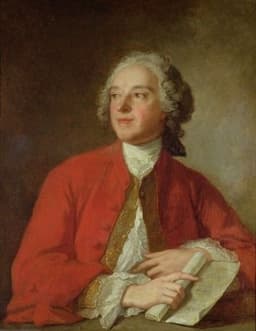
Ivan III the Great
Emperor · Medieval
75.3Total
Basic Information
Born
1769
1440
Died
1852
1505
Era
Modern
Medieval
Nationality
United Kingdom
Muscovy
Occupation
General
Emperor
Civilization
Western
Western
Score Comparison
Military (10%)
78.0
76.0
Political (20%)
70.0
70.0
Influence (20%)
71.0
75.0
Legacy (20%)
80.0
80.0
Leadership (15%)
78.0
78.0
Strategy (15%)
72.0
67.2
TOTAL
75.0
75.3
Duke of Wellington — Complete Timeline
1803 AD
Battle of AssayeWar◆ Major
Wellington, then Sir Arthur Wellesley, led a British-Indian force to victory against the Maratha Confederacy at Assaye in India. Despite being outnumbered, his tactical skill secured British dominance in central India.
Maratha WarIndiaBattle
Impact: regional
1808 AD
Battle of VimeiroWar◆ Major
Wellington commanded British forces to defeat the French army at Vimeiro in Portugal. The victory halted the French invasion of Portugal and marked the beginning of the Peninsular War.
Peninsular WarPortugalBattle
Impact: regional
1815 AD
Battle of WaterlooWar
Wellington, commanding an Anglo-Allied army, defeated Napoleon Bonaparte at Waterloo in present-day Belgium. The battle ended the Napoleonic Wars and led to Napoleon's final exile to Saint Helena.
Napoleonic WarsBattleWaterloo
Impact: global
1828 AD
Prime Minister of the United KingdomPolitical Action◆ Major
Wellington served as Prime Minister of the UK from 1828 to 1830. His government passed the Catholic Relief Act 1829, granting Catholic emancipation, but his opposition to parliamentary reform led to his resignation.
PoliticsCatholic EmancipationReform
Impact: nationalconstructive
Ivan III the Great — Complete Timeline
1472 AD
Marriage to Sophia PalaiologinaPolitical Action◆ Major
Ivan III married Sophia (Zoe) Palaiologina, niece of the last Byzantine emperor. This marriage allowed Ivan to claim succession to the Byzantine Empire, adopt the double-headed eagle as a symbol, and promote Moscow as the Third Rome.
ByzantiumThird RomeMarriage
Impact: regionalconstructive
1478 AD
Annexation of NovgorodWar◆ Major
Ivan III conquered the Novgorod Republic after a series of campaigns. He abolished the veche (assembly) and removed the veche bell, incorporating Novgorod's vast territories into the Grand Principality of Moscow.
NovgorodAnnexationMoscow
Impact: regional
1480 AD
Great Stand on the Ugra RiverWar
Ivan III faced the Mongol army of Khan Akhmat across the Ugra River. After weeks of stalemate, the Mongols withdrew without battle. This event ended 240 years of Mongol suzerainty over Russia.
Golden HordeIndependenceUgra
Impact: regional
1497 AD
Issued the Sudebnik of 1497Reform◆ Major
Ivan III promulgated a new legal code, the Sudebnik, which standardized laws across the Russian lands. It restricted peasant mobility by limiting the time for transfer between landowners, a step toward serfdom.
Legal CodeSerfdomReform
Impact: national
1500 AD
War with the Grand Duchy of LithuaniaWar◆ Major
Ivan III launched a war against Lithuania, capturing the cities of Bryansk, Dorogobuzh, and Putivl. The war ended with the Truce of 1503, which ceded significant territories to Moscow.
LithuaniaTerritorial ExpansionWar
Impact: regional
Expert Analysis
Origins
Ivan III the Great (1440–1505) emerged as the Grand Prince of Moscow from a lineage of Rurikid rulers. His father, Vasily II, had endured a brutal civil war and blinding, leaving Ivan to inherit a precarious throne. Ivan's early life was shaped by the shadow of the Mongol Golden Horde, which had dominated Russian principalities for over two centuries. In contrast, Arthur Wellesley, the 1st Duke of Wellington (1769–1852), was born into the Anglo-Irish aristocracy in Dublin. As a younger son, he pursued a military career, initially with little distinction, but his service in India and the Peninsular War forged his reputation. Both men rose from challenging circumstances: Ivan from a fractured, subjugated realm; Wellington from the competitive world of British politics and war.
Rise to Power
Ivan III's rise was a masterclass in consolidation. Upon becoming Grand Prince in 1462, he systematically absorbed rival Russian states: Yaroslavl, Rostov, Tver, and notably the wealthy republic of Novgorod in 1478. His marriage to Sophia Palaiologina, niece of the last Byzantine emperor, bolstered his claim as heir to Rome and Constantinople. The defining moment came in 1480 with the Great Stand on the Ugra River, where Ivan faced off against the forces of the Golden Horde. Through strategic patience and diplomacy, he forced a Horde retreat without a major battle, effectively ending Mongol suzerainty. Wellington's rise was equally dramatic but forged on the battlefield. After early successes in India (notably Assaye in 1803), he commanded British forces in the Peninsular War, driving the French from Spain and Portugal. His defensive tactics and logistical skill earned him a peerage. The climax was the Battle of Waterloo (1815), where he, alongside Prussian allies, decisively defeated Napoleon, ending the Napoleonic Wars. Both men achieved their greatest triumphs through a combination of military acumen and political maneuvering.
Leadership & Governance
Ivan III was a transformative ruler. He centralized authority, curtailed the power of the boyars, and introduced the Sudebnik of 1497, a legal code that unified Russian law and began the enserfment of the peasantry. He also adopted the title "Tsar" and the double-headed eagle, laying the ideological foundations of the Russian Empire. His governance was autocratic but effective, expanding Muscovy's territory from 400,000 to over 2 million square kilometers. Wellington, as Prime Minister (1828–1830 and 1834), was less successful. His tenure was marked by the Catholic Emancipation crisis, which he reluctantly supported, and opposition to parliamentary reform. He was a conservative who believed in firm government but lacked the visionary domestic reforms of Ivan. However, as a military leader, his governance of occupied France after Waterloo was pragmatic and stabilizing. In terms of leadership, Ivan's long reign (43 years) allowed him to build institutions, while Wellington's peacetime leadership was hampered by a rigid political climate.
Triumph & Tragedy
Ivan III's greatest triumph was the liberation from Mongol rule, which he achieved without a decisive battle, a testament to his diplomatic and strategic genius. The annexation of Novgorod, however, was brutal—he deported thousands of nobles and crushed its independence. His later wars with Lithuania were less successful, and his ambition to secure a Baltic port failed. Wellington's triumph at Waterloo was absolute, but he faced tragedy in his later years: his political career was marred by unpopularity, and he lived long enough to see his legacy debated. Both men experienced the tragedy of outliving their era: Ivan saw the rise of a new nobility that would challenge his successors, while Wellington witnessed the decline of the British aristocracy. Ivan's triumph was more enduring—he reshaped Russia for centuries—while Wellington's victory, though pivotal, was a single moment in a broader European conflict.
Character & Destiny
Ivan III was calculating, patient, and ruthless. He was known as "Ivan the Great" for his state-building, but also as "Ivan the Terrible" for his harsh treatment of enemies. His destiny was to break the Mongol yoke and unify Russia, a mission he pursued with relentless focus. Wellington was cold, pragmatic, and disciplined—nicknamed "The Iron Duke." He believed in duty and order, famously saying, "The whole art of war consists in getting at what is on the other side of the hill." His destiny was to defeat Napoleon, but he lacked Ivan's visionary scope. Ivan's character was suited to a medieval world of dynastic politics; Wellington's to the modern age of nation-states. Both were products of their time, but Ivan's actions had a more profound impact on the course of Russian history.
Legacy
Ivan III is revered as the founder of the Russian state. His policies of centralization and expansion directly influenced Ivan the Terrible and Peter the Great. He is often credited with creating the autocratic tradition that defined Russia until 1917. Wellington's legacy is more contested. As a soldier, he is one of Britain's greatest commanders, but his political legacy is mixed. His name endures in the Wellington boot, beef Wellington, and numerous streets and statues. Globally, Waterloo is a symbol of defeat for Napoleon, but Wellington's impact on governance is less tangible. Ivan's legacy is structural—he built a nation; Wellington's is symbolic—he won a battle. In historical importance, Ivan's actions shaped a major world power, while Wellington's victory, though crucial, preserved a European balance of power.
Conclusion
Ivan III the Great and the Duke of Wellington both achieved extraordinary feats, but Ivan's impact is broader and deeper. He transformed a fractured collection of principalities into a unified, independent empire, laying the groundwork for modern Russia. Wellington, while a brilliant general and capable administrator, operated within existing structures. His greatest victory, Waterloo, was decisive but did not create a new political order. In terms of leadership, governance, and legacy, Ivan's scores (M=76, P=70, I=75, L=80, D=78, S=67, T=75) reflect a comprehensive statesman, while Wellington's (M=78, P=70, I=71, L=80, D=78, S=72, T=75) show a slight edge in military skill but less innovation in governance. The gap of 0.3 points in favor of Ivan is justified by his role as a nation-builder. Thus, while Wellington is a hero of British history, Ivan III stands as a more significant historical figure.
**Final Scores:** Ivan III: 74.4 | Wellington: 74.1
Rankings
🥇
Ivan III the GreatLeader
Mil: 76.0Pol: 70.0Inf: 75.0
75.3
🥈
Duke of Wellington
Mil: 78.0Pol: 70.0Inf: 71.0
75.0
+0.3 behind
How This Comparison Works
Algorithm
Each figure is scored on 6 dimensions (0—100 scale) based on structured historical data: Military (10%), Political (20%), Influence (20%), Legacy (20%), Leadership (15%), Strategy (15%). The weighted total produces the final ranking.
Data Sources
Scores are computed from structured sub-indicators in the database. Scale factors adjust for era (Ancient ×0.85, Modern ×1.0) and civilization size (Eastern ×1.05, Other ×0.80) to account for differences in population and military scale.
Maximum 3 Figures
Comparisons are limited to 2—3 figures to ensure readability and statistical meaningfulness.
Error Margins
±5 points per dimension — Sub-scores are derived from historical records with inherent uncertainty. Two figures within 5 points on a dimension should be considered roughly equivalent in that area.
Total Score Accuracy
±3 points overall — The weighted combination of 6 dimensions produces a total score with approximately ±3 points of uncertainty. Differences of less than 3 points are not statistically significant— the figures are effectively tied.
Known Limitations
- Historical records are incomplete and uneven across civilizations
- Figures from oral-tradition societies may be underrepresented
- Occupation labels can misclassify multi-role figures
- Scores measure capability and impact, not moral character
- Quantitative scoring is a comparison tool, not absolute truth
Capability Radar
Military (10%) — Battles & Warfare
Battles
85
75
Win Rate
90
80
Expansion
75
85
Political (20%) — Governance & Reform
Reform
65
80
Diplomacy
80
85
Economy
60
70
Influence (20%) — Cultural & Global Reach
Cultural
75
70
Global
80
70
Legacy (20%) — Historical Impact
Historical
85
85
Longevity
80
80
Leadership (15%) — Power & Stability
Tenure
75
85
Stability
70
75
Strategy (15%) — Tactics & Innovation
Strategy
88
85
Tactics
92
70
Reform
70
65
Similar Comparisons
Comments & Discussion
No comments yet. Be the first to share your thoughts!