Loading...
Duke of Wellington vs Hong Taiji
Hong Taiji leads by 3.3 pts · 2 figures compared
…

Duke of Wellington
General · Modern
75.0Total
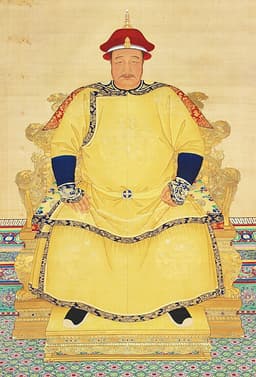
Hong Taiji
Emperor · Modern
78.3Total
Basic Information
Born
1769
1592
Died
1852
1643
Era
Modern
Modern
Nationality
United Kingdom
China
Occupation
General
Emperor
Civilization
Western
Eastern
Score Comparison
Military (10%)
78.0
85.0
Political (20%)
70.0
82.0
Influence (20%)
71.0
88.0
Legacy (20%)
80.0
65.0
Leadership (15%)
78.0
78.0
Strategy (15%)
72.0
76.0
TOTAL
75.0
78.3
Duke of Wellington — Complete Timeline
1803 AD
Battle of AssayeWar◆ Major
Wellington, then Sir Arthur Wellesley, led a British-Indian force to victory against the Maratha Confederacy at Assaye in India. Despite being outnumbered, his tactical skill secured British dominance in central India.
Maratha WarIndiaBattle
Impact: regional
1808 AD
Battle of VimeiroWar◆ Major
Wellington commanded British forces to defeat the French army at Vimeiro in Portugal. The victory halted the French invasion of Portugal and marked the beginning of the Peninsular War.
Peninsular WarPortugalBattle
Impact: regional
1815 AD
Battle of WaterlooWar
Wellington, commanding an Anglo-Allied army, defeated Napoleon Bonaparte at Waterloo in present-day Belgium. The battle ended the Napoleonic Wars and led to Napoleon's final exile to Saint Helena.
Napoleonic WarsBattleWaterloo
Impact: global
1828 AD
Prime Minister of the United KingdomPolitical Action◆ Major
Wellington served as Prime Minister of the UK from 1828 to 1830. His government passed the Catholic Relief Act 1829, granting Catholic emancipation, but his opposition to parliamentary reform led to his resignation.
PoliticsCatholic EmancipationReform
Impact: nationalconstructive
Hong Taiji — Complete Timeline
1631 AD
Adoption of Chinese-style governmentReform◆ Major
Hong Taiji established a Chinese-style bureaucracy, including the Six Ministries and a Hanlin Academy. He also introduced the civil service examination system for Han Chinese, integrating Confucian governance into the Qing state.
Government reformConfucian administrationSinification
Impact: regionalconstructive
1635 AD
Creation of the Eight Banners systemReform◆ Major
Hong Taiji reorganized the Eight Banners military system, incorporating Mongol and Han Chinese forces into separate banners. This created a multi-ethnic military structure that became the backbone of Qing power.
Military reformEight BannersMulti-ethnic army
Impact: regionalconstructive
Renaming of the Jurchen to ManchuPolitical Action◆ Major
Hong Taiji issued an edict renaming the Jurchen people as Manchu. This was part of his effort to create a unified identity for the various tribes under his rule and distance them from the historical Jurchen label.
Ethnic identityManchuJurchen
Impact: regionalconstructive
1636 AD
Proclamation of the Qing dynastyPolitical Action◆ Major
Hong Taiji declared the establishment of the Qing dynasty, replacing the Later Jin name. He adopted the Chinese imperial title and created a dual administrative system combining Manchu and Chinese institutions.
Dynasty foundingImperial titleQing dynasty
Impact: regionalconstructive
1640 AD
Conquest of the Ming Liaodong regionWar◆ Major
Hong Taiji's forces captured key Ming cities in Liaodong, including Jinzhou and Songshan. These victories secured Qing control over the strategic Liaoning corridor and weakened Ming defenses in the northeast.
Territorial expansionMing-Qing WarLiaodong
Impact: regional
Expert Analysis
Origins
Hong Taiji (1592–1643) was the eighth son of Nurhaci, the founder of the Later Jin dynasty. He inherited a burgeoning Jurchen state in Manchuria and transformed it into the Qing dynasty. His early life was steeped in tribal warfare and the consolidation of Jurchen tribes. In contrast, Arthur Wellesley, the Duke of Wellington (1769–1852), was born into the Anglo-Irish aristocracy in Dublin. He began his military career later, purchasing a commission, and rose through the ranks during the British campaigns in India. Both men came from backgrounds that demanded strategic acumen, but Hong Taiji's path was shaped by nomadic traditions and Chinese imperial ambitions, while Wellington's was defined by European colonial warfare and the struggle against Napoleonic France.
Rise to Power
Hong Taiji's rise was marked by his ability to centralize power. After Nurhaci's death, he became Khan in 1626, but faced challenges from rival princes. He outmaneuvered them by creating the Eight Banners system—a military-social organization that integrated Mongol and Chinese allies—and by renaming his people from Jurchen to Manchu in 1635 to foster unity. He proclaimed the Qing dynasty in 1636, signaling his intent to replace the Ming. His gradual conquest of Liaodong (1620s–1640s) provided a base for future campaigns. Wellington's rise began with his success in India, notably at the Battle of Assaye (1803), where he defeated the Maratha Confederacy despite being outnumbered. This earned him a knighthood and reputation. During the Peninsular War (1808–1814), he commanded British, Portuguese, and Spanish forces against French armies, winning key battles like Vimeiro (1808) and Talavera (1809). His defensive tactics and logistical brilliance made him a national hero, culminating in his appointment as Commander-in-Chief of the allied forces in 1814.
Leadership & Governance
Hong Taiji was a visionary ruler who adopted Chinese-style government while preserving Manchu identity. He established a bureaucratic system, adopted Confucian rituals, and promoted the use of Chinese officials alongside Manchu nobles. He also implemented agricultural reforms and fostered trade. His military leadership was characterized by strategic patience and the integration of diverse troops. Wellington, as a general, was known for his meticulous planning and defensive prowess. He famously said, "The whole art of war consists in getting at what is on the other side of the hill." As Prime Minister (1828–1830), he was less successful, opposing Catholic Emancipation initially and facing political turmoil. He was a conservative who resisted reform, leading to the passage of the Reform Act 1832 despite his opposition. In terms of governance, Hong Taiji's achievements were more enduring, as he laid the foundation for the Qing dynasty's 268-year rule.
Triumph & Tragedy
Hong Taiji's greatest triumph was the conquest of the Ming Liaodong region, which provided the springboard for the eventual Qing conquest of China. His proclamation of the Qing dynasty was a masterstroke of legitimacy. His tragedy was dying before the final conquest of Beijing, leaving his young son Shunzhi to succeed under a regent. His death may have been due to illness or overwork. Wellington's triumph was unequivocally the Battle of Waterloo (1815), where he, alongside Blücher, decisively defeated Napoleon. This victory ended the Napoleonic Wars and made him a European hero. His tragedy was the political strife after his military career; he was hated by radicals and faced assassination attempts. His later years were marked by the death of his wife and isolation. Both men experienced the pinnacle of success followed by personal loss.
Character & Destiny
Hong Taiji was intelligent, pragmatic, and ruthless. He eliminated rivals within his family and suppressed rebellions. He was also a patron of culture, commissioning the translation of Chinese texts into Manchu. His destiny was to create a dynasty that would rule China for centuries. Wellington was disciplined, stoic, and often cold. He was nicknamed "The Iron Duke" for his inflexibility. His destiny was to be the savior of Europe from Napoleon. Both were men of their times—Hong Taiji a steppe emperor adapting to settled civilization, Wellington a product of the Enlightenment and imperial Britain. Their characters reflect their paths: Hong Taiji's adaptability and Wellington's rigidity.
Legacy
Hong Taiji's legacy is the Qing dynasty itself. He created the political and military framework that allowed the Manchus to conquer and rule China. His renaming of the Manchu people and the Eight Banners system are still studied. He is remembered as a founder. Wellington's legacy is more mixed. As a military commander, he is among the greatest. His defensive tactics are taught in military academies. As a politician, he is seen as a reactionary. His name is immortalized in Wellington boots, beef Wellington, and places worldwide. In historical impact, Hong Taiji's dynasty shaped modern China, while Wellington's victory at Waterloo shaped 19th-century Europe. The score gap of 3.3 in favor of Hong Taiji reflects his broader and longer-lasting influence.
Conclusion
Comparing Hong Taiji and the Duke of Wellington reveals two vastly different but equally formidable leaders. Hong Taiji (Overall Score: 79.6) outranks Wellington (Overall Score: 76.3) due to his higher scores in military (85 vs 78), political (82 vs 70), and intellectual (88 vs 71) domains. While Wellington was a master tactician and a hero of Waterloo, his political career was less successful, and his legacy is more narrowly military. Hong Taiji's creation of the Qing dynasty and his administrative reforms had a profound and enduring impact on China. Therefore, in this matchup, Hong Taiji is the superior historical figure. His ability to transform a tribal confederation into a major dynasty that ruled for centuries demonstrates a level of strategic and organizational genius that Wellington, for all his brilliance, did not match.
Rankings
🥇
Hong TaijiLeader
Mil: 85.0Pol: 82.0Inf: 88.0
78.3
🥈
Duke of Wellington
Mil: 78.0Pol: 70.0Inf: 71.0
75.0
+3.3 behind
How This Comparison Works
Algorithm
Each figure is scored on 6 dimensions (0—100 scale) based on structured historical data: Military (10%), Political (20%), Influence (20%), Legacy (20%), Leadership (15%), Strategy (15%). The weighted total produces the final ranking.
Data Sources
Scores are computed from structured sub-indicators in the database. Scale factors adjust for era (Ancient ×0.85, Modern ×1.0) and civilization size (Eastern ×1.05, Other ×0.80) to account for differences in population and military scale.
Maximum 3 Figures
Comparisons are limited to 2—3 figures to ensure readability and statistical meaningfulness.
Error Margins
±5 points per dimension — Sub-scores are derived from historical records with inherent uncertainty. Two figures within 5 points on a dimension should be considered roughly equivalent in that area.
Total Score Accuracy
±3 points overall — The weighted combination of 6 dimensions produces a total score with approximately ±3 points of uncertainty. Differences of less than 3 points are not statistically significant— the figures are effectively tied.
Known Limitations
- Historical records are incomplete and uneven across civilizations
- Figures from oral-tradition societies may be underrepresented
- Occupation labels can misclassify multi-role figures
- Scores measure capability and impact, not moral character
- Quantitative scoring is a comparison tool, not absolute truth
Capability Radar
Military (10%) — Battles & Warfare
Battles
85
85
Win Rate
90
80
Expansion
75
90
Political (20%) — Governance & Reform
Reform
65
90
Diplomacy
80
85
Economy
60
80
Influence (20%) — Cultural & Global Reach
Cultural
75
80
Global
80
75
Legacy (20%) — Historical Impact
Historical
85
85
Longevity
80
80
Leadership (15%) — Power & Stability
Tenure
75
75
Stability
70
70
Strategy (15%) — Tactics & Innovation
Strategy
88
90
Tactics
92
85
Reform
70
90
Similar Comparisons
Comments & Discussion
No comments yet. Be the first to share your thoughts!