Loading...
This comparison has not been analyzed yet.
One-time AI generation (~1 minute). Scores and timeline are already available below.
Duke Mu of Qin vs Kumaragupta I
Kumaragupta I leads by 7.0 pts · 2 figures compared
…
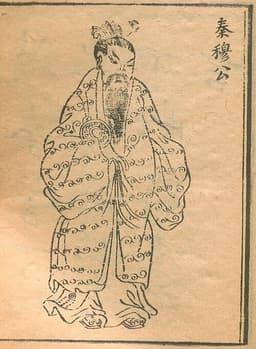
Duke Mu of Qin
Emperor · Ancient
52.9Total

Kumaragupta I
Emperor · Ancient
59.9Total
Basic Information
Born
-683
415
Died
-621
455
Era
Ancient
Ancient
Nationality
China
India
Occupation
Emperor
Emperor
Civilization
Eastern
Indian
Score Comparison
Military (10%)
52.5
60.0
Political (20%)
48.0
72.0
Influence (20%)
49.4
55.0
Legacy (20%)
44.2
55.0
Leadership (15%)
74.0
66.0
Strategy (15%)
60.0
57.5
TOTAL
52.9
59.9
Duke Mu of Qin — Complete Timeline
650 BC
Expanded Qin into Western TerritoriesWar◆ Major
Duke Mu of Qin led campaigns against the Rong and Di barbarian tribes to the west, conquering twelve minor states and opening up 1,000 li of territory. This expansion strengthened Qin and secured its western flank.
ExpansionBarbariansQin
Impact: regionalconstructive
645 BC
Allied with Jin StatePolitical Action◆ Major
Duke Mu formed an alliance with the state of Jin, marrying his daughter to Duke Hui of Jin. However, when Jin reneged on promises, Duke Mu attacked and defeated Jin at the Battle of Han, capturing Duke Hui.
AllianceJinBattle of Han
Impact: regional
636 BC
Aided Chong'er to Become Duke Wen of JinPolitical Action◆ Major
Duke Mu supported the exiled prince Chong'er, sending troops to help him return to Jin and become Duke Wen. This act created a powerful ally but also a future rival who would challenge Qin's dominance.
SupportJinDuke Wen
Impact: regionalconstructive
627 BC
Failed to Expand EastwardWar◆ Major
Duke Mu's attempt to expand eastward was thwarted by Jin at the Battle of Yao. Qin forces were ambushed and destroyed in a narrow pass, forcing Duke Mu to abandon eastern ambitions and focus on the west.
DefeatJinBattle of Yao
Impact: regionaldestructive
Kumaragupta I — Complete Timeline
415 AD
Issued the 'Kumaragupta' Coin SeriesCultural
Kumaragupta I issued a series of gold and silver coins depicting him in various roles, including as a horseman and a lion slayer. These coins reflected Gupta wealth and artistic achievement.
CoinageArtGupta
Impact: regionalconstructive
420 AD
Patronized the Arts and LiteratureCultural◆ Major
Kumaragupta I supported poets and scholars at his court, including the playwright Kalidasa. This patronage contributed to the Gupta Golden Age, fostering advancements in Sanskrit literature and drama.
PatronageLiteratureGupta Golden Age
Impact: regionalconstructive
427 AD
Founded Nalanda UniversityCultural
Kumaragupta I established the Nalanda Mahavihara, a major Buddhist monastic university. It became a premier center of learning in Asia, attracting scholars from China, Tibet, and Southeast Asia for centuries.
EducationBuddhismNalanda
Impact: globalconstructive
448 AD
Defended the Gupta Empire against the PushyamitrasWar◆ Major
Kumaragupta I led military campaigns to repel the Pushyamitra tribe, who threatened Gupta territories. His son Skandagupta played a key role in these battles, securing the empire's northern borders.
WarPushyamitraGupta
Impact: regional
This comparison has not been analyzed yet.
One-time AI generation (~1 minute). Scores and timeline are already available below.
Rankings
🥇
Kumaragupta ILeader
Mil: 60.0Pol: 72.0Inf: 55.0
59.9
🥈
Duke Mu of Qin
Mil: 52.5Pol: 48.0Inf: 49.4
52.9
+7.0 behind
How This Comparison Works
Algorithm
Each figure is scored on 6 dimensions (0—100 scale) based on structured historical data: Military (10%), Political (20%), Influence (20%), Legacy (20%), Leadership (15%), Strategy (15%). The weighted total produces the final ranking.
Data Sources
Scores are computed from structured sub-indicators in the database. Scale factors adjust for era (Ancient ×0.85, Modern ×1.0) and civilization size (Eastern ×1.05, Other ×0.80) to account for differences in population and military scale.
Maximum 3 Figures
Comparisons are limited to 2—3 figures to ensure readability and statistical meaningfulness.
Error Margins
±5 points per dimension — Sub-scores are derived from historical records with inherent uncertainty. Two figures within 5 points on a dimension should be considered roughly equivalent in that area.
Total Score Accuracy
±3 points overall — The weighted combination of 6 dimensions produces a total score with approximately ±3 points of uncertainty. Differences of less than 3 points are not statistically significant— the figures are effectively tied.
Known Limitations
- Historical records are incomplete and uneven across civilizations
- Figures from oral-tradition societies may be underrepresented
- Occupation labels can misclassify multi-role figures
- Scores measure capability and impact, not moral character
- Quantitative scoring is a comparison tool, not absolute truth
Capability Radar
Military (10%) — Battles & Warfare
Battles
45
55
Win Rate
50
60
Expansion
60
45
Political (20%) — Governance & Reform
Reform
40
65
Diplomacy
50
60
Economy
45
75
Influence (20%) — Cultural & Global Reach
Cultural
30
80
Global
25
70
Legacy (20%) — Historical Impact
Historical
45
75
Longevity
40
85
Leadership (15%) — Power & Stability
Tenure
55
70
Stability
50
65
Strategy (15%) — Tactics & Innovation
Strategy
55
55
Tactics
40
50
Reform
35
40
Similar Comparisons
Comments & Discussion
No comments yet. Be the first to share your thoughts!