Loading...
Duke Huan of Qi vs Hadrian
Hadrian leads by 3.1 pts · 2 figures compared
…
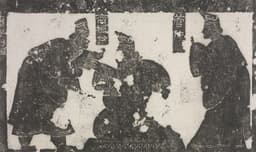
Duke Huan of Qi
Emperor · Ancient
62.3Total

Hadrian
Emperor · Ancient
65.4Total
Basic Information
Born
-685
76
Died
-643
138
Era
Ancient
Ancient
Nationality
China
Roman Empire
Occupation
Emperor
Emperor
Civilization
Eastern
Western
Score Comparison
Military (10%)
67.3
50.0
Political (20%)
65.0
72.0
Influence (20%)
60.0
72.0
Legacy (20%)
58.0
55.0
Leadership (15%)
72.0
78.0
Strategy (15%)
55.0
61.2
TOTAL
62.3
65.4
Duke Huan of Qi — Complete Timeline
685 BC
Reforms under Guan ZhongReform◆ Major
Duke Huan appointed Guan Zhong as chancellor, who implemented administrative and economic reforms. These included reorganizing the state into districts, standardizing taxes, and promoting trade, which strengthened Qi's power and wealth.
Qi StateReformGuan Zhong
Impact: regionalprogressive
Reign as Hegemon of QiPolitical Action◆ Major
Duke Huan of Qi became the first of the Five Hegemons, dominating the Spring and Autumn period. He used the authority of the Zhou king to lead alliances of states, maintaining order and defending against non-Chinese tribes.
Spring and AutumnHegemonAlliance
Impact: regionalconstructive
664 BC
Defeat of the Northern Di TribesWar
Duke Huan led a campaign against the Northern Di tribes who were threatening the states of Yan and Xing. His victory protected the northern borders and earned him gratitude from the Zhou court, enhancing his prestige as protector of Chinese civilization.
Spring and AutumnWarDefense
Impact: regionalconstructive
651 BC
Convening of the Alliance of KuiqiuPolitical Action◆ Major
Duke Huan convened a major alliance of states at Kuiqiu, where he reaffirmed the authority of the Zhou king and established a code of conduct among states. This meeting solidified his position as hegemon and set precedents for interstate relations.
Spring and AutumnAllianceHegemon
Impact: regionalconstructive
Hadrian — Complete Timeline
121 AD
Travels and Provincial ReformsPolitical Action◆ Major
Hadrian spent more than half his reign traveling through the provinces, inspecting troops and administration. He reformed provincial governance, improved infrastructure, and promoted cultural unity.
TravelProvincial AdministrationReform
Impact: globalconstructive
122 AD
Construction of Hadrian's WallOther
Hadrian ordered the construction of a defensive wall across northern Britain, from the Tyne to the Solway Firth. The wall marked the northern limit of Roman Britain and served as a military barrier and customs post.
FrontierBritainDefense
Impact: regionalconstructive
125 AD
Construction of the Pantheon (Reconstruction)Cultural◆ Major
Hadrian rebuilt the Pantheon in Rome, replacing an earlier structure. The new building featured a massive concrete dome with an oculus, a masterpiece of Roman engineering still standing today.
ArchitectureEngineeringRome
Impact: globalconstructive
132 AD
Bar Kokhba RevoltWar
Hadrian's decision to rebuild Jerusalem as Aelia Capitolina with a temple to Jupiter sparked the Bar Kokhba revolt. The revolt was brutally suppressed, resulting in the destruction of hundreds of Jewish settlements and the exile of Jews from Judea.
Jewish RevoltSuppressionDiaspora
Impact: regionaldestructive
138 AD
Adoption of Antoninus PiusPolitical Action◆ Major
Hadrian adopted Antoninus Pius as his successor, requiring Antoninus to adopt Marcus Aurelius and Lucius Verus. This ensured a stable succession and the era of the Five Good Emperors.
SuccessionAdoptionFive Good Emperors
Impact: globalconstructive
Expert Analysis
Origins
Duke Huan of Qi (born 685 BCE) was a member of the Jiang family, ruling the state of Qi during the Spring and Autumn period. His early life was marked by political turmoil; he ascended the throne after a power struggle with his brother, Prince Jiu, and relied on the advice of his chancellor Guan Zhong, who had initially opposed him. Duke Huan's formative experiences included exile and the need to consolidate power, which shaped his pragmatic and alliance-based approach.
Hadrian (born 76 CE) was born in Italica, Hispania, to a senatorial family. He was a cousin of Emperor Trajan and was groomed for leadership from an early age. Hadrian's education included Greek and Latin literature, military training, and administration. His early career included military service in various provinces, which gave him firsthand knowledge of the empire's frontiers.
Rise to Power
Duke Huan rose to prominence by appointing Guan Zhong as chancellor in 685 BCE, who implemented sweeping reforms. Guan Zhong reorganized Qi into districts, standardized taxes, and promoted trade. Duke Huan then used Qi's economic strength to form alliances with other states, positioning himself as protector of the Zhou king. The turning point was his convening of the Alliance of Kuiqiu in 651 BCE, where he established a code of conduct among states and reaffirmed the Zhou monarchy. This made him the first "Hegemon" (Ba) of the Spring and Autumn period.
Hadrian's rise was smoother: Trajan adopted him on his deathbed in 117 CE. However, Hadrian faced initial opposition from the Senate, which resented his withdrawal from Trajan's eastern conquests. To secure his position, he executed four senators suspected of conspiracy, a move that damaged his early reputation. He then focused on consolidating the empire, abandoning Mesopotamia and adopting a defensive strategy.
Leadership & Governance
Duke Huan ruled through a system of alliances and military intimidation. His governance relied heavily on Guan Zhong's reforms, which centralized administration and boosted Qi's economy. Duke Huan's leadership style was collaborative: he listened to Guan Zhong and other advisors, and his alliances were built on mutual benefit rather than conquest. For example, he protected the states of Yan and Xing from Northern Di tribes, earning their loyalty. His score of 72.0 in leadership reflects his ability to command respect without overwhelming force.
Hadrian's leadership was more autocratic and hands-on. He traveled extensively across the empire, inspecting troops and reforming provincial administration. He standardized military equipment and fortifications, such as Hadrian's Wall in Britain (built 122 CE). His political score of 72.0 highlights his administrative reforms, including the codification of Roman law and the improvement of infrastructure. However, his handling of the Bar Kokhba revolt (132-136 CE) showed a harsh side: he suppressed the Jewish rebellion with extreme brutality, killing hundreds of thousands and banning Jews from Jerusalem.
Triumph & Tragedy
Duke Huan's greatest triumph was achieving hegemony over the Chinese states, uniting them against external threats. His military score of 67.3 and strategy score of 55.0 indicate he was not a brilliant commander but succeeded through diplomacy and economic power. His tragedy came later: after Guan Zhong's death in 645 BCE, Duke Huan's judgment faltered. He trusted corrupt officials and fell into decline. He died in 643 BCE after a palace coup, leaving Qi weakened. His failure to secure a stable succession led to chaos.
Hadrian's triumphs include the construction of the Pantheon (rebuilt 126 CE), a masterpiece of engineering with its massive concrete dome, and the consolidation of Roman frontiers, which brought stability. His influence score of 72.0 reflects his lasting impact on architecture and law. However, his tragedy was the Bar Kokhba revolt, which devastated Judea and damaged his reputation. Additionally, his decision to withdraw from Trajan's conquests was seen by some as a loss of Roman prestige. His military score of 50.0 shows he prioritized defense over expansion.
Character & Destiny
Duke Huan was pragmatic, relying on Guan Zhong's wisdom. His character was marked by adaptability and a willingness to delegate. But his later reliance on flatterers led to his downfall. His destiny was tied to his chancellor's advice; without Guan Zhong, he faltered. Historical assessments note that his hegemony was a product of his partnership with Guan Zhong, not his own genius.
Hadrian was a complex figure: cultured, restless, and often ruthless. He was a philhellene, patron of the arts, and a meticulous administrator. But he could be paranoid, as seen in the execution of senators. His character shaped his destiny: his defensive policies preserved the empire but also sowed dissent in provinces like Judea. He died in 138 CE after a long illness, having secured a stable succession through adoption.
Legacy
Duke Huan's legacy is as the first of the Five Hegemons, a model of Chinese political authority. His system of alliances influenced later Chinese statecraft. However, his state of Qi did not endure as a major power after his death. His legacy score of 58.0 reflects his limited long-term impact compared to other Chinese figures.
Hadrian's legacy is more tangible: Hadrian's Wall still stands as a symbol of Roman frontier policy, and the Pantheon remains an architectural marvel. His legal reforms influenced later Roman law. His legacy score of 55.0 is slightly lower due to the controversial suppression of the Bar Kokhba revolt, which tarnished his reputation. Nonetheless, he is remembered as one of the "Five Good Emperors" for his administrative achievements.
Conclusion
Hadrian had a greater overall impact than Duke Huan of Qi. With a total score of 65.4 against Duke Huan's 62.3, Hadrian's influence through architecture, law, and frontier consolidation shaped the Roman Empire for centuries. Duke Huan's hegemony was significant but ephemeral; his achievements were largely dependent on Guan Zhong. Hadrian's reforms and buildings endured long after his death, while Duke Huan's Qi state collapsed. Thus, Hadrian's impact was more lasting and structurally transformative.
Rankings
🥇
HadrianLeader
Mil: 50.0Pol: 72.0Inf: 72.0
65.4
🥈
Duke Huan of Qi
Mil: 67.3Pol: 65.0Inf: 60.0
62.3
+3.1 behind
How This Comparison Works
Algorithm
Each figure is scored on 6 dimensions (0—100 scale) based on structured historical data: Military (10%), Political (20%), Influence (20%), Legacy (20%), Leadership (15%), Strategy (15%). The weighted total produces the final ranking.
Data Sources
Scores are computed from structured sub-indicators in the database. Scale factors adjust for era (Ancient ×0.85, Modern ×1.0) and civilization size (Eastern ×1.05, Other ×0.80) to account for differences in population and military scale.
Maximum 3 Figures
Comparisons are limited to 2—3 figures to ensure readability and statistical meaningfulness.
Error Margins
±5 points per dimension — Sub-scores are derived from historical records with inherent uncertainty. Two figures within 5 points on a dimension should be considered roughly equivalent in that area.
Total Score Accuracy
±3 points overall — The weighted combination of 6 dimensions produces a total score with approximately ±3 points of uncertainty. Differences of less than 3 points are not statistically significant— the figures are effectively tied.
Known Limitations
- Historical records are incomplete and uneven across civilizations
- Figures from oral-tradition societies may be underrepresented
- Occupation labels can misclassify multi-role figures
- Scores measure capability and impact, not moral character
- Quantitative scoring is a comparison tool, not absolute truth
Capability Radar
Military (10%) — Battles & Warfare
Battles
65
45
Win Rate
70
55
Expansion
70
30
Political (20%) — Governance & Reform
Reform
65
85
Diplomacy
80
80
Economy
75
75
Influence (20%) — Cultural & Global Reach
Cultural
65
70
Global
55
65
Legacy (20%) — Historical Impact
Historical
75
75
Longevity
70
80
Leadership (15%) — Power & Stability
Tenure
70
80
Stability
60
85
Strategy (15%) — Tactics & Innovation
Strategy
75
75
Tactics
60
60
Reform
55
70
Similar Comparisons
Comments & Discussion
No comments yet. Be the first to share your thoughts!