Loading...
Duke Huan of Qi vs Julius Caesar
Julius Caesar leads by 20.5 pts · 2 figures compared
…
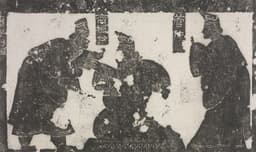
Duke Huan of Qi
Emperor · Ancient
62.3Total

Julius Caesar
General · Ancient
82.8Total
Basic Information
Born
-685
-100
Died
-643
-44
Era
Ancient
Ancient
Nationality
China
Roman Republic
Occupation
Emperor
General
Civilization
Eastern
Western
Score Comparison
Military (10%)
67.3
88.0
Political (20%)
65.0
78.0
Influence (20%)
60.0
85.0
Legacy (20%)
58.0
82.0
Leadership (15%)
72.0
80.0
Strategy (15%)
55.0
85.0
TOTAL
62.3
82.8
Duke Huan of Qi — Complete Timeline
685 BC
Reforms under Guan ZhongReform◆ Major
Duke Huan appointed Guan Zhong as chancellor, who implemented administrative and economic reforms. These included reorganizing the state into districts, standardizing taxes, and promoting trade, which strengthened Qi's power and wealth.
Qi StateReformGuan Zhong
Impact: regionalprogressive
Reign as Hegemon of QiPolitical Action◆ Major
Duke Huan of Qi became the first of the Five Hegemons, dominating the Spring and Autumn period. He used the authority of the Zhou king to lead alliances of states, maintaining order and defending against non-Chinese tribes.
Spring and AutumnHegemonAlliance
Impact: regionalconstructive
664 BC
Defeat of the Northern Di TribesWar
Duke Huan led a campaign against the Northern Di tribes who were threatening the states of Yan and Xing. His victory protected the northern borders and earned him gratitude from the Zhou court, enhancing his prestige as protector of Chinese civilization.
Spring and AutumnWarDefense
Impact: regionalconstructive
651 BC
Convening of the Alliance of KuiqiuPolitical Action◆ Major
Duke Huan convened a major alliance of states at Kuiqiu, where he reaffirmed the authority of the Zhou king and established a code of conduct among states. This meeting solidified his position as hegemon and set precedents for interstate relations.
Spring and AutumnAllianceHegemon
Impact: regionalconstructive
Julius Caesar — Complete Timeline
58 BC
Gallic WarsWar◆ Major
Caesar, as proconsul of Gaul, launched a series of campaigns that conquered all of Gaul (modern France, Belgium, and parts of Switzerland). He fought numerous battles, including against the Helvetii, the Belgae, and the Gallic chieftain Vercingetorix. The wars brought immense wealth and a loyal army to Caesar.
Gallic WarsConquestRoman Expansion
Impact: regional
49 BC
Crossing the RubiconPolitical Action◆ Major
Caesar led Legio XIII across the Rubicon River into Italy, defying the Roman Senate's order to disband his army. This act triggered a civil war against Pompey and the Optimates, ultimately leading to Caesar's dictatorship and the end of the Roman Republic.
Roman Civil WarEnd of RepublicPower Struggle
Impact: global
48 BC
Battle of PharsalusWar◆ Major
Caesar's outnumbered army defeated the larger forces of Pompey the Great at Pharsalus in Greece. Caesar's tactical use of a reserve line to counter Pompey's cavalry charge proved decisive. Pompey fled to Egypt, where he was assassinated, leaving Caesar as the undisputed master of the Roman world.
Roman Civil WarBattleDecisive Victory
Impact: regional
44 BC
Appointment as Dictator for LifePolitical Action◆ Major
The Roman Senate appointed Caesar dictator perpetuo (dictator for life), granting him unprecedented personal power. This move concentrated military, legislative, and judicial authority in one person, effectively ending the Roman Republic's traditional system of checks and balances and alarming many senators.
DictatorshipEnd of RepublicPower Consolidation
Impact: regionaldestructive
Assassination on the Ides of MarchPolitical Action◆ Major
A group of Roman senators, led by Marcus Junius Brutus and Gaius Cassius Longinus, stabbed Caesar to death at a meeting of the Senate in the Theatre of Pompey. The assassination was intended to restore the Republic, but instead triggered another civil war that led to the rise of the Roman Empire.
AssassinationRoman PoliticsEnd of Republic
Impact: globaldestructive
Expert Analysis
duke-huan-of-qi-vs-julius-caesar
# The General and the Hegemon: Caesar and Duke Huan of Qi
On the Ides of March, 44 BCE, a Roman dictator fell to twenty-three dagger wounds in the Senate chamber. His blood pooled on the marble floor, and with his last breath, the Roman Republic gasped its own death rattle. Half a world away and four centuries earlier, in 643 BCE, another ruler—Duke Huan of Qi—died in his bed, his body later found to be so neglected that maggots crawled from the palace doors. Two men, two civilizations, two utterly different ends. Yet both had reshaped their worlds. Why did one become a legend whose name still echoes in every Western schoolroom, while the other remains a footnote to all but specialists?
Origins
Julius Caesar was born into the chaos of the late Roman Republic, a world of civil wars, senatorial corruption, and a patrician class that clung to fading traditions. His family, the Julii, claimed descent from the goddess Venus, but they were not among the Republic’s wealthiest or most powerful. Caesar’s father died when he was sixteen, leaving him to navigate a treacherous political landscape where ambition was both currency and poison. He was a product of a society that worshipped military glory, political cunning, and personal honor—a triumvirate of values that would define his life.
Duke Huan of Qi, born in 685 BCE, inherited a different world. The Spring and Autumn period of ancient China was an age of fragmenting feudal states, where the Zhou king’s authority had become a hollow ritual. Dukes and marquesses fought not to destroy the old order but to dominate it—to become the “hegemon” who upheld the king’s nominal rule while wielding real power. Duke Huan’s Qi was a coastal state, rich in salt and iron, but his path was not one of divine ancestry. He came to power after a violent succession struggle, his brother having been murdered. His early years were marked by a desperate need to consolidate control.
Rise to Power
Caesar’s ascent was a masterpiece of calculated risk. He allied with Pompey and Crassus in the First Triumvirate in 60 BCE, secured the governorship of Gaul, and then spent eight years conquering a territory that made him fabulously wealthy and dangerously popular. His Commentaries on the Gallic Wars were not merely historical records but political propaganda, crafted to make his name immortal. When the Senate ordered him to disband his army, he crossed the Rubicon River in 49 BCE with a single legion, uttering the famous phrase “*Alea iacta est*”—the die is cast. It was an act of treason that ignited a civil war, and within four years, he was master of Rome.
Duke Huan’s rise was quieter but no less shrewd. He appointed Guan Zhong, a former rival, as his chancellor—a decision that modern political scientists would call genius and ancient Chinese historians would call virtuous. Guan Zhong’s reforms were the engine of Qi’s dominance: he reorganized the state into administrative districts, standardized taxes, and created a professional army. Where Caesar relied on personal charisma and military conquest, Duke Huan relied on institutional strength. His power came not from crossing a river but from convening alliances. In 651 BCE, at the Alliance of Kuiqiu, he gathered the feudal lords and reaffirmed the Zhou king’s authority—while subtly establishing himself as the true power behind the throne.
Leadership & Governance
Caesar governed as a revolutionary. He reformed the calendar, granted citizenship to provincials, and initiated massive public works. But his rule was always personal, autocratic, and fragile. He centralized authority in himself, packing the Senate with his supporters and accepting the title of “dictator for life.” His military genius was undeniable—his siege of Alesia in 52 BCE remains a textbook example of double-envelopment—but his political wisdom was undermined by his arrogance. He forgave his enemies, only to be killed by them.
Duke Huan governed as a hegemon, a concept that balanced force with legitimacy. He did not abolish the Zhou king; he used him. His military campaigns, like the 664 BCE defeat of the Northern Di tribes, were framed as protective interventions, not conquests. He saved the states of Yan and Xing from barbarian raids and then withdrew, demanding only recognition. This was statecraft as theater, where power was exercised through ritual and alliance rather than raw force. His reforms under Guan Zhong created a bureaucracy that outlasted any single ruler—a stark contrast to Caesar’s one-man rule.
Triumph & Tragedy
Caesar’s greatest triumph was the conquest of Gaul, which added a vast, wealthy province to Rome and gave him an army that worshipped him. His greatest tragedy was his assassination—a failure of political trust. He had pardoned his assassins, believed he could charm them, and walked into the Senate unarmed. His death plunged Rome into another civil war, from which his adopted heir, Octavian, emerged as the first emperor.
Duke Huan’s triumph was the Alliance of Kuiqiu, where he stood as the acknowledged hegemon of all China’s central states. His tragedy came in his final years. As he aged, his judgment failed. He trusted corrupt officials, alienated Guan Zhong’s successors, and allowed his sons to war over succession. When he died in 643 BCE, his body lay unattended for days, a symbol of how quickly power can rot without institutional foundations.
Character & Destiny
Caesar was driven by an insatiable need for glory. He was brilliant, charismatic, and reckless—a man who believed that fortune favored the bold. His destiny was to destroy the Republic he claimed to save, not out of malice but because he could imagine no other path. Duke Huan was more cautious, more pragmatic. He sought not to upend the world but to manage it. His destiny was to create a model of hegemonic power that would influence Chinese political thought for centuries, but his personal story ended in squalor.
Legacy
Caesar’s legacy is the Roman Empire. His name became a title—Kaiser, Tsar—and his reforms laid the groundwork for two thousand years of Western civilization. He is remembered as a genius and a tyrant, a man who changed history by sheer force of will. Duke Huan’s legacy is more diffuse but equally profound. He established the concept of the hegemon, a ruler who dominates through virtue and strength while maintaining the fiction of traditional authority. This idea—that power must be cloaked in legitimacy—became a cornerstone of Chinese governance. He is remembered not as a conqueror but as a pioneer of political order.
Conclusion
Two rulers, two worlds. Caesar burned bright and died young, leaving a trail of fire that still lights the Western imagination. Duke Huan built slowly and died forgotten, yet the structures he erected outlasted his own decay. The difference lies not in their ambition—both were immense—but in their civilizations. Rome demanded heroes and martyrs; China demanded architects and stewards. Caesar gave Rome what it wanted. Duke Huan gave China what it needed. And in the end, it is the hero who gets the headlines, but the architect who builds the house.
Rankings
🥇
Julius CaesarLeader
Mil: 88.0Pol: 78.0Inf: 85.0
82.8
🥈
Duke Huan of Qi
Mil: 67.3Pol: 65.0Inf: 60.0
62.3
+20.5 behind
How This Comparison Works
Algorithm
Each figure is scored on 6 dimensions (0—100 scale) based on structured historical data: Military (10%), Political (20%), Influence (20%), Legacy (20%), Leadership (15%), Strategy (15%). The weighted total produces the final ranking.
Data Sources
Scores are computed from structured sub-indicators in the database. Scale factors adjust for era (Ancient ×0.85, Modern ×1.0) and civilization size (Eastern ×1.05, Other ×0.80) to account for differences in population and military scale.
Maximum 3 Figures
Comparisons are limited to 2—3 figures to ensure readability and statistical meaningfulness.
Error Margins
±5 points per dimension — Sub-scores are derived from historical records with inherent uncertainty. Two figures within 5 points on a dimension should be considered roughly equivalent in that area.
Total Score Accuracy
±3 points overall — The weighted combination of 6 dimensions produces a total score with approximately ±3 points of uncertainty. Differences of less than 3 points are not statistically significant— the figures are effectively tied.
Known Limitations
- Historical records are incomplete and uneven across civilizations
- Figures from oral-tradition societies may be underrepresented
- Occupation labels can misclassify multi-role figures
- Scores measure capability and impact, not moral character
- Quantitative scoring is a comparison tool, not absolute truth
Capability Radar
Military (10%) — Battles & Warfare
Battles
65
95
Win Rate
70
92
Expansion
70
97
Political (20%) — Governance & Reform
Reform
65
90
Diplomacy
80
85
Economy
75
82
Influence (20%) — Cultural & Global Reach
Cultural
65
88
Global
55
94
Legacy (20%) — Historical Impact
Historical
75
95
Longevity
70
96
Leadership (15%) — Power & Stability
Tenure
70
75
Stability
60
60
Strategy (15%) — Tactics & Innovation
Strategy
75
94
Tactics
60
96
Reform
55
88
Similar Comparisons
Comments & Discussion
Caesar’s Ghost6/17/2026
Hard truth: Caesar was a coup plotter who destroyed a functioning republic for ego; Duke Huan restored order under the king. Comparing them as equals flatters Rome’s mediocre tyrant. Caesar’s “genius” is just Latin propaganda, while Huan kept his civilization intact for centuries. Try counting the dead from Gaul before praising Caesar.
罗马铁杆黑6/17/2026
恺撒就是个扛着共和旗子搞独裁的军阀,而齐桓公好歹真搞过尊王攘夷。说这俩是同类,简直侮辱中国文明的组织智慧。齐桓死时尸虫出户没人理?那是因为中国政治早玩明白了——没兵符的霸主就是个笑话,哪像罗马把独裁者捧成神。