Loading...
This comparison has not been analyzed yet.
One-time AI generation (~1 minute). Scores and timeline are already available below.
Draza Mihailovic vs Wei Fenghe
Wei Fenghe leads by 0.1 pts · 2 figures compared
…

Draza Mihailovic
General · Modern
46.4Total
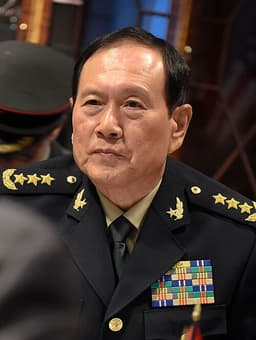
Wei Fenghe
General · Modern
46.5Total
Basic Information
Born
1893
1954
Died
1946
—
Era
Modern
Modern
Nationality
Yugoslavia
China
Occupation
General
General
Civilization
Western
Eastern
Score Comparison
Military (10%)
55.0
25.9
Political (20%)
30.8
35.1
Influence (20%)
54.1
51.8
Legacy (20%)
45.0
38.3
Leadership (15%)
36.9
74.0
Strategy (15%)
60.0
50.0
TOTAL
46.4
46.5
Draza Mihailovic — Complete Timeline
1941 AD
Appointed Commander of Chetnik DetachmentsPolitical Action◆ Major
Following the Axis invasion of Yugoslavia, Mihailovic was appointed commander of the Yugoslav Army in the Homeland (Chetniks). He established his headquarters in Ravna Gora, Serbia, and began organizing resistance against the German occupation.
World War IIResistanceChetniks
Impact: regional
1942 AD
Collaboration with Axis ForcesPolitical Action◆ Major
Mihailovic's Chetniks entered into tactical collaborations with Italian and German forces against the communist Partisans. This included ceasefires and joint operations, which later formed the basis for Allied accusations of collaboration.
World War IICollaborationChetniks
Impact: regionaldestructive
1943 AD
Abandoned by Allies at Tehran ConferencePolitical Action
At the Tehran Conference, the Allies decided to shift support from Mihailovic's Chetniks to Tito's Partisans. This decision was based on intelligence reports of Chetnik collaboration and the Partisans' more effective fighting against the Axis.
World War IIAllied DecisionTurning Point
Impact: regionaltragic
1946 AD
Captured by PartisansWar◆ Major
Mihailovic was captured by Yugoslav Partisan forces after months in hiding. He was brought to Belgrade to stand trial for treason and war crimes, marking the end of the Chetnik movement as a military force.
Post-WWIICaptureTrial
Impact: nationaltragic
Executed for TreasonPolitical Action◆ Major
Mihailovic was found guilty of treason and war crimes by a Yugoslav military court and executed by firing squad. The trial and execution were controversial, with some viewing him as a martyr for anti-communism and Serbian nationalism.
Post-WWIIExecutionControversy
Impact: nationaltragic
Wei Fenghe — Complete Timeline
2015 AD
Commander of the PLA Rocket ForcePolitical Action◆ Major
Wei Fenghe was appointed as the first commander of the newly established People's Liberation Army Rocket Force, which consolidated China's missile and nuclear forces. He oversaw the modernization of China's strategic deterrent, including the development of new intercontinental ballistic missiles.
Rocket ForceNuclear DeterrenceMilitary Reform
Impact: global
2018 AD
Appointed Defense Minister of ChinaPolitical Action◆ Major
Wei Fenghe was appointed as the Minister of National Defense of the People's Republic of China, succeeding Chang Wanquan. He became responsible for overseeing the People's Liberation Army's modernization and military diplomacy.
Chinese MilitaryAppointmentDefense Policy
Impact: global
2019 AD
Shangri-La Dialogue SpeechPolitical Action
Wei Fenghe delivered a speech at the Shangri-La Dialogue in Singapore, defending China's military buildup and South China Sea policies. He warned against foreign interference and emphasized China's right to self-defense, drawing criticism from the United States and allies.
Defense DiplomacySouth China SeaMilitary Posture
Impact: regional
2020 AD
US-China Military TensionsPolitical Action◆ Major
Wei Fenghe oversaw increased Chinese military activities in the South China Sea and Taiwan Strait, including exercises and patrols. He responded to US sanctions and arms sales to Taiwan with threats of retaliation, escalating tensions between the two militaries.
US-China RelationsTaiwanMilitary Confrontation
Impact: globaldestructive
This comparison has not been analyzed yet.
One-time AI generation (~1 minute). Scores and timeline are already available below.
Rankings
🥇
Wei FengheLeader
Mil: 25.9Pol: 35.1Inf: 51.8
46.5
🥈
Draza Mihailovic
Mil: 55.0Pol: 30.8Inf: 54.1
46.4
+0.1 behind
How This Comparison Works
Algorithm
Each figure is scored on 6 dimensions (0—100 scale) based on structured historical data: Military (10%), Political (20%), Influence (20%), Legacy (20%), Leadership (15%), Strategy (15%). The weighted total produces the final ranking.
Data Sources
Scores are computed from structured sub-indicators in the database. Scale factors adjust for era (Ancient ×0.85, Modern ×1.0) and civilization size (Eastern ×1.05, Other ×0.80) to account for differences in population and military scale.
Maximum 3 Figures
Comparisons are limited to 2—3 figures to ensure readability and statistical meaningfulness.
Error Margins
±5 points per dimension — Sub-scores are derived from historical records with inherent uncertainty. Two figures within 5 points on a dimension should be considered roughly equivalent in that area.
Total Score Accuracy
±3 points overall — The weighted combination of 6 dimensions produces a total score with approximately ±3 points of uncertainty. Differences of less than 3 points are not statistically significant— the figures are effectively tied.
Known Limitations
- Historical records are incomplete and uneven across civilizations
- Figures from oral-tradition societies may be underrepresented
- Occupation labels can misclassify multi-role figures
- Scores measure capability and impact, not moral character
- Quantitative scoring is a comparison tool, not absolute truth
Capability Radar
Military (10%) — Battles & Warfare
Battles
35
10
Win Rate
30
10
Expansion
15
10
Political (20%) — Governance & Reform
Reform
10
20
Diplomacy
25
30
Economy
10
10
Influence (20%) — Cultural & Global Reach
Cultural
30
10
Global
25
10
Legacy (20%) — Historical Impact
Historical
40
10
Longevity
20
10
Leadership (15%) — Power & Stability
Tenure
20
60
Stability
10
30
Strategy (15%) — Tactics & Innovation
Strategy
35
20
Tactics
40
20
Reform
20
30
Similar Comparisons
Comments & Discussion
No comments yet. Be the first to share your thoughts!