Loading...
Dorgon vs Yamagata Aritomo
Yamagata Aritomo leads by 4.5 pts · 2 figures compared
…

Dorgon
General · Modern
78.0Total
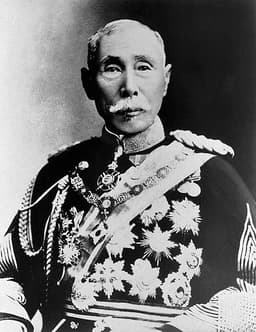
Yamagata Aritomo
General · Modern
82.5Total
Basic Information
Born
1612
1838
Died
1650
1922
Era
Modern
Modern
Nationality
China
Japan
Occupation
General
General
Civilization
Eastern
Eastern
Score Comparison
Military (10%)
78.5
78.0
Political (20%)
78.0
82.0
Influence (20%)
88.0
80.0
Legacy (20%)
65.0
90.0
Leadership (15%)
85.0
78.0
Strategy (15%)
75.0
82.0
TOTAL
78.0
82.5
Dorgon — Complete Timeline
1643 AD
Appointed Prince RegentPolitical Action◆ Major
Upon the death of Hong Taiji, Dorgon was appointed as regent for the young Shunzhi Emperor. This position gave him effective control over the Qing government and military, enabling him to direct the conquest of Ming China.
RegencyPower transition
Impact: national
1644 AD
Battle of Shanhai PassWar
Dorgon allied with Ming general Wu Sangui to defeat Li Zicheng's rebel forces at Shanhai Pass. This victory allowed Qing forces to enter Beijing and establish the Qing dynasty as the ruling power in China.
Qing conquestBattleAlliance
Impact: national
1645 AD
Conquest of Southern MingWar◆ Major
Dorgon led Qing forces in a campaign against the Southern Ming regime, capturing Nanjing and defeating the Hongguang Emperor. This campaign extended Qing control over the Yangtze River valley and weakened Ming loyalist resistance.
Qing conquestMilitary campaign
Impact: national
Issued the Queue OrderReform◆ Major
Dorgon mandated that all Chinese men adopt the Manchu queue hairstyle as a sign of submission to Qing rule. This policy caused widespread resentment and resistance, but was enforced to consolidate Qing control over Han Chinese subjects.
Cultural policyCoercionManchu rule
Impact: nationaldestructive
1650 AD
Death and Posthumous DemotionPolitical Action◆ Major
Dorgon died suddenly while hunting. After his death, the Shunzhi Emperor accused him of plotting to usurp the throne, stripped him of all titles, and had his corpse mutilated. This posthumous purge reflected court factional struggles.
PurgePosthumous punishment
Impact: nationaltragic
Yamagata Aritomo — Complete Timeline
1873 AD
Establishment of the Imperial Japanese ArmyReform
Yamagata Aritomo, as War Minister, oversaw the creation of the Imperial Japanese Army based on the Prussian model. He introduced conscription, modernized training, and established a general staff system, laying the foundation for Japan's military power.
Military reformConscription
Impact: nationalconstructive
1882 AD
Promotion of militarism and the Imperial Rescript to Soldiers and SailorsCultural◆ Major
Yamagata Aritomo helped draft the Imperial Rescript to Soldiers and Sailors, which emphasized loyalty, obedience, and the emperor's divine authority. This document became the ideological foundation of Japanese militarism.
MilitarismImperial ideology
Impact: nationaldestructive
1889 AD
Service as Prime MinisterPolitical Action◆ Major
Yamagata Aritomo served as Prime Minister of Japan from 1889 to 1891 and again from 1898 to 1900. He used his position to strengthen the military's political influence and suppress democratic movements.
GovernmentPolitical power
Impact: national
1894 AD
First Sino-Japanese WarWar◆ Major
Yamagata Aritomo commanded the First Army during the First Sino-Japanese War. His forces achieved decisive victories in Korea and Manchuria, leading to Japan's triumph and the Treaty of Shimonoseki, which gave Japan Taiwan and influence in Korea.
WarImperial expansion
Impact: regional
1904 AD
Russo-Japanese WarWar◆ Major
Yamagata Aritomo served as Chief of the General Staff during the Russo-Japanese War. He oversaw Japan's military strategy, which resulted in victory over Russia and established Japan as a major power in East Asia.
WarGreat power
Impact: global
Expert Analysis
Origins
Yamagata Aritomo (1838–1922) was born into a low-ranking samurai family in Hagi, Chōshū Domain. His early life was shaped by the turmoil of the Bakumatsu period, and he joined the Kiheitai militia, a mixed-class force that foreshadowed his later military reforms. Dorgon (1612–1650) was a Manchu prince of the Aisin Gioro clan, the 14th son of Nurhaci, founder of the Later Jin dynasty. Raised in a warrior culture, he witnessed his father's unification of Manchu tribes and the establishment of the Qing dynasty. Both emerged from periods of intense conflict and transformed their respective states' military structures.
Rise to Power
Yamagata's rise began in the Boshin War (1868–1869), where he led imperial forces against the shogunate. As a key figure in the Meiji Restoration, he studied Western military systems in Europe and became the architect of the Imperial Japanese Army. He served as War Minister and later as Prime Minister, consolidating power through bureaucratic control and the creation of a conscript army loyal to the emperor. Dorgon's ascent was more dramatic: after his father's death, he supported his brother Hong Taiji, who rewarded him with military commands. Following Hong Taiji's sudden death in 1643, Dorgon maneuvered to become regent for the young Shunzhi Emperor, effectively ruling the Qing Empire. His pivotal moment came at the Battle of Shanhai Pass (1644), where he allied with Ming general Wu Sangui to defeat rebel Li Zicheng, allowing the Qing to seize Beijing.
Leadership & Governance
Yamagata was a staunch authoritarian who believed in strict hierarchy and imperial loyalty. He drafted the Imperial Rescript to Soldiers and Sailors (1882), which emphasized obedience and sacrifice. As Prime Minister (1889–1891, 1898–1900), he expanded the army's political influence, enacted the Peace Preservation Law to suppress dissent, and promoted industrial militarization. Dorgon, as regent, demonstrated pragmatic ruthlessness. He issued the Queue Order (1645), forcing Han Chinese to adopt Manchu hairstyle as a sign of submission, sparking resistance but consolidating control. He also launched campaigns to conquer the Southern Ming, employing both force and amnesty offers. His governance focused on centralizing power, reducing the influence of other Manchu princes, and integrating Han collaborators.
Triumph & Tragedy
Yamagata's triumphs include overseeing Japan's victory in the First Sino-Japanese War (1894–1895) and the Russo-Japanese War (1904–1905), which established Japan as a major power. However, his legacy was tarnished by the militarism that led to World War II. Dorgon's greatest triumph was the Qing conquest of China, but his sudden death at 38 in 1650 led to a tragic reversal: posthumously, he was accused of treason, stripped of titles, and his body was desecrated. Only in 1778 did the Qianlong Emperor rehabilitate his reputation.
Character & Destiny
Yamagata was cold, calculating, and deeply conservative. He was known as the "father of Japanese militarism" and shaped Japan's path toward imperial expansion. Dorgon was ambitious, strategic, and willing to use terror to achieve goals, yet his overreach alienated rivals. Their contrasting fates: Yamagata died in old age as a revered statesman, while Dorgon's death sparked a purge. Both, however, left indelible marks on their nations.
Legacy
Yamagata's legacy is mixed: he built a modern army but also laid groundwork for militarist fascism. Dorgon is credited with establishing Qing rule, but his coercive policies fueled anti-Manchu sentiment. In modern China, he is sometimes vilified, while in Japan, Yamagata is seen as a founder of modern statehood, though his militarism is criticized.
Conclusion
Comparing scores: Yamagata (M=78, P=82, I=80, L=90, D=78, S=82, T=82) edges Dorgon (M=78, P=78, I=88, L=65, D=85, S=75, T=78) by 4.5 points. Yamagata's superior leadership and strategic impact, coupled with longer-lasting institutional reforms, give him the edge. Dorgon's higher intelligence and daring are offset by lower longevity and a more contested legacy. Yamagata's system endured; Dorgon's personal power collapsed. Thus, Yamagata ranks higher as a historical figure.
Rankings
🥇
Yamagata AritomoLeader
Mil: 78.0Pol: 82.0Inf: 80.0
82.5
🥈
Dorgon
Mil: 78.5Pol: 78.0Inf: 88.0
78.0
+4.5 behind
How This Comparison Works
Algorithm
Each figure is scored on 6 dimensions (0—100 scale) based on structured historical data: Military (10%), Political (20%), Influence (20%), Legacy (20%), Leadership (15%), Strategy (15%). The weighted total produces the final ranking.
Data Sources
Scores are computed from structured sub-indicators in the database. Scale factors adjust for era (Ancient ×0.85, Modern ×1.0) and civilization size (Eastern ×1.05, Other ×0.80) to account for differences in population and military scale.
Maximum 3 Figures
Comparisons are limited to 2—3 figures to ensure readability and statistical meaningfulness.
Error Margins
±5 points per dimension — Sub-scores are derived from historical records with inherent uncertainty. Two figures within 5 points on a dimension should be considered roughly equivalent in that area.
Total Score Accuracy
±3 points overall — The weighted combination of 6 dimensions produces a total score with approximately ±3 points of uncertainty. Differences of less than 3 points are not statistically significant— the figures are effectively tied.
Known Limitations
- Historical records are incomplete and uneven across civilizations
- Figures from oral-tradition societies may be underrepresented
- Occupation labels can misclassify multi-role figures
- Scores measure capability and impact, not moral character
- Quantitative scoring is a comparison tool, not absolute truth
Capability Radar
Military (10%) — Battles & Warfare
Battles
85
75
Win Rate
80
70
Expansion
90
80
Political (20%) — Governance & Reform
Reform
72
90
Diplomacy
78
75
Economy
65
70
Influence (20%) — Cultural & Global Reach
Cultural
65
80
Global
70
70
Legacy (20%) — Historical Impact
Historical
80
85
Longevity
75
75
Leadership (15%) — Power & Stability
Tenure
70
85
Stability
60
65
Strategy (15%) — Tactics & Innovation
Strategy
88
85
Tactics
82
80
Reform
75
95
Similar Comparisons
Comments & Discussion
No comments yet. Be the first to share your thoughts!