Loading...
Dorgon vs Le Duc Anh
Dorgon leads by 28.1 pts · 2 figures compared
…

Dorgon
General · Modern
78.0Total
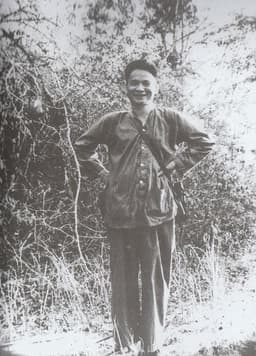
Le Duc Anh
General · Modern
49.9Total
Basic Information
Born
1612
1920
Died
1650
—
Era
Modern
Modern
Nationality
China
Vietnam
Occupation
General
General
Civilization
Eastern
Eastern
Score Comparison
Military (10%)
78.5
10.0
Political (20%)
78.0
68.0
Influence (20%)
88.0
53.3
Legacy (20%)
65.0
43.3
Leadership (15%)
85.0
68.0
Strategy (15%)
75.0
43.3
TOTAL
78.0
49.9
Dorgon — Complete Timeline
1643 AD
Appointed Prince RegentPolitical Action◆ Major
Upon the death of Hong Taiji, Dorgon was appointed as regent for the young Shunzhi Emperor. This position gave him effective control over the Qing government and military, enabling him to direct the conquest of Ming China.
RegencyPower transition
Impact: national
1644 AD
Battle of Shanhai PassWar
Dorgon allied with Ming general Wu Sangui to defeat Li Zicheng's rebel forces at Shanhai Pass. This victory allowed Qing forces to enter Beijing and establish the Qing dynasty as the ruling power in China.
Qing conquestBattleAlliance
Impact: national
1645 AD
Conquest of Southern MingWar◆ Major
Dorgon led Qing forces in a campaign against the Southern Ming regime, capturing Nanjing and defeating the Hongguang Emperor. This campaign extended Qing control over the Yangtze River valley and weakened Ming loyalist resistance.
Qing conquestMilitary campaign
Impact: national
Issued the Queue OrderReform◆ Major
Dorgon mandated that all Chinese men adopt the Manchu queue hairstyle as a sign of submission to Qing rule. This policy caused widespread resentment and resistance, but was enforced to consolidate Qing control over Han Chinese subjects.
Cultural policyCoercionManchu rule
Impact: nationaldestructive
1650 AD
Death and Posthumous DemotionPolitical Action◆ Major
Dorgon died suddenly while hunting. After his death, the Shunzhi Emperor accused him of plotting to usurp the throne, stripped him of all titles, and had his corpse mutilated. This posthumous purge reflected court factional struggles.
PurgePosthumous punishment
Impact: nationaltragic
Le Duc Anh — Complete Timeline
1954 AD
Commanded Forces in the Battle of Dien Bien PhuWar◆ Major
Le Duc Anh served as a regimental commander during the Battle of Dien Bien Phu, the decisive engagement that ended French colonial rule in Indochina. His unit played a key role in the siege, contributing to the Viet Minh victory.
Dien Bien PhuViet MinhIndochina War
Impact: regional
1979 AD
Led Vietnamese Forces in CambodiaWar◆ Major
Le Duc Anh commanded Vietnamese forces during the invasion of Cambodia in 1979, which overthrew the Khmer Rouge regime. He oversaw military operations that installed the People's Republic of Kampuchea and remained in command of occupation forces until 1987.
CambodiaInvasionKhmer Rouge
Impact: regional
1987 AD
Appointed Minister of DefensePolitical Action◆ Major
Le Duc Anh was appointed Minister of Defense of Vietnam in 1987, overseeing the military during the latter stages of the Cambodian occupation and the normalization of relations with China. He modernized the armed forces and reduced troop levels.
Minister of DefenseMilitaryVietnam
Impact: national
1992 AD
Elected President of VietnamPolitical Action◆ Major
Le Duc Anh was elected President of Vietnam by the National Assembly in September 1992, serving as head of state until 1997. His presidency focused on consolidating party rule and maintaining stability during the post-Doi Moi period.
PresidentVietnamHead of State
Impact: national
Expert Analysis
Origins
Dorgon (1612-1650) was born into the Aisin Gioro clan, the 14th son of Nurhaci, founder of the Later Jin dynasty. His mother was Lady Abahai, a secondary consort. Dorgon grew up in a militaristic environment, learning horsemanship and archery. After Nurhaci's death, his eighth brother Hong Taiji became khan, and Dorgon served as a major general in campaigns against the Ming and Korea.
Le Duc Anh (1920-2019) was born Le Van Giac in Phu Loc district, Thua Thien province, central Vietnam. His father was a poor farmer. He joined the Indochinese Communist Party in 1938 and adopted the name Le Duc Anh. He received military training under Vo Nguyen Giap and participated in anti-French resistance from the 1940s.
Rise to Power
Dorgon's rise accelerated after Hong Taiji's death in 1643. As one of the two princes eligible for succession, Dorgon used his influence to install Hong Taiji's young son Fulin as Shunzhi Emperor, making himself and Jirgalang co-regents. Dorgon quickly sidelined Jirgalang and assumed sole regency by 1644. That same year, he allied with Ming general Wu Sangui at the Battle of Shanhai Pass (1644), defeating Li Zicheng's rebel forces and capturing Beijing. This pivotal event allowed the Qing to claim the Mandate of Heaven.
Le Duc Anh's rise came through military service. He commanded a regiment at the Battle of Dien Bien Phu (1954), where French forces were defeated. After Vietnam's reunification in 1975, he became commander of Military Region 7, then led the 1979 invasion of Cambodia, overthrowing the Khmer Rouge. His success in Cambodia earned him promotion: Minister of Defense in 1987, and President of Vietnam in 1992.
Leadership & Governance
Dorgon ruled as regent with absolute authority. He implemented the Queue Order (1645), forcing Chinese men to shave their foreheads and braid their hair into a queue, a symbol of submission. This policy sparked resistance but was enforced ruthlessly. Dorgon also promoted Manchu customs while adopting Chinese bureaucratic structures, balancing ethnic control with administrative efficiency. His leadership score is 85.0, reflecting his decisive control.
Le Duc Anh's governance was more collective, typical of Vietnam's Communist Party. As President (1992-1997), he focused on economic reforms under Doi Moi, normalizing relations with China and the US. He oversaw military withdrawal from Cambodia in 1989. His political score (68.0) is lower than Dorgon's (78.0), as his power was constrained by party leadership.
Triumph & Tragedy
Dorgon's greatest success was conquering China for the Qing, defeating both the Ming loyalists and peasant rebels. He expanded Qing control to most of China proper by 1650. However, his greatest failure was his posthumous downfall. After his death in 1650, the Shunzhi Emperor accused him of plotting rebellion, stripped him of titles, and had his body exhumed and flogged. This reversal erased much of his legacy during the Qing.
Le Duc Anh's triumph was commanding the overthrow of the Khmer Rouge in 1979, ending a genocidal regime. His tragedy was the prolonged Cambodian occupation (1979-1989), which drew international condemnation and economic strain. His military score of 10.0 reflects limited combat command; he was more an administrator than battlefield commander.
Character & Destiny
Dorgon was ambitious and pragmatic. He formed strategic alliances (e.g., with Wu Sangui) and used force to suppress dissent. His death at 38, possibly from illness or poisoning, cut short his rule. His character—ruthless yet politically astute—enabled his rise but also fostered enemies who destroyed his reputation posthumously.
Le Duc Anh was cautious and loyal to the Communist Party. He survived purges and rose through steady service. His long life (99 years) allowed him to witness Vietnam's transformation. He was not a charismatic leader but a reliable functionary.
Legacy
Dorgon's legacy is complex. He established the Qing dynasty's rule over China, but his contributions were suppressed after his disgrace. Only in the 20th century did historians revive his role. His influence score (88.0) reflects his foundational impact on the Qing empire, which lasted until 1912.
Le Duc Anh's legacy is as a transitional figure. He led Vietnam through post-war normalization and economic opening. His role in Cambodia remains controversial. He is remembered as a steady hand rather than a transformative leader.
Conclusion
Dorgon had greater impact. His conquest of China reshaped East Asian history for centuries, while Le Duc Anh's influence was limited to Vietnam's regional sphere. Dorgon's total score (78.0) far exceeds Le Duc Anh's (49.9). The score gap of 28.1 points underscores Dorgon's superior military and political achievements. Though Le Duc Anh contributed to Vietnam's independence and stability, Dorgon's actions determined the fate of a vast empire.
Rankings
🥇
DorgonLeader
Mil: 78.5Pol: 78.0Inf: 88.0
78.0
🥈
Le Duc Anh
Mil: 10.0Pol: 68.0Inf: 53.3
49.9
+28.1 behind
How This Comparison Works
Algorithm
Each figure is scored on 6 dimensions (0—100 scale) based on structured historical data: Military (10%), Political (20%), Influence (20%), Legacy (20%), Leadership (15%), Strategy (15%). The weighted total produces the final ranking.
Data Sources
Scores are computed from structured sub-indicators in the database. Scale factors adjust for era (Ancient ×0.85, Modern ×1.0) and civilization size (Eastern ×1.05, Other ×0.80) to account for differences in population and military scale.
Maximum 3 Figures
Comparisons are limited to 2—3 figures to ensure readability and statistical meaningfulness.
Error Margins
±5 points per dimension — Sub-scores are derived from historical records with inherent uncertainty. Two figures within 5 points on a dimension should be considered roughly equivalent in that area.
Total Score Accuracy
±3 points overall — The weighted combination of 6 dimensions produces a total score with approximately ±3 points of uncertainty. Differences of less than 3 points are not statistically significant— the figures are effectively tied.
Known Limitations
- Historical records are incomplete and uneven across civilizations
- Figures from oral-tradition societies may be underrepresented
- Occupation labels can misclassify multi-role figures
- Scores measure capability and impact, not moral character
- Quantitative scoring is a comparison tool, not absolute truth
Capability Radar
Military (10%) — Battles & Warfare
Battles
85
40
Win Rate
80
45
Expansion
90
25
Political (20%) — Governance & Reform
Reform
72
40
Diplomacy
78
50
Economy
65
45
Influence (20%) — Cultural & Global Reach
Cultural
65
30
Global
70
20
Legacy (20%) — Historical Impact
Historical
80
35
Longevity
75
25
Leadership (15%) — Power & Stability
Tenure
70
55
Stability
60
50
Strategy (15%) — Tactics & Innovation
Strategy
88
40
Tactics
82
35
Reform
75
30
Similar Comparisons
Comments & Discussion
No comments yet. Be the first to share your thoughts!