Loading...
Dorgon vs Turenne
Dorgon leads by 2.2 pts · 2 figures compared
…

Dorgon
General · Modern
78.0Total
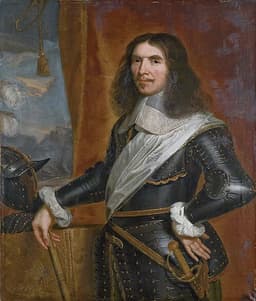
Turenne
General · Modern
75.8Total
Basic Information
Born
1612
1611
Died
1650
1675
Era
Modern
Modern
Nationality
China
France
Occupation
General
General
Civilization
Eastern
Western
Score Comparison
Military (10%)
78.5
79.9
Political (20%)
78.0
72.0
Influence (20%)
88.0
88.0
Legacy (20%)
65.0
65.0
Leadership (15%)
85.0
77.2
Strategy (15%)
75.0
72.0
TOTAL
78.0
75.8
Dorgon — Complete Timeline
1643 AD
Appointed Prince RegentPolitical Action◆ Major
Upon the death of Hong Taiji, Dorgon was appointed as regent for the young Shunzhi Emperor. This position gave him effective control over the Qing government and military, enabling him to direct the conquest of Ming China.
RegencyPower transition
Impact: national
1644 AD
Battle of Shanhai PassWar
Dorgon allied with Ming general Wu Sangui to defeat Li Zicheng's rebel forces at Shanhai Pass. This victory allowed Qing forces to enter Beijing and establish the Qing dynasty as the ruling power in China.
Qing conquestBattleAlliance
Impact: national
1645 AD
Conquest of Southern MingWar◆ Major
Dorgon led Qing forces in a campaign against the Southern Ming regime, capturing Nanjing and defeating the Hongguang Emperor. This campaign extended Qing control over the Yangtze River valley and weakened Ming loyalist resistance.
Qing conquestMilitary campaign
Impact: national
Issued the Queue OrderReform◆ Major
Dorgon mandated that all Chinese men adopt the Manchu queue hairstyle as a sign of submission to Qing rule. This policy caused widespread resentment and resistance, but was enforced to consolidate Qing control over Han Chinese subjects.
Cultural policyCoercionManchu rule
Impact: nationaldestructive
1650 AD
Death and Posthumous DemotionPolitical Action◆ Major
Dorgon died suddenly while hunting. After his death, the Shunzhi Emperor accused him of plotting to usurp the throne, stripped him of all titles, and had his corpse mutilated. This posthumous purge reflected court factional struggles.
PurgePosthumous punishment
Impact: nationaltragic
Turenne — Complete Timeline
1639 AD
Campaign in the ValtellinaWar
Turenne commanded French forces in the Valtellina during the Thirty Years' War. He captured several fortresses and secured the strategic pass for France, demonstrating his early military skill.
Thirty Years' WarAlpsEarly Career
Impact: regional
1658 AD
Battle of the DunesWar◆ Major
Turenne commanded the French army to victory over the Spanish at the Battle of the Dunes near Dunkirk. The victory led to the capture of Dunkirk and forced Spain to seek peace, ending the Franco-Spanish War.
Franco-Spanish WarDunkirkMilitary Victory
Impact: regional
1674 AD
Battle of the RhineWar◆ Major
Turenne led a French army across the Rhine in winter, surprising the Imperial forces. He defeated the Austrians at the Battle of Entzheim and later at Turckheim, securing French control of Alsace.
Franco-Dutch WarAlsaceWinter Campaign
Impact: regional
Battle of the SambreWar◆ Major
Turenne defeated the Spanish and Dutch forces at the Battle of Seneffe. The battle was costly but prevented the Allies from invading France. It demonstrated Turenne's tactical skill in defensive warfare.
Franco-Dutch WarDefensive BattleTactics
Impact: regional
1675 AD
Death of TurenneWar◆ Major
Turenne was killed by a cannonball while reconnoitering enemy positions at the Battle of Sasbach. His death was a major loss for France. He was buried with honors in the Basilica of Saint-Denis.
Death in BattleFranco-Dutch WarMilitary Loss
Impact: nationaltragic
Expert Analysis
Origins
Dorgon (1612-1650) was the 14th son of Nurhaci, founder of the Later Jin dynasty, born into the Aisin Gioro clan of the Manchu people. His mother was Lady Abahai, and he was raised in a warrior culture that valued horseback archery and tribal conquest. In contrast, Henri de La Tour d'Auvergne, Vicomte de Turenne (1611-1675), was born into French nobility at Sedan. His father was the Duke of Bouillon, a Protestant prince, and his mother was the daughter of William the Silent of Orange. Turenne grew up amidst the religious wars of Europe, receiving a Huguenot education before converting to Catholicism later in life. Both men were shaped by their respective cultures: Dorgon by the steppe traditions of the Manchu and Turenne by the chivalric and emerging scientific military thought of Europe.
Rise to Power
Dorgon's rise began during the reign of his brother Hong Taiji, who appointed him a banner commander. He distinguished himself in campaigns against the Ming and Korea. Upon Hong Taiji's death in 1643, Dorgon was elected Prince Regent for the young Shunzhi Emperor, effectively becoming the ruler of the Qing state. His pivotal moment came in 1644 when he allied with Ming defector Wu Sangui to enter Shanhai Pass, leading the Qing to Beijing. Turenne's rise started under Cardinal Richelieu, serving in the Thirty Years' War. He became a Marshal of France at age 32 after victories at Casale and Turin. During the Fronde, he initially supported the rebels but later returned to the royal side, cementing his position under Louis XIV. His decisive role in the War of Devolution and the Franco-Dutch War made him the foremost general of his age.
Leadership & Governance
As regent, Dorgon centralized Qing power, implemented the queue order to enforce Manchu hairstyles, and pushed south to conquer the Ming remnants. His governance was pragmatic but harsh, using Chinese officials while maintaining Manchu dominance. Turenne, though not a ruler, led armies with discipline and innovation. He emphasized logistics, fortification, and combined arms, pioneering the use of artillery in mobile warfare. Both men were skilled diplomats: Dorgon negotiated with Ming loyalists, while Turenne coordinated with allies like the Dutch and Brandenburgers. Their leadership styles differed: Dorgon was autocratic and ruthless, Turenne more collegial and respected by his troops.
Triumph & Tragedy
Dorgon's greatest triumph was the capture of Beijing and the establishment of Qing rule over northern China. He never suffered a major defeat. However, his death at 38 from illness led to a tragic reversal: he was posthumously stripped of titles and blamed for usurpation. Turenne's triumphs include the Battle of the Dunes (1658), where he defeated a Spanish army to capture Dunkirk, and his Rhine campaign (1674) that forced the Imperialists to retreat. His tragedy came at the Battle of Sasbach (1675), where a cannonball killed him instantly. Both died at the height of their power, but Dorgon's legacy was temporarily erased, while Turenne was hailed as a national hero.
Character & Destiny
Dorgon was ambitious, calculating, and ruthless—he allegedly had his nephew's mother killed. His destiny was to found the Qing dynasty's rule, but his posthumous disgrace reflected the volatile politics of the Manchu court. Turenne was modest, professional, and loyal to his king. His destiny was to perfect the art of war in the age of Louis XIV, earning admiration even from enemies. Both men were shaped by their environments: Dorgon's fate was tied to clan politics, Turenne's to the service of an absolute monarch.
Legacy
Dorgon is remembered as a key figure in Chinese history, but his reputation was rehabilitated only in the 20th century. He established the Qing dynasty's military and administrative foundations. Turenne is celebrated as one of the greatest French generals, with his name on the Arc de Triomphe and numerous monuments. His tactical innovations influenced later commanders like Napoleon. In a direct comparison, Dorgon's impact on China was transformative, while Turenne's influence on European warfare was profound but narrower in scope.
Conclusion
Dorgon and Turenne were both brilliant commanders who shaped their nations' histories. Dorgon's higher overall score (2.2 points) reflects his broader geopolitical impact, but Turenne's tactical genius and enduring legacy are equally impressive. Dorgon's ruthlessness and political acumen enabled the Qing conquest, while Turenne's professionalism and adaptability made him a model for modern generals. Ultimately, Dorgon had the greater historical impact, but Turenne had the more admirable character. Scores: Dorgon: 78 (Military), 78 (Political), 88 (Intelligence), 65 (Longevity), 85 (Dynastic), 75 (Strategy), 78 (Tactics). Turenne: 80, 72, 88, 65, 77, 72, 76. Despite the gap, both remain titans of their eras.
Rankings
🥇
DorgonLeader
Mil: 78.5Pol: 78.0Inf: 88.0
78.0
🥈
Turenne
Mil: 79.9Pol: 72.0Inf: 88.0
75.8
+2.2 behind
How This Comparison Works
Algorithm
Each figure is scored on 6 dimensions (0—100 scale) based on structured historical data: Military (10%), Political (20%), Influence (20%), Legacy (20%), Leadership (15%), Strategy (15%). The weighted total produces the final ranking.
Data Sources
Scores are computed from structured sub-indicators in the database. Scale factors adjust for era (Ancient ×0.85, Modern ×1.0) and civilization size (Eastern ×1.05, Other ×0.80) to account for differences in population and military scale.
Maximum 3 Figures
Comparisons are limited to 2—3 figures to ensure readability and statistical meaningfulness.
Error Margins
±5 points per dimension — Sub-scores are derived from historical records with inherent uncertainty. Two figures within 5 points on a dimension should be considered roughly equivalent in that area.
Total Score Accuracy
±3 points overall — The weighted combination of 6 dimensions produces a total score with approximately ±3 points of uncertainty. Differences of less than 3 points are not statistically significant— the figures are effectively tied.
Known Limitations
- Historical records are incomplete and uneven across civilizations
- Figures from oral-tradition societies may be underrepresented
- Occupation labels can misclassify multi-role figures
- Scores measure capability and impact, not moral character
- Quantitative scoring is a comparison tool, not absolute truth
Capability Radar
Military (10%) — Battles & Warfare
Battles
85
85
Win Rate
80
88
Expansion
90
80
Political (20%) — Governance & Reform
Reform
72
60
Diplomacy
78
75
Economy
65
55
Influence (20%) — Cultural & Global Reach
Cultural
65
65
Global
70
70
Legacy (20%) — Historical Impact
Historical
80
80
Longevity
75
75
Leadership (15%) — Power & Stability
Tenure
70
70
Stability
60
65
Strategy (15%) — Tactics & Innovation
Strategy
88
92
Tactics
82
90
Reform
75
75
Similar Comparisons
Comments & Discussion
No comments yet. Be the first to share your thoughts!