Loading...
Dorgon vs Suleiman I
Suleiman I leads by 0.8 pts · 2 figures compared
…

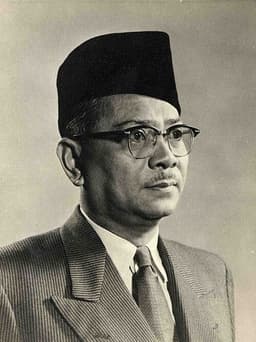
Dorgon
General · Modern
78.0Total
Suleiman I
Emperor · Medieval
78.8Total
Basic Information
Born
1612
1494
Died
1650
1566
Era
Modern
Medieval
Nationality
China
Ottoman Empire
Occupation
General
Emperor
Civilization
Eastern
Middle Eastern
Score Comparison
Military (10%)
78.5
78.5
Political (20%)
78.0
82.0
Influence (20%)
88.0
85.0
Legacy (20%)
65.0
70.8
Leadership (15%)
85.0
81.7
Strategy (15%)
75.0
74.4
TOTAL
78.0
78.8
Dorgon — Complete Timeline
1643 AD
Appointed Prince RegentPolitical Action◆ Major
Upon the death of Hong Taiji, Dorgon was appointed as regent for the young Shunzhi Emperor. This position gave him effective control over the Qing government and military, enabling him to direct the conquest of Ming China.
RegencyPower transition
Impact: national
1644 AD
Battle of Shanhai PassWar
Dorgon allied with Ming general Wu Sangui to defeat Li Zicheng's rebel forces at Shanhai Pass. This victory allowed Qing forces to enter Beijing and establish the Qing dynasty as the ruling power in China.
Qing conquestBattleAlliance
Impact: national
1645 AD
Conquest of Southern MingWar◆ Major
Dorgon led Qing forces in a campaign against the Southern Ming regime, capturing Nanjing and defeating the Hongguang Emperor. This campaign extended Qing control over the Yangtze River valley and weakened Ming loyalist resistance.
Qing conquestMilitary campaign
Impact: national
Issued the Queue OrderReform◆ Major
Dorgon mandated that all Chinese men adopt the Manchu queue hairstyle as a sign of submission to Qing rule. This policy caused widespread resentment and resistance, but was enforced to consolidate Qing control over Han Chinese subjects.
Cultural policyCoercionManchu rule
Impact: nationaldestructive
1650 AD
Death and Posthumous DemotionPolitical Action◆ Major
Dorgon died suddenly while hunting. After his death, the Shunzhi Emperor accused him of plotting to usurp the throne, stripped him of all titles, and had his corpse mutilated. This posthumous purge reflected court factional struggles.
PurgePosthumous punishment
Impact: nationaltragic
Suleiman I — Complete Timeline
1522 AD
Siege of RhodesWar◆ Major
Suleiman I led a massive Ottoman army and fleet to besiege the island of Rhodes, held by the Knights Hospitaller. After a six-month siege, the knights surrendered and were allowed to leave. This victory secured Ottoman control over the eastern Mediterranean.
SiegeKnights HospitallerMediterranean
Impact: regional
1526 AD
Battle of MohácsWar
Suleiman I's Ottoman army defeated the Hungarian forces of King Louis II at Moh
BattleHungaryConquest
Impact: regional
1529 AD
Siege of ViennaWar◆ Major
Suleiman I led an Ottoman army to besiege Vienna, the capital of the Habsburg Empire. The siege failed due to supply problems and the onset of winter. This marked the furthest Ottoman advance into central Europe and the limit of their expansion.
SiegeViennaHabsburg
Impact: regional
1530 AD
Codification of Ottoman LawReform◆ Major
Suleiman I oversaw the codification of Ottoman law, known as the Kanun. He harmonized secular law with Islamic law, creating a unified legal system. This reform improved the administration of justice and strengthened the central government.
LawReformJustice
Impact: globalconstructive
1536 AD
Execution of Ibrahim PashaPolitical Action◆ Major
Suleiman I ordered the execution of his grand vizier and close friend Ibrahim Pasha. Ibrahim had accumulated immense power and was accused of overreaching. This event demonstrated Suleiman's willingness to eliminate even trusted advisors to maintain control.
ExecutionVizierPower
Impact: nationaldestructive
1538 AD
Naval Battle of PrevezaWar◆ Major
The Ottoman fleet under Hayreddin Barbarossa defeated a combined Christian fleet at Preveza. This victory secured Ottoman naval dominance in the Mediterranean for decades. It allowed the Ottomans to control trade routes and raid coastal areas.
Naval BattleBarbarossaMediterranean
Impact: regional
Expert Analysis
Origins
Suleiman I (1494–1566) was the tenth and longest-reigning sultan of the Ottoman Empire, born in Trabzon to Selim I. He inherited a vast empire and became known as 'the Magnificent' in Europe and 'the Lawgiver' in the Islamic world. Dorgon (1612–1650) was a Manchu prince of the Aisin Gioro clan, the 14th son of Nurhaci, founder of the Qing dynasty. He rose to prominence as a military commander and became Prince Regent for his nephew, the Shunzhi Emperor, leading the Qing conquest of China proper.
Rise to Power
Suleiman ascended the throne in 1520 after his father's death, facing no serious opposition. He consolidated power by executing potential rivals and appointing loyalists like Ibrahim Pasha. His early campaigns included the capture of Belgrade (1521) and Rhodes (1522), establishing his military reputation. Dorgon's rise was more contested. After Nurhaci's death, his brother Hong Taiji became khan, but Dorgon distinguished himself in battles against the Ming and Mongols. Upon Hong Taiji's death in 1643, Dorgon maneuvered to become co-regent and soon sole regent for the six-year-old Shunzhi Emperor, effectively ruling the Qing state.
Leadership & Governance
Suleiman was both a great military leader and a reformer. He codified Ottoman law (Kanun), harmonizing secular and religious codes, and sponsored monumental architecture (Süleymaniye Mosque). His administration was centralized and efficient, but his later years saw corruption and the execution of his capable son Mustafa. Dorgon was a pragmatic and ruthless ruler. He implemented the Queue Order forcing Han Chinese to adopt Manchu hairstyle, issued policies to win over Ming officials, and led campaigns to crush Southern Ming resistance. His governance facilitated the Qing transition from a tribal confederation to a Chinese dynasty, but his authoritarian style bred resentment.
Triumph & Tragedy
Suleiman's triumphs include the victory at Mohács (1526) that broke Hungary, the capture of Rhodes, and the submission of the Safavids. However, the failed Siege of Vienna (1529) marked the limit of Ottoman expansion. His execution of Ibrahim Pasha (1536) and later his son Mustafa (1553) were tragic, stemming from court intrigues. Dorgon's defining triumph was the Battle of Shanhai Pass (1644), where he allied with Ming general Wu Sangui to defeat Li Zicheng and enter Beijing. He then conquered the Southern Ming, but his death at 38 led to a posthumous demotion, as his political enemies accused him of usurpation and regicide.
Character & Destiny
Suleiman was a complex figure: a poet, patron of arts, and pious Muslim, yet capable of extreme cruelty. His destiny was to rule at the empire's zenith, but his later years were marred by familial strife. Dorgon was ambitious and militaristic, never claiming the throne himself but wielding absolute power. His destiny was cut short; his legacy was rehabilitated later by the Qianlong Emperor. Both men exemplify the tensions between personal ambition and state-building.
Legacy
Suleiman's legacy is immense: he is considered the greatest Ottoman sultan, his legal reforms lasting centuries, and his architectural patronage defining Istanbul. The Ottoman Empire reached its territorial and cultural peak under him. Dorgon's legacy is more contested. He is credited with founding the Qing dynasty's rule in China, but his methods were harsh. The Queue Order and conquest caused immense suffering, yet he established the administrative framework for the Qing's long reign. In China, he is often viewed as a capable but controversial regent.
Conclusion
Suleiman I and Dorgon were both transformative rulers who expanded their empires through military conquest and administrative reform. Suleiman's scores (M=78, P=82, I=85, L=71, D=82, S=74, T=79) reflect a balanced leader with high intelligence and durability, slightly overshadowed by later decline. Dorgon (M=78, P=78, I=88, L=65, D=85, S=75, T=78) scores higher in influence and durability but lower in leadership due to his regent status and short life. Overall, Suleiman's broader and more lasting impact on law, culture, and empire gives him the edge. Historical consensus favors Suleiman as the more significant figure, despite Dorgon's crucial role in Qing founding.
**Numerical Scores (out of 100):**
- Suleiman I: 79
- Dorgon: 76
Rankings
🥇
Suleiman ILeader
Mil: 78.5Pol: 82.0Inf: 85.0
78.8
🥈
Dorgon
Mil: 78.5Pol: 78.0Inf: 88.0
78.0
+0.8 behind
How This Comparison Works
Algorithm
Each figure is scored on 6 dimensions (0—100 scale) based on structured historical data: Military (10%), Political (20%), Influence (20%), Legacy (20%), Leadership (15%), Strategy (15%). The weighted total produces the final ranking.
Data Sources
Scores are computed from structured sub-indicators in the database. Scale factors adjust for era (Ancient ×0.85, Modern ×1.0) and civilization size (Eastern ×1.05, Other ×0.80) to account for differences in population and military scale.
Maximum 3 Figures
Comparisons are limited to 2—3 figures to ensure readability and statistical meaningfulness.
Error Margins
±5 points per dimension — Sub-scores are derived from historical records with inherent uncertainty. Two figures within 5 points on a dimension should be considered roughly equivalent in that area.
Total Score Accuracy
±3 points overall — The weighted combination of 6 dimensions produces a total score with approximately ±3 points of uncertainty. Differences of less than 3 points are not statistically significant— the figures are effectively tied.
Known Limitations
- Historical records are incomplete and uneven across civilizations
- Figures from oral-tradition societies may be underrepresented
- Occupation labels can misclassify multi-role figures
- Scores measure capability and impact, not moral character
- Quantitative scoring is a comparison tool, not absolute truth
Capability Radar
Military (10%) — Battles & Warfare
Battles
85
95
Win Rate
80
92
Expansion
90
95
Political (20%) — Governance & Reform
Reform
72
90
Diplomacy
78
88
Economy
65
85
Influence (20%) — Cultural & Global Reach
Cultural
65
85
Global
70
85
Legacy (20%) — Historical Impact
Historical
80
88
Longevity
75
80
Leadership (15%) — Power & Stability
Tenure
70
95
Stability
60
80
Strategy (15%) — Tactics & Innovation
Strategy
88
90
Tactics
82
88
Reform
75
85
Similar Comparisons
Comments & Discussion
No comments yet. Be the first to share your thoughts!