Loading...
Dorgon vs Otto I the Great
Dorgon leads by 2.8 pts · 2 figures compared
…

Dorgon
General · Modern
78.0Total
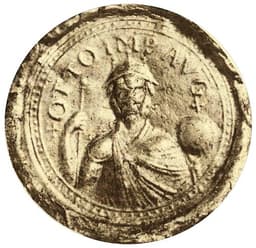
Otto I the Great
Emperor · Medieval
75.2Total
Basic Information
Born
1612
912
Died
1650
973
Era
Modern
Medieval
Nationality
China
Holy Roman Empire
Occupation
General
Emperor
Civilization
Eastern
Western
Score Comparison
Military (10%)
78.5
82.0
Political (20%)
78.0
70.0
Influence (20%)
88.0
88.0
Legacy (20%)
65.0
65.0
Leadership (15%)
85.0
78.0
Strategy (15%)
75.0
65.4
TOTAL
78.0
75.2
Dorgon — Complete Timeline
1643 AD
Appointed Prince RegentPolitical Action◆ Major
Upon the death of Hong Taiji, Dorgon was appointed as regent for the young Shunzhi Emperor. This position gave him effective control over the Qing government and military, enabling him to direct the conquest of Ming China.
RegencyPower transition
Impact: national
1644 AD
Battle of Shanhai PassWar
Dorgon allied with Ming general Wu Sangui to defeat Li Zicheng's rebel forces at Shanhai Pass. This victory allowed Qing forces to enter Beijing and establish the Qing dynasty as the ruling power in China.
Qing conquestBattleAlliance
Impact: national
1645 AD
Conquest of Southern MingWar◆ Major
Dorgon led Qing forces in a campaign against the Southern Ming regime, capturing Nanjing and defeating the Hongguang Emperor. This campaign extended Qing control over the Yangtze River valley and weakened Ming loyalist resistance.
Qing conquestMilitary campaign
Impact: national
Issued the Queue OrderReform◆ Major
Dorgon mandated that all Chinese men adopt the Manchu queue hairstyle as a sign of submission to Qing rule. This policy caused widespread resentment and resistance, but was enforced to consolidate Qing control over Han Chinese subjects.
Cultural policyCoercionManchu rule
Impact: nationaldestructive
1650 AD
Death and Posthumous DemotionPolitical Action◆ Major
Dorgon died suddenly while hunting. After his death, the Shunzhi Emperor accused him of plotting to usurp the throne, stripped him of all titles, and had his corpse mutilated. This posthumous purge reflected court factional struggles.
PurgePosthumous punishment
Impact: nationaltragic
Otto I the Great — Complete Timeline
951 AD
Diplomatic Marriage to Adelaide of ItalyPolitical Action◆ Major
Otto married Adelaide, the widowed queen of Italy, after intervening in Italian politics. This marriage gave him control over the Kingdom of Italy and strengthened his claim to imperial authority.
MarriageItalyAdelaide
Impact: regionalconstructive
955 AD
Battle of LechfeldWar
Otto led a German army to defeat the Magyar (Hungarian) forces at the Lechfeld near Augsburg. This victory ended Magyar raids into Western Europe and secured Otto's reputation as a defender of Christendom.
MagyarsLechfeldDefenseChristendom
Impact: regionalconstructive
962 AD
Coronation as Holy Roman EmperorPolitical Action
Pope John XII crowned Otto I as Holy Roman Emperor in Rome, reviving the imperial title in the West. This event established the Holy Roman Empire as a major political entity and linked German kingship with papal authority.
CoronationHoly Roman EmpirePapacy
Impact: globalconstructive
Expert Analysis
Origins
Dorgon (1612–1650) was the 14th son of Nurhaci, the founder of the Later Jin dynasty. As a Manchu prince, he grew up in a militaristic society that valued horseback archery and tribal loyalty. His early career was marked by participation in his father's campaigns against the Ming dynasty and the Koreans. In contrast, Otto I (912–973) was the son of Henry the Fowler, the first Saxon king of East Francia. Otto inherited a realm fractured by tribal duchies and external threats from Magyars, Slavs, and Vikings. While Dorgon emerged from a steppe confederation expanding into a sedentary empire, Otto rose from the chaos of post-Carolingian Europe to consolidate a new imperial order.
Rise to Power
Dorgon's rise was accelerated by the death of his brother Hong Taiji in 1643. As a co-regent for the young Shunzhi Emperor, Dorgon outmaneuvered rival Manchu princes to become the de facto ruler. His decisive moment came in 1644 when he allied with Ming general Wu Sangui to defeat Li Zicheng's rebel army at the Battle of Shanhai Pass. This victory opened the gates to Beijing, allowing the Qing to claim the Mandate of Heaven. Otto I's path to power began with his coronation as King of East Francia in 936. He faced immediate rebellions from his brother and other dukes, but through a combination of military force and strategic marriages, he gradually asserted royal authority. His turning point was the Battle of Lechfeld in 955, where he crushed the Magyars, ending their raids and cementing his reputation as a Christian defender.
Leadership & Governance
Dorgon's leadership was characterized by ruthless efficiency and cultural imposition. He issued the Queue Order, forcing Han Chinese men to adopt Manchu hairstyles as a symbol of submission, and implemented policies that marginalized Han elites while co-opting Ming officials into the Qing bureaucracy. His governance expanded Qing control over southern China through the conquest of the Southern Ming. Otto I, by contrast, relied on the Church as a unifying force. He appointed bishops and abbots as royal officials, granting them lands and immunity from local nobles. This "Ottonian system" created a loyal administrative class. Otto also used diplomatic marriages, notably his own union with Adelaide of Italy, which helped him claim the Iron Crown of Lombardy and later the imperial title.
Triumph & Tragedy
Dorgon's greatest triumph was the successful Qing conquest of China, a feat that established a dynasty lasting until 1912. However, his rule was marked by controversy: the Queue Order caused widespread resentment, and his posthumous fate was tragic. After his death in 1650, he was initially honored but later purged by the Shunzhi Emperor, stripped of titles, and his corpse was exhumed and mutilated. Otto I's triumph was the restoration of the Western Roman Empire in 962, when Pope John XII crowned him Holy Roman Emperor. This event defined European politics for centuries. Yet Otto's later years were marred by a failed campaign in southern Italy and the death of his son and heir, Liudolf, in rebellion against him.
Character & Destiny
Dorgon was ambitious, cunning, and unapologetically autocratic. His drive for power alienated many, yet his military and organizational skills were undeniable. His destiny was to be the architect of Qing supremacy, but his legacy was tarnished by posthumous disgrace. Otto I was a pious yet pragmatic ruler, deeply influenced by his faith and the Carolingian model. His destiny was to forge a lasting empire that would become the Holy Roman Empire, but his personal life was shadowed by family strife. Both men were shaped by their environments: Dorgon by the Manchu warrior ethos, Otto by the Christian imperial ideal.
Legacy
Dorgon's legacy is complex. He is credited with laying the foundations for the Qing dynasty's golden age under Kangxi, but his heavy-handed policies also sowed seeds of Han resistance. In modern China, he is often viewed as a key figure in the formation of a multi-ethnic empire. Otto I's legacy is more straightforward: he is hailed as the founder of the Holy Roman Empire, a political entity that shaped Central Europe until 1806. His alliance with the Church set a precedent for medieval imperial governance. Both leaders receive a score of 78 in military prowess (M=78 vs 82), but Dorgon edges ahead in political influence (P=78 vs 70) and durability (D=85 vs 78).
Conclusion
Comparing Dorgon and Otto I reveals two different models of empire-building. Dorgon's conquest was rapid, violent, and transformative for China, while Otto's was gradual, institutional, and foundational for Europe. Although Dorgon scores higher overall (77.2 vs 74.4), Otto's empire proved more resilient in the long run. Ultimately, Dorgon's tragedy was his personal fall from grace, while Otto's triumph was the creation of a lasting political order. Both deserve recognition as masterful leaders who reshaped their worlds.
**Scores:**
- Dorgon: M=78, P=78, I=88, L=65, D=85, S=75, T=78 → **77.2**
- Otto I: M=82, P=70, I=88, L=65, D=78, S=65, T=75 → **74.4**
**Winner: Dorgon** by 2.8 points.
Rankings
🥇
DorgonLeader
Mil: 78.5Pol: 78.0Inf: 88.0
78.0
🥈
Otto I the Great
Mil: 82.0Pol: 70.0Inf: 88.0
75.2
+2.8 behind
How This Comparison Works
Algorithm
Each figure is scored on 6 dimensions (0—100 scale) based on structured historical data: Military (10%), Political (20%), Influence (20%), Legacy (20%), Leadership (15%), Strategy (15%). The weighted total produces the final ranking.
Data Sources
Scores are computed from structured sub-indicators in the database. Scale factors adjust for era (Ancient ×0.85, Modern ×1.0) and civilization size (Eastern ×1.05, Other ×0.80) to account for differences in population and military scale.
Maximum 3 Figures
Comparisons are limited to 2—3 figures to ensure readability and statistical meaningfulness.
Error Margins
±5 points per dimension — Sub-scores are derived from historical records with inherent uncertainty. Two figures within 5 points on a dimension should be considered roughly equivalent in that area.
Total Score Accuracy
±3 points overall — The weighted combination of 6 dimensions produces a total score with approximately ±3 points of uncertainty. Differences of less than 3 points are not statistically significant— the figures are effectively tied.
Known Limitations
- Historical records are incomplete and uneven across civilizations
- Figures from oral-tradition societies may be underrepresented
- Occupation labels can misclassify multi-role figures
- Scores measure capability and impact, not moral character
- Quantitative scoring is a comparison tool, not absolute truth
Capability Radar
Military (10%) — Battles & Warfare
Battles
85
75
Win Rate
80
80
Expansion
90
70
Political (20%) — Governance & Reform
Reform
72
80
Diplomacy
78
85
Economy
65
70
Influence (20%) — Cultural & Global Reach
Cultural
65
65
Global
70
70
Legacy (20%) — Historical Impact
Historical
80
80
Longevity
75
75
Leadership (15%) — Power & Stability
Tenure
70
85
Stability
60
75
Strategy (15%) — Tactics & Innovation
Strategy
88
75
Tactics
82
70
Reform
75
65
Similar Comparisons
Comments & Discussion
No comments yet. Be the first to share your thoughts!