Loading...
Dorgon vs Norman Schwarzkopf
Dorgon leads by 19.1 pts · 2 figures compared
…

Dorgon
General · Modern
78.0Total
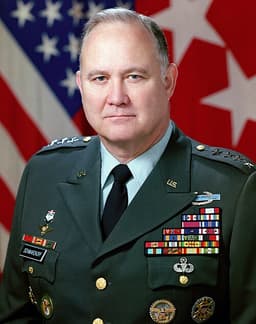
Norman Schwarzkopf
General · Modern
58.9Total
Basic Information
Born
1612
1934
Died
1650
—
Era
Modern
Modern
Nationality
China
United States
Occupation
General
General
Civilization
Eastern
Western
Score Comparison
Military (10%)
78.5
78.0
Political (20%)
78.0
45.0
Influence (20%)
88.0
55.0
Legacy (20%)
65.0
58.0
Leadership (15%)
85.0
62.0
Strategy (15%)
75.0
68.1
TOTAL
78.0
58.9
Dorgon — Complete Timeline
1643 AD
Appointed Prince RegentPolitical Action◆ Major
Upon the death of Hong Taiji, Dorgon was appointed as regent for the young Shunzhi Emperor. This position gave him effective control over the Qing government and military, enabling him to direct the conquest of Ming China.
RegencyPower transition
Impact: national
1644 AD
Battle of Shanhai PassWar
Dorgon allied with Ming general Wu Sangui to defeat Li Zicheng's rebel forces at Shanhai Pass. This victory allowed Qing forces to enter Beijing and establish the Qing dynasty as the ruling power in China.
Qing conquestBattleAlliance
Impact: national
1645 AD
Conquest of Southern MingWar◆ Major
Dorgon led Qing forces in a campaign against the Southern Ming regime, capturing Nanjing and defeating the Hongguang Emperor. This campaign extended Qing control over the Yangtze River valley and weakened Ming loyalist resistance.
Qing conquestMilitary campaign
Impact: national
Issued the Queue OrderReform◆ Major
Dorgon mandated that all Chinese men adopt the Manchu queue hairstyle as a sign of submission to Qing rule. This policy caused widespread resentment and resistance, but was enforced to consolidate Qing control over Han Chinese subjects.
Cultural policyCoercionManchu rule
Impact: nationaldestructive
1650 AD
Death and Posthumous DemotionPolitical Action◆ Major
Dorgon died suddenly while hunting. After his death, the Shunzhi Emperor accused him of plotting to usurp the throne, stripped him of all titles, and had his corpse mutilated. This posthumous purge reflected court factional struggles.
PurgePosthumous punishment
Impact: nationaltragic
Norman Schwarzkopf — Complete Timeline
1990 AD
Appointed Commander of Coalition Forces for Operation Desert ShieldOther◆ Major
In August 1990, Schwarzkopf was appointed Commander-in-Chief of U.S. Central Command and overall commander of coalition forces in the Persian Gulf. He oversaw the buildup of over 500,000 troops in Saudi Arabia to deter Iraqi aggression after the invasion of Kuwait.
Gulf WarMilitary BuildupCoalition Command
Impact: global
1991 AD
Executed Operation Desert Storm Ground CampaignWar◆ Major
Schwarzkopf planned and executed the 100-hour ground offensive that began on February 24, 1991. Using a left-hook maneuver through the Iraqi desert, coalition forces outflanked Iraqi defenses, liberating Kuwait and destroying much of the Iraqi Republican Guard with minimal coalition casualties.
Gulf WarMilitary VictoryOperational Planning
Impact: global
Negotiated Ceasefire at SafwanOther◆ Major
On March 3, 1991, Schwarzkopf met with Iraqi military commanders at Safwan airfield to negotiate the terms of the ceasefire ending the Gulf War. He secured Iraqi agreement to return prisoners, provide minefield maps, and cease military operations, though he allowed Iraqi helicopters to fly, later criticized as enabling suppression of uprisings.
Gulf WarCeasefirePost-War Settlement
Impact: regional
1992 AD
Published Autobiography 'It Doesn't Take a Hero'Other
Schwarzkopf published his autobiography 'It Doesn't Take a Hero' in September 1992. The book detailed his military career from Vietnam through the Gulf War, becoming a bestseller and providing his personal account of the decision-making process during Operation Desert Storm.
AutobiographyMilitary MemoirPublic Figure
Impact: national
Expert Analysis
Origins
Dorgon (1612–1650) was the 14th son of Nurhaci, the founder of the Later Jin dynasty. Born into the Aisin Gioro clan, he grew up in a militaristic environment where warfare and statecraft were central. His early life was marked by the death of his father in 1626 and the subsequent struggle for succession. Dorgon's mother was forced to commit suicide, a trauma that shaped his ruthless pragmatism. He received a traditional Manchu education in archery, horsemanship, and martial tactics, and by his teens he was leading troops in battle.
Norman Schwarzkopf (1934–2012) was born in Trenton, New Jersey, the son of a U.S. Army officer. His father, a veteran of World War I, moved the family frequently. Schwarzkopf attended the United States Military Academy at West Point, graduating in 1956. He later earned a master's degree in mechanical engineering from the University of Southern California. His early career included a tour in the Vietnam War, where he served as an adviser and later as a battalion commander, earning multiple decorations.
Rise to Power
Dorgon's rise began under his brother Hong Taiji, who succeeded Nurhaci. Dorgon distinguished himself in campaigns against the Ming dynasty and the Koreans, earning command positions. In 1643, after Hong Taiji's sudden death, a succession crisis erupted. Dorgon maneuvered to have Hong Taiji's young son, Fulin, installed as the Shunzhi Emperor, while Dorgon himself became prince regent with effective control over the Qing government. This power grab sidelined rival princes like Hooge and gave Dorgon the authority to pursue the conquest of China.
Schwarzkopf's rise was more gradual. He served two tours in Vietnam, where he was wounded and received three Silver Stars. After Vietnam, he held various command and staff positions, including a pivotal role in the 1983 invasion of Grenada. In 1988, he was appointed Commander-in-Chief of U.S. Central Command (CENTCOM), a position that put him in charge of U.S. military operations in the Middle East. When Iraq invaded Kuwait in August 1990, Schwarzkopf was thrust into the global spotlight as the commander of the coalition forces.
Leadership & Governance
Dorgon's leadership was autocratic and centralized. As regent, he issued decrees that reshaped Chinese society, such as the Queue Order (1645), forcing Han Chinese to adopt Manchu hairstyles as a sign of submission. He also implemented land reforms that redistributed fields to Manchu bannermen, displacing many Chinese farmers. His governance relied on a mix of Manchu military aristocracy and co-opted Ming officials. Dorgon was known for his decisiveness and willingness to use force, but his policies bred resentment, particularly among the Han elite.
Schwarzkopf's leadership style was collaborative and charismatic, earning him the nickname "Stormin' Norman" for his temper but also respect from subordinates. He built a coalition of 34 nations, coordinating their disparate militaries through diplomacy and clear command structures. His governance in the Gulf War was focused on military objectives: the liberation of Kuwait and the destruction of Iraq's offensive capability. He delegated operational details but maintained tight control over strategy, exemplified by the famous "left hook" maneuver that outflanked Iraqi forces.
Triumph & Tragedy
Dorgon's greatest triumph was the conquest of China proper. The Battle of Shanhai Pass (1644) was a turning point: allied with Ming general Wu Sangui, Dorgon defeated Li Zicheng's rebel army and entered Beijing. He then led campaigns that crushed the Southern Ming resistance, capturing Nanjing in 1645. By his death in 1650, the Qing controlled most of China. However, his greatest failure was his posthumous fate. Accused of usurpation and forced to have had an affair with the Empress Dowager, the Shunzhi Emperor stripped Dorgon of all titles, had his corpse exhumed and mutilated, and purged his family. This reversal erased many of his immediate achievements.
Schwarzkopf's triumph was the swift and decisive victory in the Gulf War. Operation Desert Storm's ground campaign lasted only 100 hours, with coalition forces suffering minimal casualties (around 300 dead) while destroying much of the Iraqi army. The ceasefire at Safwan (March 3, 1991) secured Iraq's withdrawal from Kuwait. However, Schwarzkopf's failure was the incomplete nature of the victory. He allowed the Iraqi Republican Guard to escape, and the decision to end the war before toppling Saddam Hussein led to future conflicts. Critics argue that his ceasefire terms were too lenient, allowing Iraq to later suppress uprisings by Kurds and Shiites.
Character & Destiny
Dorgon was ambitious, calculating, and ruthless. His early trauma—his mother's forced suicide—instilled a drive for power and a willingness to eliminate rivals. He was also pragmatic, forming alliances with Ming defectors to facilitate conquest. His character shaped his destiny: his overreach in centralizing power and alienating the young emperor led to his posthumous disgrace. Historical assessments note that Dorgon scored 78.0 in political acumen but his inability to secure his legacy after death undermined his influence.
Schwarzkopf was disciplined, strategic, and media-savvy. He was known for his temper but also for his genuine concern for soldiers. His character led to a successful military career but also to a limited political role; he scored only 45.0 in political skills. After the Gulf War, he retired from the army and wrote a memoir, but he never held high political office. His destiny was to be a one-war hero, celebrated but not transformative beyond the battlefield.
Legacy
Dorgon's legacy is mixed. He laid the foundation for Qing rule in China, which lasted until 1912. The queue hairstyle became a symbol of Manchu domination, and the land redistribution policies shaped the Qing social structure. However, his personal legacy was erased for centuries, only rehabilitated in the 20th century. His influence score of 88.0 reflects his role in establishing a dynasty that controlled China for over 260 years.
Schwarzkopf's legacy is tied to a single campaign. The Gulf War demonstrated the effectiveness of modern combined-arms warfare and precision bombing. It also set a precedent for multinational coalitions under U.S. leadership. His leadership score of 62.0 and legacy score of 58.0 indicate that while his victory was celebrated, its long-term impact was limited by the incomplete resolution of the conflict. The Iraq War of 2003 arguably overshadowed his achievements.
Conclusion
Dorgon had a greater impact on world history than Norman Schwarzkopf. While Schwarzkopf's Gulf War victory was tactically brilliant, it did not fundamentally alter the global order. Dorgon, however, changed the course of Chinese history by establishing the Qing dynasty, which governed a quarter of the world's population for centuries. His total score of 78.0 versus Schwarzkopf's 58.9 reflects this difference. Dorgon's military (78.5) and political (78.0) scores are higher, and his influence (88.0) dwarfs Schwarzkopf's (55.0). Although Dorgon's personal legacy was destroyed, his institutional legacy endured. Schwarzkopf, despite his tactical genius, was a product of a superpower's temporary advantage; Dorgon was a founder of an empire. Thus, Dorgon stands as the more consequential figure.
Rankings
🥇
DorgonLeader
Mil: 78.5Pol: 78.0Inf: 88.0
78.0
🥈
Norman Schwarzkopf
Mil: 78.0Pol: 45.0Inf: 55.0
58.9
+19.1 behind
How This Comparison Works
Algorithm
Each figure is scored on 6 dimensions (0—100 scale) based on structured historical data: Military (10%), Political (20%), Influence (20%), Legacy (20%), Leadership (15%), Strategy (15%). The weighted total produces the final ranking.
Data Sources
Scores are computed from structured sub-indicators in the database. Scale factors adjust for era (Ancient ×0.85, Modern ×1.0) and civilization size (Eastern ×1.05, Other ×0.80) to account for differences in population and military scale.
Maximum 3 Figures
Comparisons are limited to 2—3 figures to ensure readability and statistical meaningfulness.
Error Margins
±5 points per dimension — Sub-scores are derived from historical records with inherent uncertainty. Two figures within 5 points on a dimension should be considered roughly equivalent in that area.
Total Score Accuracy
±3 points overall — The weighted combination of 6 dimensions produces a total score with approximately ±3 points of uncertainty. Differences of less than 3 points are not statistically significant— the figures are effectively tied.
Known Limitations
- Historical records are incomplete and uneven across civilizations
- Figures from oral-tradition societies may be underrepresented
- Occupation labels can misclassify multi-role figures
- Scores measure capability and impact, not moral character
- Quantitative scoring is a comparison tool, not absolute truth
Capability Radar
Military (10%) — Battles & Warfare
Battles
85
85
Win Rate
80
95
Expansion
90
70
Political (20%) — Governance & Reform
Reform
72
40
Diplomacy
78
75
Economy
65
50
Influence (20%) — Cultural & Global Reach
Cultural
65
55
Global
70
65
Legacy (20%) — Historical Impact
Historical
80
65
Longevity
75
50
Leadership (15%) — Power & Stability
Tenure
70
55
Stability
60
70
Strategy (15%) — Tactics & Innovation
Strategy
88
85
Tactics
82
80
Reform
75
60
Similar Comparisons
Comments & Discussion
No comments yet. Be the first to share your thoughts!