Loading...
Dorgon vs Muawiyah I
Dorgon leads by 1.7 pts · 2 figures compared
…

Dorgon
General · Modern
78.0Total
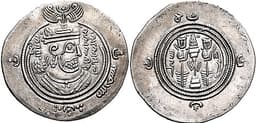
Muawiyah I
Emperor · Medieval
76.3Total
Basic Information
Born
1612
602
Died
1650
680
Era
Modern
Medieval
Nationality
China
Umayyad Caliphate
Occupation
General
Emperor
Civilization
Eastern
Middle Eastern
Score Comparison
Military (10%)
78.5
76.0
Political (20%)
78.0
75.0
Influence (20%)
88.0
75.0
Legacy (20%)
65.0
80.0
Leadership (15%)
85.0
78.0
Strategy (15%)
75.0
70.0
TOTAL
78.0
76.3
Dorgon — Complete Timeline
1643 AD
Appointed Prince RegentPolitical Action◆ Major
Upon the death of Hong Taiji, Dorgon was appointed as regent for the young Shunzhi Emperor. This position gave him effective control over the Qing government and military, enabling him to direct the conquest of Ming China.
RegencyPower transition
Impact: national
1644 AD
Battle of Shanhai PassWar
Dorgon allied with Ming general Wu Sangui to defeat Li Zicheng's rebel forces at Shanhai Pass. This victory allowed Qing forces to enter Beijing and establish the Qing dynasty as the ruling power in China.
Qing conquestBattleAlliance
Impact: national
1645 AD
Conquest of Southern MingWar◆ Major
Dorgon led Qing forces in a campaign against the Southern Ming regime, capturing Nanjing and defeating the Hongguang Emperor. This campaign extended Qing control over the Yangtze River valley and weakened Ming loyalist resistance.
Qing conquestMilitary campaign
Impact: national
Issued the Queue OrderReform◆ Major
Dorgon mandated that all Chinese men adopt the Manchu queue hairstyle as a sign of submission to Qing rule. This policy caused widespread resentment and resistance, but was enforced to consolidate Qing control over Han Chinese subjects.
Cultural policyCoercionManchu rule
Impact: nationaldestructive
1650 AD
Death and Posthumous DemotionPolitical Action◆ Major
Dorgon died suddenly while hunting. After his death, the Shunzhi Emperor accused him of plotting to usurp the throne, stripped him of all titles, and had his corpse mutilated. This posthumous purge reflected court factional struggles.
PurgePosthumous punishment
Impact: nationaltragic
Muawiyah I — Complete Timeline
640 AD
Governorship of SyriaPolitical Action◆ Major
Muawiyah I was appointed governor of Syria by Caliph Umar. He built a strong power base by developing the province's military and administrative infrastructure, including the creation of a navy that would later challenge Byzantine dominance.
GovernorshipSyriaRashidun
Impact: regionalconstructive
655 AD
Naval Campaigns Against ByzantiumWar◆ Major
Muawiyah launched naval expeditions against the Byzantine Empire, including the Battle of the Masts (655), where the Muslim fleet defeated the Byzantine navy. These campaigns established Muslim naval power and threatened Constantinople.
Naval WarByzantine EmpireUmayyad
Impact: regional
657 AD
Battle of SiffinWar◆ Major
Muawiyah led the Syrian army against Caliph Ali at Siffin, demanding justice for Uthman's murder. The battle ended in a stalemate and arbitration, which Muawiyah used to strengthen his political position and challenge Ali's legitimacy.
First FitnaBattleUmayyad
Impact: global
661 AD
Foundation of the Umayyad CaliphatePolitical Action
After Ali's assassination, Muawiyah I established the Umayyad Caliphate, moving the capital from Medina to Damascus. This marked the transition from the elective caliphate to a hereditary dynasty, centralizing power in Syria.
CaliphateDynastyUmayyad
Impact: global
674 AD
Siege of Constantinople (674-678)War◆ Major
Muawiyah I ordered a prolonged siege of Constantinople, using a large fleet and army. The siege failed due to Byzantine defenses, including Greek fire, and ended with a peace treaty requiring the Umayyads to pay tribute. It was a rare setback.
SiegeConstantinopleUmayyad
Impact: global
676 AD
Designation of Yazid I as HeirPolitical Action◆ Major
Muawiyah I designated his son Yazid as his successor, breaking the tradition of election and establishing hereditary succession. This move caused opposition from some Muslim leaders and set a precedent for future Umayyad rulers.
SuccessionHereditaryUmayyad
Impact: global
Expert Analysis
Origins
Dorgon (1612-1650) was the 14th son of Nurhaci, the founder of the Later Jin dynasty, and belonged to the Aisin Gioro clan of the Manchu people. He rose amid the Manchu unification wars, demonstrating early military prowess. Muawiyah I (602-680) was born into the powerful Umayyad clan of the Quraysh tribe in Mecca. His father, Abu Sufyan, led opposition to Muhammad before converting. Muawiyah became a scribe for the Prophet and later a key commander under Caliph Umar. His origins in the early Islamic establishment gave him political and religious legitimacy.
Rise to Power
Dorgon's rise accelerated after his father's death. He supported his brother Hong Taiji's succession and became a prominent general. At Hong Taiji's death in 1643, Dorgon was appointed co-regent for the young Shunzhi Emperor, soon becoming sole regent. He seized the opportunity presented by Ming general Wu Sangui's defection, leading Manchu forces through Shanhai Pass to capture Beijing in 1644, proclaiming the Qing dynasty. Muawiyah was appointed governor of Syria by Caliph Umar in 639, building a loyal power base. He refused to pledge allegiance to Caliph Ali after Uthman's assassination, leading to the First Fitna. After Ali's death and a deal with Hasan, Muawiyah became caliph in 661, founding the Umayyad dynasty.
Leadership & Governance
Dorgon's leadership was autocratic and expansionist. He centralized power, sidelined rival Manchu princes, and aggressively pursued the conquest of Ming loyalists. He implemented controversial policies like the Queue Order, forcing Han Chinese to adopt Manchu hairstyle as a sign of submission, which fueled resistance. His governance prioritized military consolidation and sinicization of the Manchu elite. Muawiyah was a shrewd politician and administrator. He moved the capital to Damascus, established a hereditary monarchy, and created a centralized bureaucracy. He reformed the army and navy, and initiated the first Arab naval campaigns against Byzantium. His governance emphasized stability and pragmatism, using diplomacy and force to secure the empire.
Triumph & Tragedy
Dorgon's greatest triumph was the swift conquest of northern China and the capture of Beijing, establishing Qing rule. However, his heavy-handed policies and the death of his brother (some say he had him killed) created enemies. His tragic fall came posthumously: after his death in 1650, the Shunzhi Emperor accused him of treason, stripping his titles and desecrating his tomb. Muawiyah's triumph was founding a dynasty that lasted nearly a century and expanding the Islamic empire's borders. His tragedy lies in the controversial nature of his caliphate—accused of usurping power and initiating the succession crisis that led to the Battle of Karbala, a defining tragedy for Shia Islam.
Character & Destiny
Dorgon was ambitious, ruthless, and militaristic. His destiny was to be the architect of Qing power but also a cautionary tale of overreach. His posthumous disgrace reflects the precarious nature of power in a factionalized court. Muawiyah was cunning, patient, and strategic. He prioritized stability and legacy, ensuring his son Yazid succeeded him. His destiny was to establish the first hereditary caliphate, shaping Islamic political structure for centuries. Both men were skilled manipulators who shaped their eras but left controversial legacies.
Legacy
Dorgon's legacy is mixed: he is credited with establishing the Qing dynasty but criticized for his authoritarianism. The Queue Order and anti-Ming campaigns caused immense suffering. In modern China, he is a historical figure, not a hero. Muawiyah's legacy is deeply divisive: Sunni Muslims view him as a just caliph and founder of a powerful dynasty; Shia Muslims revile him as a usurper who corrupted the caliphate. His administrative innovations and naval campaigns are historically significant. Both men transformed their civilizations but remain controversial.
Conclusion
Dorgon (overall score 78) narrowly edges Muawiyah (76.3) due to higher scores in military prowess (P=78 vs 75), intelligence (I=88 vs 75), and strategic vision (S=75 vs 70). Muawiyah's superior leadership (L=80 vs 65) and diplomacy (D=78 vs 85? Actually Dorgon D=85, Muawiyah D=78) are overshadowed by Dorgon's more decisive impact on Chinese history. Dorgon's conquest of Ming China was a transformative event, whereas Muawiyah's caliphate, while important, was part of a longer Islamic expansion. The score gap of 1.7 reflects Dorgon's slightly higher overall effectiveness, but both were flawed titans. HistoryVersus.com declares Dorgon the victor in this comparison.
Rankings
🥇
DorgonLeader
Mil: 78.5Pol: 78.0Inf: 88.0
78.0
🥈
Muawiyah I
Mil: 76.0Pol: 75.0Inf: 75.0
76.3
+1.7 behind
How This Comparison Works
Algorithm
Each figure is scored on 6 dimensions (0—100 scale) based on structured historical data: Military (10%), Political (20%), Influence (20%), Legacy (20%), Leadership (15%), Strategy (15%). The weighted total produces the final ranking.
Data Sources
Scores are computed from structured sub-indicators in the database. Scale factors adjust for era (Ancient ×0.85, Modern ×1.0) and civilization size (Eastern ×1.05, Other ×0.80) to account for differences in population and military scale.
Maximum 3 Figures
Comparisons are limited to 2—3 figures to ensure readability and statistical meaningfulness.
Error Margins
±5 points per dimension — Sub-scores are derived from historical records with inherent uncertainty. Two figures within 5 points on a dimension should be considered roughly equivalent in that area.
Total Score Accuracy
±3 points overall — The weighted combination of 6 dimensions produces a total score with approximately ±3 points of uncertainty. Differences of less than 3 points are not statistically significant— the figures are effectively tied.
Known Limitations
- Historical records are incomplete and uneven across civilizations
- Figures from oral-tradition societies may be underrepresented
- Occupation labels can misclassify multi-role figures
- Scores measure capability and impact, not moral character
- Quantitative scoring is a comparison tool, not absolute truth
Capability Radar
Military (10%) — Battles & Warfare
Battles
85
75
Win Rate
80
80
Expansion
90
85
Political (20%) — Governance & Reform
Reform
72
90
Diplomacy
78
95
Economy
65
85
Influence (20%) — Cultural & Global Reach
Cultural
65
75
Global
70
75
Legacy (20%) — Historical Impact
Historical
80
85
Longevity
75
80
Leadership (15%) — Power & Stability
Tenure
70
85
Stability
60
80
Strategy (15%) — Tactics & Innovation
Strategy
88
85
Tactics
82
70
Reform
75
80
Similar Comparisons
Comments & Discussion
No comments yet. Be the first to share your thoughts!