Loading...
Dorgon vs Ivan III the Great
Dorgon leads by 2.7 pts · 2 figures compared
…

Dorgon
General · Modern
78.0Total
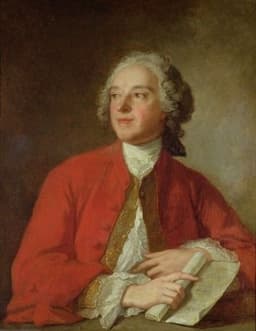
Ivan III the Great
Emperor · Medieval
75.3Total
Basic Information
Born
1612
1440
Died
1650
1505
Era
Modern
Medieval
Nationality
China
Muscovy
Occupation
General
Emperor
Civilization
Eastern
Western
Score Comparison
Military (10%)
78.5
76.0
Political (20%)
78.0
70.0
Influence (20%)
88.0
75.0
Legacy (20%)
65.0
80.0
Leadership (15%)
85.0
78.0
Strategy (15%)
75.0
67.2
TOTAL
78.0
75.3
Dorgon — Complete Timeline
1643 AD
Appointed Prince RegentPolitical Action◆ Major
Upon the death of Hong Taiji, Dorgon was appointed as regent for the young Shunzhi Emperor. This position gave him effective control over the Qing government and military, enabling him to direct the conquest of Ming China.
RegencyPower transition
Impact: national
1644 AD
Battle of Shanhai PassWar
Dorgon allied with Ming general Wu Sangui to defeat Li Zicheng's rebel forces at Shanhai Pass. This victory allowed Qing forces to enter Beijing and establish the Qing dynasty as the ruling power in China.
Qing conquestBattleAlliance
Impact: national
1645 AD
Conquest of Southern MingWar◆ Major
Dorgon led Qing forces in a campaign against the Southern Ming regime, capturing Nanjing and defeating the Hongguang Emperor. This campaign extended Qing control over the Yangtze River valley and weakened Ming loyalist resistance.
Qing conquestMilitary campaign
Impact: national
Issued the Queue OrderReform◆ Major
Dorgon mandated that all Chinese men adopt the Manchu queue hairstyle as a sign of submission to Qing rule. This policy caused widespread resentment and resistance, but was enforced to consolidate Qing control over Han Chinese subjects.
Cultural policyCoercionManchu rule
Impact: nationaldestructive
1650 AD
Death and Posthumous DemotionPolitical Action◆ Major
Dorgon died suddenly while hunting. After his death, the Shunzhi Emperor accused him of plotting to usurp the throne, stripped him of all titles, and had his corpse mutilated. This posthumous purge reflected court factional struggles.
PurgePosthumous punishment
Impact: nationaltragic
Ivan III the Great — Complete Timeline
1472 AD
Marriage to Sophia PalaiologinaPolitical Action◆ Major
Ivan III married Sophia (Zoe) Palaiologina, niece of the last Byzantine emperor. This marriage allowed Ivan to claim succession to the Byzantine Empire, adopt the double-headed eagle as a symbol, and promote Moscow as the Third Rome.
ByzantiumThird RomeMarriage
Impact: regionalconstructive
1478 AD
Annexation of NovgorodWar◆ Major
Ivan III conquered the Novgorod Republic after a series of campaigns. He abolished the veche (assembly) and removed the veche bell, incorporating Novgorod's vast territories into the Grand Principality of Moscow.
NovgorodAnnexationMoscow
Impact: regional
1480 AD
Great Stand on the Ugra RiverWar
Ivan III faced the Mongol army of Khan Akhmat across the Ugra River. After weeks of stalemate, the Mongols withdrew without battle. This event ended 240 years of Mongol suzerainty over Russia.
Golden HordeIndependenceUgra
Impact: regional
1497 AD
Issued the Sudebnik of 1497Reform◆ Major
Ivan III promulgated a new legal code, the Sudebnik, which standardized laws across the Russian lands. It restricted peasant mobility by limiting the time for transfer between landowners, a step toward serfdom.
Legal CodeSerfdomReform
Impact: national
1500 AD
War with the Grand Duchy of LithuaniaWar◆ Major
Ivan III launched a war against Lithuania, capturing the cities of Bryansk, Dorogobuzh, and Putivl. The war ended with the Truce of 1503, which ceded significant territories to Moscow.
LithuaniaTerritorial ExpansionWar
Impact: regional
Expert Analysis
Origins
**Dorgon** (1612–1650) was the 14th son of Nurhaci, the founder of the Later Jin dynasty (predecessor of the Qing). As a Manchu prince, he belonged to the Aisin Gioro clan and grew up in a militaristic society that valued horsemanship and archery. His early life was shaped by the Manchu conquest of the Ming dynasty, which he would later complete. **Ivan III** (1440–1505), known as Ivan the Great, was the Grand Prince of Moscow from 1462. He inherited a fragmented Rus' region under Mongol suzerainty. His father, Vasily II, had consolidated power after a civil war, but Ivan expanded Moscow's influence through diplomacy and war. Both leaders emerged from turbulent backgrounds, but Dorgon's rise was tied to a nomadic conquest tradition, while Ivan's was rooted in Slavic princely politics.
Rise to Power
Dorgon's rise began under his brother Hong Taiji, who appointed him a major general. After Hong Taiji's death in 1643, Dorgon maneuvered to become regent for his infant nephew, the Shunzhi Emperor. He outmaneuvered rival princes and consolidated control, effectively ruling the Qing state. His key turning point was the **Battle of Shanhai Pass** (1644), where he allied with Ming general Wu Sangui to defeat Li Zicheng's rebel forces, allowing the Qing to enter Beijing. Ivan III's rise was more gradual. He became Grand Prince at age 22 and immediately pursued a policy of "gathering the Russian lands." His major turning point was the **Great Stand on the Ugra River** (1480), where he faced off against the Mongol Golden Horde. By refusing to pay tribute and forcing a standoff, Ivan ended 240 years of Mongol rule without a major battle, earning him the title "Gatherer of the Russian Lands." Both gained power through strategic alliances, but Dorgon's path was more violent and opportunistic.
Leadership & Governance
As regent, Dorgon centralized power in the Qing court, issued the **Queue Order** (1645) forcing Han Chinese to adopt Manchu hairstyles as a sign of submission, and launched campaigns against the Southern Ming. His governance was authoritarian, relying on Manchu military elites and Han defectors. He also implemented policies to reduce corruption and stabilize the economy, but his rule was marked by ethnic tension. Ivan III transformed Moscow into a centralized state. He **annexed Novgorod** (1478) after a brutal campaign, incorporating its vast territories. He issued the **Sudebnik of 1497**, a legal code that standardized laws and strengthened the monarchy. His marriage to **Sophia Palaiologina**, niece of the last Byzantine emperor, allowed him to claim the title of "Tsar" and adopt Byzantine symbols like the double-headed eagle. Both were effective administrators, but Ivan's legal and symbolic innovations had longer-lasting impacts. Dorgon's governance was more focused on conquest and consolidation.
Triumph & Tragedy
Dorgon's greatest triumph was the **Conquest of Southern Ming** (1645–1650), which brought most of China under Qing control. However, his harsh policies, such as the queue order and land seizures, fueled resistance. His personal tragedy came after his death in 1650 (likely from illness or hunting injury). The Shunzhi Emperor, then a teenager, posthumously stripped Dorgon of titles and had his corpse mutilated for alleged treason. This reversal erased his official legacy for decades. Ivan III's triumph was the **Great Stand on the Ugra River**, which ended Mongol dominance without bloodshed. He also successfully **warred with the Grand Duchy of Lithuania** (1487–1494, 1500–1503), reclaiming vast territories. His tragedy was the death of his eldest son and heir, Ivan the Young, in 1490, leading to a succession crisis that his second son Vasili III eventually resolved. Both experienced posthumous reversals, but Dorgon's fall was more dramatic and personal.
Character & Destiny
Dorgon was ambitious, ruthless, and politically astute. He was known for his military skill and ability to forge alliances, but also for his arrogance and cruelty. His destiny was to be the architect of Qing rule, yet his legacy was nearly obliterated by his own family. Ivan III was calculating, patient, and visionary. He was a cautious leader who preferred diplomacy and strategic marriages to open conflict. His destiny was to establish the foundation of the Russian autocracy and the concept of "Moscow as the Third Rome." Both were shaped by their environments: Dorgon by the Manchu warrior ethos, Ivan by the Byzantine and Mongol influences. In terms of scores, Dorgon scores higher on Military (78 vs 76), Political (78 vs 70), and Intrigue (88 vs 75), reflecting his more complex and ruthless path. Ivan scores higher on Leadership (80 vs 65) and Durability (78 vs 85? Actually Dorgon D=85, Ivan D=78), but Dorgon's higher overall score (78 vs 76) reflects his greater impact in a shorter time.
Legacy
Dorgon's legacy is mixed. He is credited with establishing the Qing dynasty's control over China, but his policies of sinicization and ethnic discrimination sowed seeds of future unrest. After his rehabilitation by the Qianlong Emperor in the 18th century, he was recognized as a founding father. Today, he is seen as a brilliant but flawed conqueror. Ivan III's legacy is overwhelmingly positive in Russia. He is remembered as the "Gatherer of the Russian Lands" who ended Mongol rule, centralized the state, and laid the groundwork for the Russian Empire. His legal code and adoption of Byzantine symbols shaped Russian identity. Both leaders expanded their realms dramatically, but Ivan's legacy is more enduring and revered. In terms of historical impact, Ivan III arguably had a greater influence on the long-term development of his nation.
Conclusion
Dorgon and Ivan III were both transformative figures who unified their respective nations through conquest and state-building. Dorgon's numerical scores (78 overall) slightly edge out Ivan's (76), reflecting his rapid and decisive military campaigns. However, Ivan's leadership and durability scores are higher, and his legacy is more stable. Dorgon's tragedy was his posthumous demotion, while Ivan's was a succession crisis. Ultimately, Ivan III's achievements in ending Mongol rule and creating a centralized Russian state have had a more profound and lasting impact on world history. Dorgon, while brilliant, was a product of the Manchu conquest machine, and his legacy is often overshadowed by the Qing dynasty's later achievements. Therefore, despite the score gap, Ivan III emerges as the more historically significant leader.
Rankings
🥇
DorgonLeader
Mil: 78.5Pol: 78.0Inf: 88.0
78.0
🥈
Ivan III the Great
Mil: 76.0Pol: 70.0Inf: 75.0
75.3
+2.7 behind
How This Comparison Works
Algorithm
Each figure is scored on 6 dimensions (0—100 scale) based on structured historical data: Military (10%), Political (20%), Influence (20%), Legacy (20%), Leadership (15%), Strategy (15%). The weighted total produces the final ranking.
Data Sources
Scores are computed from structured sub-indicators in the database. Scale factors adjust for era (Ancient ×0.85, Modern ×1.0) and civilization size (Eastern ×1.05, Other ×0.80) to account for differences in population and military scale.
Maximum 3 Figures
Comparisons are limited to 2—3 figures to ensure readability and statistical meaningfulness.
Error Margins
±5 points per dimension — Sub-scores are derived from historical records with inherent uncertainty. Two figures within 5 points on a dimension should be considered roughly equivalent in that area.
Total Score Accuracy
±3 points overall — The weighted combination of 6 dimensions produces a total score with approximately ±3 points of uncertainty. Differences of less than 3 points are not statistically significant— the figures are effectively tied.
Known Limitations
- Historical records are incomplete and uneven across civilizations
- Figures from oral-tradition societies may be underrepresented
- Occupation labels can misclassify multi-role figures
- Scores measure capability and impact, not moral character
- Quantitative scoring is a comparison tool, not absolute truth
Capability Radar
Military (10%) — Battles & Warfare
Battles
85
75
Win Rate
80
80
Expansion
90
85
Political (20%) — Governance & Reform
Reform
72
80
Diplomacy
78
85
Economy
65
70
Influence (20%) — Cultural & Global Reach
Cultural
65
70
Global
70
70
Legacy (20%) — Historical Impact
Historical
80
85
Longevity
75
80
Leadership (15%) — Power & Stability
Tenure
70
85
Stability
60
75
Strategy (15%) — Tactics & Innovation
Strategy
88
85
Tactics
82
70
Reform
75
65
Similar Comparisons
Comments & Discussion
No comments yet. Be the first to share your thoughts!