Loading...
Dong Zhuo vs Drusus the Elder
Drusus the Elder leads by 6.7 pts · 2 figures compared
…
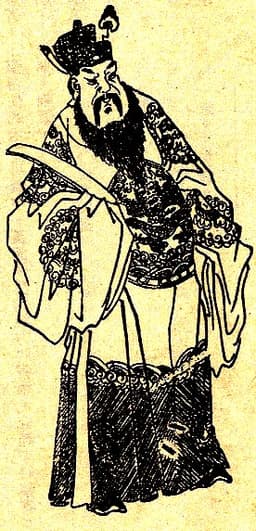
Dong Zhuo
General · Ancient
50.0Total

Drusus the Elder
General · Ancient
56.7Total
Basic Information
Born
138
-38
Died
192
-9
Era
Ancient
Ancient
Nationality
China
Roman Empire
Occupation
General
General
Civilization
Eastern
Western
Score Comparison
Military (10%)
67.5
90.0
Political (20%)
35.0
29.3
Influence (20%)
49.4
60.0
Legacy (20%)
44.2
56.0
Leadership (15%)
57.1
47.3
Strategy (15%)
60.0
72.0
TOTAL
50.0
56.7
Dong Zhuo — Complete Timeline
189 AD
Dong Zhuo's Entry into LuoyangPolitical Action
After the death of Emperor Ling, Dong Zhuo marched his army into the capital Luoyang, ostensibly to support the He family. He deposed the young Emperor Liu Bian and installed his brother Liu Xie (Emperor Xian), seizing control of the imperial government.
CoupPower SeizureImperial Control
Impact: nationaldestructive
190 AD
Burning of LuoyangOther◆ Major
Facing a coalition of eastern warlords, Dong Zhuo ordered the evacuation and systematic destruction of Luoyang. The city was burned, its palaces and libraries destroyed, and the population forcibly relocated to Chang'an. This act devastated the Han capital.
DestructionCapital BurnedWar Crime
Impact: nationaldestructive
192 AD
Dong Zhuo's AssassinationPolitical Action◆ Major
Dong Zhuo was assassinated in a plot orchestrated by his trusted subordinate L
AssassinationPower ShiftConspiracy
Impact: national
Drusus the Elder — Complete Timeline
12 BC
First German Campaign (Drusus)War◆ Major
Drusus launched a campaign against the Germanic tribes across the Rhine. He defeated the Usipetes and Sugambri, and built a fleet on the Rhine to conduct operations. This campaign established Roman presence east of the Rhine.
Germanic WarsRhine FrontierMilitary Campaign
Impact: regional
Construction of the Fossa DrusianaCultural
Drusus ordered the construction of a canal connecting the Rhine River to the IJsselmeer, known as the Fossa Drusiana. This canal allowed Roman ships to bypass the North Sea coast and reach the German coast more safely, facilitating logistics.
CanalInfrastructureLogistics
constructive
9 BC
Campaign to the Elbe RiverWar◆ Major
Drusus led a campaign that reached the Elbe River, the furthest east any Roman army had penetrated into Germania. He defeated the Chatti and Cherusci tribes, but was forced to turn back due to supply issues and the onset of winter.
Germanic WarsExplorationElbe River
Impact: regional
Death from a Riding AccidentOther◆ Major
Drusus died from injuries sustained when he fell from his horse while returning from the Elbe campaign. His death at age 29 shocked Rome. Augustus mourned deeply, and Drusus was given a state funeral and posthumous honors.
DeathAccidentAugustus
Impact: nationaltragic
Expert Analysis
Origins
Dong Zhuo (born c. 138 AD) came from a military family in Longxi, a frontier region of the Han Empire. His father served as a minor official, and Dong Zhuo grew up among the Qiang tribes, learning horseback archery and developing physical strength. He gained a reputation for martial prowess and was recruited into the Han army, serving in campaigns against the Qiang and other rebels.
Drusus the Elder (Nero Claudius Drusus, born 38 BC) was the son of Tiberius Claudius Nero and Livia Drusilla, though his mother later married Octavian (Augustus). His biological father died when he was young, and he was raised in Augustus's household alongside his brother Tiberius. Educated in rhetoric and military arts, Drusus was groomed for high command from an early age, receiving military tribuneships and quaestorships in his teens.
Rise to Power
Dong Zhuo rose through the Han military ranks during the pacification of the Qiang rebellions and the Yellow Turban Rebellion (184 AD). He commanded armies in the northwest, building personal loyalty among his troops. After the death of Emperor Ling in 189, Dong Zhuo saw an opportunity. He marched into the capital Luoyang with his army, claiming to support the He family. He deposed the young Emperor Shao, installed the puppet Emperor Xian, and declared himself Chancellor, effectively ruling the empire.
Drusus's rise was accelerated by his stepfather Augustus, who favored him for military commands. In 15 BC, Drusus was appointed governor of Gaul and commander of the Rhine legions. He launched his first German campaign in 12 BC, defeating the Usipetes and Sugambri. His successes led to a five-year command (12-8 BC) that allowed him to push deep into Germania. Unlike Dong Zhuo, Drusus's power derived from imperial appointment and military achievement, not usurpation.
Leadership & Governance
Dong Zhuo's leadership was autocratic and cruel. He ruled through terror, executing opponents and confiscating property. He deposed and murdered Empress Dowager He and the young emperor. His governance focused on personal enrichment and securing loyalty through bribes and fear. He failed to build administrative structures, relying on his personal army and the assassin Lü Bu. His political score of 35.0 reflects his inability to govern effectively.
Drusus was a capable commander who led from the front, earning the loyalty of his legions. He combined military aggression with diplomatic efforts, forging alliances with some Germanic tribes. He built infrastructure like the Fossa Drusiana canal and established forts along the Rhine. However, his political score of 29.3 indicates limited involvement in Rome's political intrigues. He focused on military expansion rather than governance, leaving administration to subordinates.
Triumph & Tragedy
Dong Zhuo's greatest success was seizing control of the Han government and installing a puppet emperor, giving him nominal authority over the empire. His army was formidable, and he crushed early opposition. However, his tyranny provoked a coalition of eastern warlords, leading to the Burning of Luoyang in 190 AD. He evacuated the city, burning palaces and temples, and relocated the capital to Chang'an. This destruction devastated the economy and weakened Han central authority. His assassination in 192 AD by Lü Bu ended his rule, but the chaos he unleashed persisted for decades.
Drusus's triumphs were his campaigns in Germania. He reached the Elbe River in 9 BC, the furthest Roman penetration into Germania, and defeated major tribes like the Chatti and Cherusci. He built a fleet on the Rhine and conducted amphibious operations. His tragedy was his early death at age 29 from a riding accident after falling from his horse. This cut short his career, but his achievements were celebrated by Augustus. The disaster at Teutoburg Forest in 9 AD, where three legions were destroyed, occurred after his death, but some historians speculate Drusus might have prevented it.
Character & Destiny
Dong Zhuo was ambitious, ruthless, and short-sighted. He lacked the political acumen to consolidate power and alienated potential allies. His cruelty, such as feasting while opponents were executed, made him hated. His character sealed his fate: he was betrayed by his own bodyguard. His total score of 50.0 reflects limited strategic vision.
Drusus was energetic, disciplined, and popular with his troops. He was known for his bravery and willingness to share hardships. His death was accidental, but his character contributed to his success: he was a loyal servant of Augustus, not a usurper. His total score of 56.7 is higher due to military achievements and strategic planning.
Legacy
Dong Zhuo's legacy is overwhelmingly negative. His actions triggered the collapse of the Han dynasty, leading to the Three Kingdoms period. He is remembered as a tyrant who burned Luoyang and destabilized China. His influence score of 49.4 reflects the indirect impact of his destruction. In Chinese history, he is a cautionary tale of warlord ambition.
Drusus's legacy is more positive. He expanded Roman territory and established the Rhine as a defensive line. The Fossa Drusiana canal improved logistics. His son Germanicus and grandson Caligula became emperors. His memory was honored by Augustus and later Romans. However, his early death meant his achievements were not sustained; Germania east of the Rhine was lost after Teutoburg. His legacy score of 56.0 is modest but higher than Dong Zhuo's 44.2.
Conclusion
Drusus the Elder had a greater positive impact than Dong Zhuo. While Dong Zhuo's actions had more far-reaching consequences, they were destructive. Drusus's military campaigns scored 90.0 versus Dong Zhuo's 67.5, and his strategy score of 72.0 exceeded Dong Zhuo's 60.0. Drusus contributed to Roman expansion and infrastructure, whereas Dong Zhuo accelerated the fall of a dynasty. In terms of constructive legacy, Drusus is clearly superior. Dong Zhuo's influence is primarily as a catalyst for chaos, not a builder. Therefore, Drusus the Elder ranks higher in historical impact.
Rankings
🥇
Drusus the ElderLeader
Mil: 90.0Pol: 29.3Inf: 60.0
56.7
🥈
Dong Zhuo
Mil: 67.5Pol: 35.0Inf: 49.4
50.0
+6.7 behind
How This Comparison Works
Algorithm
Each figure is scored on 6 dimensions (0—100 scale) based on structured historical data: Military (10%), Political (20%), Influence (20%), Legacy (20%), Leadership (15%), Strategy (15%). The weighted total produces the final ranking.
Data Sources
Scores are computed from structured sub-indicators in the database. Scale factors adjust for era (Ancient ×0.85, Modern ×1.0) and civilization size (Eastern ×1.05, Other ×0.80) to account for differences in population and military scale.
Maximum 3 Figures
Comparisons are limited to 2—3 figures to ensure readability and statistical meaningfulness.
Error Margins
±5 points per dimension — Sub-scores are derived from historical records with inherent uncertainty. Two figures within 5 points on a dimension should be considered roughly equivalent in that area.
Total Score Accuracy
±3 points overall — The weighted combination of 6 dimensions produces a total score with approximately ±3 points of uncertainty. Differences of less than 3 points are not statistically significant— the figures are effectively tied.
Known Limitations
- Historical records are incomplete and uneven across civilizations
- Figures from oral-tradition societies may be underrepresented
- Occupation labels can misclassify multi-role figures
- Scores measure capability and impact, not moral character
- Quantitative scoring is a comparison tool, not absolute truth
Capability Radar
Military (10%) — Battles & Warfare
Battles
55
75
Win Rate
50
80
Expansion
35
85
Political (20%) — Governance & Reform
Reform
5
30
Diplomacy
20
50
Economy
15
35
Influence (20%) — Cultural & Global Reach
Cultural
20
55
Global
25
55
Legacy (20%) — Historical Impact
Historical
45
70
Longevity
30
60
Leadership (15%) — Power & Stability
Tenure
30
40
Stability
5
45
Strategy (15%) — Tactics & Innovation
Strategy
40
82
Tactics
45
78
Reform
10
60
Similar Comparisons
Comments & Discussion
No comments yet. Be the first to share your thoughts!