Loading...
Donald Kalpokas vs Milan Kucan
Milan Kucan leads by 5.6 pts · 2 figures compared
…

Donald Kalpokas
Politician · Modern
48.4Total
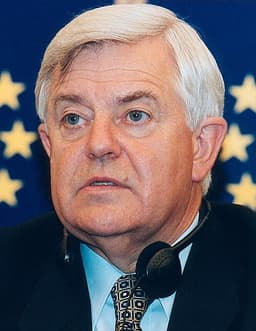
Milan Kucan
Politician · Modern
54.0Total
Basic Information
Born
1943
1941
Died
—
—
Era
Modern
Modern
Nationality
Vanuatu
Slovenia
Occupation
Politician
Politician
Civilization
Other
Western
Score Comparison
Military (10%)
50.0
50.0
Political (20%)
45.1
62.7
Influence (20%)
50.2
53.3
Legacy (20%)
40.8
45.0
Leadership (15%)
64.0
72.0
Strategy (15%)
43.1
41.8
TOTAL
48.4
54.0
Donald Kalpokas — Complete Timeline
1998 AD
Elected Prime Minister of VanuatuPolitical Action◆ Major
Kalpokas was elected Prime Minister of Vanuatu, leading a coalition government. His first term focused on economic reforms and improving relations with neighboring countries.
Prime MinisterVanuatuGovernment
Impact: nationalconstructive
1999 AD
Re-elected Prime Minister of VanuatuPolitical Action
Kalpokas was re-elected as Prime Minister after a vote of no confidence against his predecessor. His second term was marked by political instability and coalition disputes.
Prime MinisterVanuatuRe-election
Impact: national
2004 AD
Served as Vanuatu's Ambassador to the United NationsPolitical Action
Kalpokas was appointed as Vanuatu's Permanent Representative to the United Nations. He represented the country in international diplomacy, including on climate change issues.
AmbassadorUnited NationsDiplomacy
Impact: global
Milan Kucan — Complete Timeline
1991 AD
Ten-Day WarWar◆ Major
As president, Ku
War of IndependenceYugoslav Wars
Impact: regionalconstructive
Election as President of SloveniaPolitical Action
Kučan was elected the first president of independent Slovenia after the country declared independence from Yugoslavia. He led the nation through the Ten-Day War and the transition to democracy.
IndependenceSlovenia
Impact: regionalconstructive
2002 AD
End of PresidencyPolitical Action
Kučan completed his second term as president and stepped down, having served two five-year terms. He was succeeded by Janez Drnovšek.
PresidencyTransition
Impact: national
Expert Analysis
Origins
Donald Kalpokas was born in 1943 on the island of Efate, Vanuatu, then a joint British-French condominium known as the New Hebrides. He was educated at local mission schools and later studied at the University of Papua New Guinea and the University of the South Pacific, earning a degree in political science. His early career included teaching and journalism, working for the British colonial administration. Kalpokas became involved in the independence movement, joining the Vanua'aku Pati (VP) founded by Father Walter Lini. In contrast, Milan Kucan was born in 1941 in Križevci, Slovenia, then part of the Kingdom of Yugoslavia. He studied law at the University of Ljubljana, graduating in 1964. Kucan joined the League of Communists of Slovenia and rose through the party ranks, serving as a member of the Slovenian Parliament and later as the leader of the Slovenian Communist Party. His early career was shaped by the Yugoslav political system, and he was known as a reformist within the party.
Rise to Power
Kalpokas rose to prominence as a senior member of the Vanua'aku Pati under Prime Minister Walter Lini. After Lini's death in 1999, Kalpokas succeeded him as party leader and was elected Prime Minister in December 1999, forming a coalition with the Union of Moderate Parties. His first term focused on economic reforms and improving relations with France and the United Kingdom. However, his government fell in April 2001 after a no-confidence vote. He was re-elected Prime Minister in 2005 but again faced political instability, resigning in 2006. Kucan's rise was more dramatic. In 1990, as the head of the Slovenian Communist Party, he led the party to victory in the first multi-party elections, becoming President of the Presidency of Slovenia. He oversaw the declaration of independence from Yugoslavia on June 25, 1991, which triggered the Ten-Day War. Kucan's leadership during the war solidified his position, and he was elected the first President of independent Slovenia in 1992, serving two terms until 2002.
Leadership & Governance
Kalpokas governed as a consensus-builder, leading coalition governments in a fragmented political landscape. He prioritized economic stabilization and international representation, serving as Vanuatu's Ambassador to the United Nations. His leadership style was diplomatic but lacked decisive action, scoring 64.0 in leadership. In contrast, Kucan's leadership was decisive and crisis-oriented, especially during the Ten-Day War. He maintained stability in Slovenia's transition to democracy and market economy, scoring 72.0 in leadership. Kucan's governance focused on integration with Western institutions, leading to Slovenia's EU and NATO membership in 2004.
Triumph & Tragedy
Kalpokas's greatest success was his role in Vanuatu's post-independence stability and diplomatic outreach. He represented Vanuatu at the UN and maintained relations with former colonial powers. His tragedy was his inability to sustain political power: his first term ended after 16 months due to a no-confidence vote, and his second term was marked by constant political maneuvering, leading to his resignation in 2006. Kucan's triumph was leading Slovenia to independence with minimal casualties (19 deaths in the Ten-Day War). He successfully navigated the breakup of Yugoslavia and set Slovenia on a path to EU and NATO membership. His tragedy was the authoritarian tendencies in his early career; as a communist leader, he supported the suppression of dissent in the 1980s, which later drew criticism.
Character & Destiny
Kalpokas was a pragmatic diplomat, more comfortable in international settings than in domestic power struggles. His character led to a legacy of service but limited impact. Kucan was a strategic reformer who adapted from communist to democratic leadership. His character shaped Slovenia's peaceful transition, but his communist past remained a stain. Historians assess Kucan as a pivotal figure in Slovenian independence, while Kalpokas is seen as a transitional figure in Vanuatu.
Legacy
Kalpokas's legacy is tied to Vanuatu's early diplomatic efforts and his role in the Vanua'aku Pati. He scored 40.8 in legacy, reflecting limited long-term impact. Kucan's legacy is more enduring: he is remembered as the founding father of independent Slovenia, with a score of 45.0. His leadership during the Ten-Day War and subsequent integration into Europe are his lasting contributions. However, neither figure has a global legacy comparable to major historical leaders.
Conclusion
Milan Kucan had a greater impact than Donald Kalpokas. Kucan's leadership during Slovenia's independence and successful transition to democracy shaped a nation's destiny, while Kalpokas's influence was confined to Vanuatu's internal politics and diplomacy. Kucan's total score of 54.0 versus Kalpokas's 48.4 reflects this difference, particularly in leadership (72.0 vs 64.0) and political acumen (62.7 vs 45.1). Kalpokas's legacy is modest, while Kucan's is foundational for Slovenia.
Rankings
🥇
Milan KucanLeader
Mil: 50.0Pol: 62.7Inf: 53.3
54.0
🥈
Donald Kalpokas
Mil: 50.0Pol: 45.1Inf: 50.2
48.4
+5.6 behind
How This Comparison Works
Algorithm
Each figure is scored on 6 dimensions (0—100 scale) based on structured historical data: Military (10%), Political (20%), Influence (20%), Legacy (20%), Leadership (15%), Strategy (15%). The weighted total produces the final ranking.
Data Sources
Scores are computed from structured sub-indicators in the database. Scale factors adjust for era (Ancient ×0.85, Modern ×1.0) and civilization size (Eastern ×1.05, Other ×0.80) to account for differences in population and military scale.
Maximum 3 Figures
Comparisons are limited to 2—3 figures to ensure readability and statistical meaningfulness.
Error Margins
±5 points per dimension — Sub-scores are derived from historical records with inherent uncertainty. Two figures within 5 points on a dimension should be considered roughly equivalent in that area.
Total Score Accuracy
±3 points overall — The weighted combination of 6 dimensions produces a total score with approximately ±3 points of uncertainty. Differences of less than 3 points are not statistically significant— the figures are effectively tied.
Known Limitations
- Historical records are incomplete and uneven across civilizations
- Figures from oral-tradition societies may be underrepresented
- Occupation labels can misclassify multi-role figures
- Scores measure capability and impact, not moral character
- Quantitative scoring is a comparison tool, not absolute truth
Capability Radar
Military (10%) — Battles & Warfare
Battles
23
29
Win Rate
25
31
Expansion
29
35
Political (20%) — Governance & Reform
Reform
35
55
Diplomacy
45
65
Economy
30
50
Influence (20%) — Cultural & Global Reach
Cultural
20
30
Global
20
30
Legacy (20%) — Historical Impact
Historical
25
40
Longevity
20
30
Leadership (15%) — Power & Stability
Tenure
40
60
Stability
35
60
Strategy (15%) — Tactics & Innovation
Strategy
31
38
Tactics
33
40
Reform
37
42
Similar Comparisons
Comments & Discussion
No comments yet. Be the first to share your thoughts!