Loading...
This comparison has not been analyzed yet.
One-time AI generation (~1 minute). Scores and timeline are already available below.
Domitian vs Eumenes II of Pergamon
Eumenes II of Pergamon leads by 7.7 pts · 2 figures compared
…
Domitian
Emperor · Ancient
55.9Total
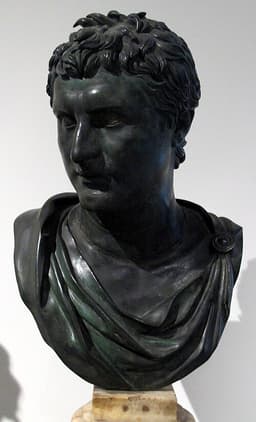
Eumenes II of Pergamon
Emperor · Ancient
63.6Total
Basic Information
Born
51
-221
Died
96
-159
Era
Ancient
Ancient
Nationality
Roman Empire
Pergamon
Occupation
Emperor
Emperor
Civilization
Western
Western
Score Comparison
Military (10%)
52.5
70.0
Political (20%)
68.0
60.0
Influence (20%)
52.5
72.0
Legacy (20%)
45.0
58.0
Leadership (15%)
74.0
66.0
Strategy (15%)
50.0
52.5
TOTAL
55.9
63.6
Domitian — Complete Timeline
81 AD
Accession as EmperorPolitical Action◆ Major
Upon Titus's sudden death, Domitian became emperor, the third of the Flavian dynasty. He was the first emperor to take the title 'Dominus et Deus' (Lord and God), emphasizing autocratic rule.
SuccessionFlavian DynastyAutocracy
Impact: global
83 AD
Campaign against the ChattiWar◆ Major
Domitian led a campaign against the Chatti tribe in Germania, extending the Roman frontier. He built the Limes Germanicus, a system of forts and walls, to secure the border.
Germanic CampaignFrontierLimes
Impact: regionalconstructive
89 AD
Persecution of Philosophers and ChristiansPolitical Action◆ Major
Domitian expelled philosophers from Rome and persecuted Christians and Jews for refusing to worship the emperor. He executed several senators and confiscated their property, increasing fear.
PersecutionPhilosophersChristians
Impact: nationaldestructive
92 AD
Construction of the Domitianic PalaceCultural◆ Major
Domitian built a vast palace on the Palatine Hill, the Domus Augustana, with grand reception halls and gardens. The palace symbolized imperial power and was used by later emperors.
ArchitecturePalaceImperial Power
Impact: nationalconstructive
96 AD
Assassination of DomitianPolitical Action
Domitian was assassinated in a palace conspiracy involving his wife Domitia and Praetorian officials. His death ended the Flavian dynasty and led to the accession of Nerva, the first of the Five Good Emperors.
AssassinationConspiracyEnd of Dynasty
Impact: globaltragic
Eumenes II of Pergamon — Complete Timeline
190 BC
Battle of MagnesiaWar◆ Major
Eumenes II fought alongside the Romans at the Battle of Magnesia, where the Seleucid king Antiochus III was defeated. This victory secured Roman dominance in Asia Minor and expanded Pergamon's territory, making it a key Roman ally.
Roman-Seleucid WarAllianceTerritorial Expansion
Impact: regionalconstructive
188 BC
Treaty of ApameaPolitical Action◆ Major
Eumenes II benefited from the Treaty of Apamea, which ended the war with Antiochus III. Pergamon received large territories in Asia Minor, including Phrygia and Lydia, greatly increasing its wealth and influence.
TreatyTerritorial GainRoman Alliance
Impact: regionalconstructive
180 BC
Construction of the Pergamon AltarCultural◆ Major
Eumenes II commissioned the Great Altar of Pergamon, a monumental structure adorned with a frieze depicting the Gigantomachy. This masterpiece of Hellenistic art symbolized the Attalid dynasty's power and cultural patronage.
Hellenistic ArtArchitecturePatronage
Impact: regionalconstructive
This comparison has not been analyzed yet.
One-time AI generation (~1 minute). Scores and timeline are already available below.
Rankings
🥇
Eumenes II of PergamonLeader
Mil: 70.0Pol: 60.0Inf: 72.0
63.6
🥈
Domitian
Mil: 52.5Pol: 68.0Inf: 52.5
55.9
+7.7 behind
How This Comparison Works
Algorithm
Each figure is scored on 6 dimensions (0—100 scale) based on structured historical data: Military (10%), Political (20%), Influence (20%), Legacy (20%), Leadership (15%), Strategy (15%). The weighted total produces the final ranking.
Data Sources
Scores are computed from structured sub-indicators in the database. Scale factors adjust for era (Ancient ×0.85, Modern ×1.0) and civilization size (Eastern ×1.05, Other ×0.80) to account for differences in population and military scale.
Maximum 3 Figures
Comparisons are limited to 2—3 figures to ensure readability and statistical meaningfulness.
Error Margins
±5 points per dimension — Sub-scores are derived from historical records with inherent uncertainty. Two figures within 5 points on a dimension should be considered roughly equivalent in that area.
Total Score Accuracy
±3 points overall — The weighted combination of 6 dimensions produces a total score with approximately ±3 points of uncertainty. Differences of less than 3 points are not statistically significant— the figures are effectively tied.
Known Limitations
- Historical records are incomplete and uneven across civilizations
- Figures from oral-tradition societies may be underrepresented
- Occupation labels can misclassify multi-role figures
- Scores measure capability and impact, not moral character
- Quantitative scoring is a comparison tool, not absolute truth
Capability Radar
Military (10%) — Battles & Warfare
Battles
55
55
Win Rate
60
60
Expansion
40
50
Political (20%) — Governance & Reform
Reform
70
65
Diplomacy
45
75
Economy
65
70
Influence (20%) — Cultural & Global Reach
Cultural
40
75
Global
35
60
Legacy (20%) — Historical Impact
Historical
50
70
Longevity
40
65
Leadership (15%) — Power & Stability
Tenure
60
70
Stability
50
65
Strategy (15%) — Tactics & Innovation
Strategy
55
60
Tactics
50
55
Reform
65
40
Similar Comparisons
Comments & Discussion
No comments yet. Be the first to share your thoughts!