Loading...
Domitian vs Emperor Kaika
Domitian leads by 1.0 pts · 2 figures compared
…
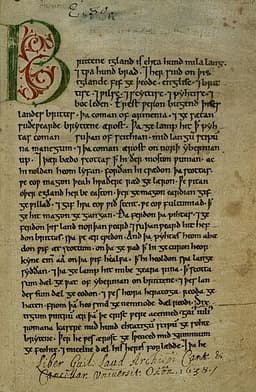
Domitian
Emperor · Ancient
55.9Total
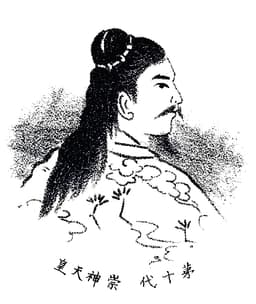
Emperor Kaika
Emperor · Ancient
54.9Total
Basic Information
Born
51
-208
Died
96
-98
Era
Ancient
Ancient
Nationality
Roman Empire
Japan
Occupation
Emperor
Emperor
Civilization
Western
Eastern
Score Comparison
Military (10%)
52.5
25.6
Political (20%)
68.0
68.0
Influence (20%)
52.5
59.8
Legacy (20%)
45.0
57.9
Leadership (15%)
74.0
44.5
Strategy (15%)
50.0
60.0
TOTAL
55.9
54.9
Domitian — Complete Timeline
81 AD
Accession as EmperorPolitical Action◆ Major
Upon Titus's sudden death, Domitian became emperor, the third of the Flavian dynasty. He was the first emperor to take the title 'Dominus et Deus' (Lord and God), emphasizing autocratic rule.
SuccessionFlavian DynastyAutocracy
Impact: global
83 AD
Campaign against the ChattiWar◆ Major
Domitian led a campaign against the Chatti tribe in Germania, extending the Roman frontier. He built the Limes Germanicus, a system of forts and walls, to secure the border.
Germanic CampaignFrontierLimes
Impact: regionalconstructive
89 AD
Persecution of Philosophers and ChristiansPolitical Action◆ Major
Domitian expelled philosophers from Rome and persecuted Christians and Jews for refusing to worship the emperor. He executed several senators and confiscated their property, increasing fear.
PersecutionPhilosophersChristians
Impact: nationaldestructive
92 AD
Construction of the Domitianic PalaceCultural◆ Major
Domitian built a vast palace on the Palatine Hill, the Domus Augustana, with grand reception halls and gardens. The palace symbolized imperial power and was used by later emperors.
ArchitecturePalaceImperial Power
Impact: nationalconstructive
96 AD
Assassination of DomitianPolitical Action
Domitian was assassinated in a palace conspiracy involving his wife Domitia and Praetorian officials. His death ended the Flavian dynasty and led to the accession of Nerva, the first of the Five Good Emperors.
AssassinationConspiracyEnd of Dynasty
Impact: globaltragic
Expert Analysis
Origins
Domitian was born on October 24, 51 AD, in Rome, the youngest son of Vespasian, the founder of the Flavian dynasty. His early life was marked by his father's rise during the Year of the Four Emperors (69 AD). Domitian received a rhetorical education but was overshadowed by his older brother Titus, who was groomed for succession. His youth was spent in relative obscurity, often in the shadow of his father and brother.
Emperor Kaika, according to Japanese tradition, was the ninth emperor of Japan, reigning from 157 BC to 98 BC. Little is known about his life; he is considered a legendary figure. His origins are shrouded in myth, with the Kojiki and Nihon Shoki providing scant details. He was the son of Emperor Kōgen and likely ruled from the Yamato court. No concrete historical records exist, and his existence is debated among historians.
Rise to Power
Domitian's rise was abrupt. Upon Titus's sudden death on September 13, 81 AD, Domitian was declared emperor by the Praetorian Guard. He was the first emperor to assume the title "Dominus et Deus" (Lord and God), signaling his autocratic ambitions. Domitian quickly consolidated power by executing rivals and rewarding the military.
Kaika's ascension followed the traditional hereditary path. He became emperor upon his father's death around 157 BC. There are no records of opposition or struggle. His reign is noted in the official list of emperors but lacks historical events. He likely ruled as a ceremonial figure in the early Yamato period, with real power held by local chieftains.
Leadership & Governance
Domitian ruled with an iron fist. He centralized authority, reduced the Senate's power, and promoted equestrians to administrative posts. He built the Limes Germanicus, a fortified border, and expanded the Roman frontier. His governance was efficient but repressive: he executed senators for conspiracy and persecuted philosophers and Christians, expelling them from Rome. Domitian's leadership score of 74.0 reflects his strong control but also his paranoia.
Kaika's leadership is largely unknown. As a legendary emperor, his governance likely followed traditional patterns. The Yamato court was consolidating power, but Kaika's personal role is unclear. His political score of 68.0 mirrors Domitian's, but this is based on inference rather than record. Kaika's military score of 25.6 is low, as no campaigns are attributed to him.
Triumph & Tragedy
Domitian's triumphs include administrative reforms and border fortifications. He stabilized the empire after the Year of the Four Emperors and left a surplus in the treasury. However, his tragedy was his assassination on September 18, 96 AD, in a palace conspiracy involving his wife Domitia and Praetorian officials. His reign ended the Flavian dynasty and led to a damnatio memoriae, with his statues destroyed and name erased.
Kaika's triumphs are unknown. If he reigned, he likely maintained peace and continuity. His tragedy is his obscurity; he left no significant mark on history. His legacy score of 57.9 is higher than Domitian's 45.0, but this reflects cultural memory rather than concrete achievements.
Character & Destiny
Domitian was autocratic, paranoid, and micromanaging. He demanded to be called "Lord and God," alienating the Senate and aristocracy. His character led to isolation and eventual murder. Historians like Tacitus and Suetonius portrayed him as a tyrant, though some modern scholars note his administrative competence.
Kaika's character is a blank slate. He is remembered as a placeholder in the imperial line. His destiny was to be forgotten, a footnote in Japan's early history.
Legacy
Domitian's legacy is mixed. His architectural projects, like the Domus Augustana on the Palatine, influenced later palaces. The Limes Germanicus remained a frontier for centuries. However, his autocratic style set a precedent for later emperors like Commodus. The damnatio memoriae erased much of his positive contributions.
Kaika's legacy is purely symbolic. He is listed as the ninth emperor, but no laws, buildings, or policies are attributed to him. His legacy is the continuity of the Japanese imperial line, which claims unbroken descent from him.
Conclusion
Domitian had a greater impact on history than Emperor Kaika. Despite his lower legacy score (45.0 vs. 57.9), Domitian's actions shaped the Roman Empire's governance and frontiers. His total score of 55.9 edges out Kaika's 54.9, but the gap is not decisive. Domitian's concrete achievements—administrative reforms, border fortifications, and architectural legacy—outweigh Kaika's mythical existence. Kaika's higher legacy score reflects the enduring Japanese imperial myth, not his personal actions. In terms of verifiable historical influence, Domitian stands above.
Rankings
🥇
DomitianLeader
Mil: 52.5Pol: 68.0Inf: 52.5
55.9
🥈
Emperor Kaika
Mil: 25.6Pol: 68.0Inf: 59.8
54.9
+1.0 behind
How This Comparison Works
Algorithm
Each figure is scored on 6 dimensions (0—100 scale) based on structured historical data: Military (10%), Political (20%), Influence (20%), Legacy (20%), Leadership (15%), Strategy (15%). The weighted total produces the final ranking.
Data Sources
Scores are computed from structured sub-indicators in the database. Scale factors adjust for era (Ancient ×0.85, Modern ×1.0) and civilization size (Eastern ×1.05, Other ×0.80) to account for differences in population and military scale.
Maximum 3 Figures
Comparisons are limited to 2—3 figures to ensure readability and statistical meaningfulness.
Error Margins
±5 points per dimension — Sub-scores are derived from historical records with inherent uncertainty. Two figures within 5 points on a dimension should be considered roughly equivalent in that area.
Total Score Accuracy
±3 points overall — The weighted combination of 6 dimensions produces a total score with approximately ±3 points of uncertainty. Differences of less than 3 points are not statistically significant— the figures are effectively tied.
Known Limitations
- Historical records are incomplete and uneven across civilizations
- Figures from oral-tradition societies may be underrepresented
- Occupation labels can misclassify multi-role figures
- Scores measure capability and impact, not moral character
- Quantitative scoring is a comparison tool, not absolute truth
Capability Radar
Military (10%) — Battles & Warfare
Battles
55
33
Win Rate
60
34
Expansion
40
38
Political (20%) — Governance & Reform
Reform
70
0
Diplomacy
45
0
Economy
65
0
Influence (20%) — Cultural & Global Reach
Cultural
40
69
Global
35
77
Legacy (20%) — Historical Impact
Historical
50
72
Longevity
40
73
Leadership (15%) — Power & Stability
Tenure
60
10
Stability
50
10
Strategy (15%) — Tactics & Innovation
Strategy
55
41
Tactics
50
44
Reform
65
50
Similar Comparisons
Comments & Discussion
No comments yet. Be the first to share your thoughts!