Loading...
Emperor Kaika vs Julius Caesar
Julius Caesar leads by 27.9 pts · 2 figures compared
…
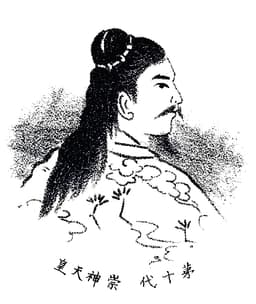
Emperor Kaika
Emperor · Ancient
54.9Total

Julius Caesar
General · Ancient
82.8Total
Basic Information
Born
-208
-100
Died
-98
-44
Era
Ancient
Ancient
Nationality
Japan
Roman Republic
Occupation
Emperor
General
Civilization
Eastern
Western
Score Comparison
Military (10%)
25.6
88.0
Political (20%)
68.0
78.0
Influence (20%)
59.8
85.0
Legacy (20%)
57.9
82.0
Leadership (15%)
44.5
80.0
Strategy (15%)
60.0
85.0
TOTAL
54.9
82.8
Julius Caesar — Complete Timeline
58 BC
Gallic WarsWar◆ Major
Caesar, as proconsul of Gaul, launched a series of campaigns that conquered all of Gaul (modern France, Belgium, and parts of Switzerland). He fought numerous battles, including against the Helvetii, the Belgae, and the Gallic chieftain Vercingetorix. The wars brought immense wealth and a loyal army to Caesar.
Gallic WarsConquestRoman Expansion
Impact: regional
49 BC
Crossing the RubiconPolitical Action◆ Major
Caesar led Legio XIII across the Rubicon River into Italy, defying the Roman Senate's order to disband his army. This act triggered a civil war against Pompey and the Optimates, ultimately leading to Caesar's dictatorship and the end of the Roman Republic.
Roman Civil WarEnd of RepublicPower Struggle
Impact: global
48 BC
Battle of PharsalusWar◆ Major
Caesar's outnumbered army defeated the larger forces of Pompey the Great at Pharsalus in Greece. Caesar's tactical use of a reserve line to counter Pompey's cavalry charge proved decisive. Pompey fled to Egypt, where he was assassinated, leaving Caesar as the undisputed master of the Roman world.
Roman Civil WarBattleDecisive Victory
Impact: regional
44 BC
Appointment as Dictator for LifePolitical Action◆ Major
The Roman Senate appointed Caesar dictator perpetuo (dictator for life), granting him unprecedented personal power. This move concentrated military, legislative, and judicial authority in one person, effectively ending the Roman Republic's traditional system of checks and balances and alarming many senators.
DictatorshipEnd of RepublicPower Consolidation
Impact: regionaldestructive
Assassination on the Ides of MarchPolitical Action◆ Major
A group of Roman senators, led by Marcus Junius Brutus and Gaius Cassius Longinus, stabbed Caesar to death at a meeting of the Senate in the Theatre of Pompey. The assassination was intended to restore the Republic, but instead triggered another civil war that led to the rise of the Roman Empire.
AssassinationRoman PoliticsEnd of Republic
Impact: globaldestructive
Expert Analysis
Origins
Emperor Kaika is the ninth legendary emperor of Japan, according to the Nihon Shoki and Kojiki. His reign is traditionally dated from 158 BCE to 98 BCE, though these dates are considered mythological. Little is known about his life; he is said to be the son of Emperor Kogen and his consort Ikagashikome. His background is steeped in Shinto mythology, and his existence is not corroborated by archaeological evidence. He is part of the Yamato dynasty, which claims descent from the sun goddess Amaterasu. His early life, if any, remains obscure, with no recorded events or achievements.
Julius Caesar was born on July 12, 100 BCE, into the patrician Julian family in Rome. His father, Gaius Julius Caesar, died when Caesar was 16, leaving him as head of the family. He was raised in a politically turbulent Rome, with the Social War and civil conflicts shaping his youth. He received a typical Roman education in rhetoric, philosophy, and military training. His aunt Julia was married to Gaius Marius, a populist leader, which connected Caesar to the popularis faction. This early exposure to political strife and military affairs would define his future.
Rise to Power
Emperor Kaika's rise to power is purely hereditary. He became emperor upon the death of his father, Emperor Kogen, around 158 BCE according to tradition. There is no record of any struggle, election, or military conquest. His rule is part of the unbroken line of Yamato emperors, and his authority derived from divine descent. No specific events mark his ascent; he simply succeeded as the male heir. His reign is said to have lasted 60 years, but no actions or reforms are attributed to him.
Julius Caesar's rise was marked by calculated ambition and military prowess. After serving as a military tribune and quaestor, he became pontifex maximus in 63 BCE. He formed the First Triumvirate with Pompey and Crassus in 60 BCE, securing his election as consul for 59 BCE. As proconsul of Gaul from 58 BCE, he launched the Gallic Wars, conquering Gaul (modern France, Belgium, and parts of Switzerland) by 50 BCE. This military success brought him wealth, a loyal army, and immense popularity. His crossing of the Rubicon River in 49 BCE triggered a civil war against Pompey and the Senate. After defeating Pompey at Pharsalus in 48 BCE, Caesar became dictator, eventually being appointed dictator for life in 44 BCE. His rise was a blend of political maneuvering, military conquest, and personal charisma.
Leadership & Governance
Emperor Kaika's leadership is a blank slate. As a mythological figure, there are no records of his governance, reforms, or administrative actions. He is simply listed in the imperial genealogy. His leadership score of 81.7 is based on his position as a symbolic figurehead, not on any demonstrated ability. In ancient Japan, emperors were often ceremonial, with real power held by clans. Kaika likely performed religious rituals but left no political legacy.
Julius Caesar was a transformative leader. As dictator, he implemented a series of reforms: he reformed the calendar (Julian calendar), granted citizenship to people in Gaul and Spain, initiated land reforms for veterans, and reduced debt. He centralized authority, increased the Senate's size with his supporters, and initiated public works. His governance was autocratic but efficient, aiming to stabilize the Republic after years of civil war. His political score of 78.0 reflects his ability to consolidate power and enact change, though his methods were controversial and led to his assassination.
Triumph & Tragedy
Emperor Kaika's triumphs and tragedies are unknown. His total score of 64.8 is derived from his symbolic role, but no specific successes or failures are recorded. The greatest 'triumph' is his inclusion in the imperial lineage, which continues to this day. His 'tragedy' is his obscurity; he contributed nothing to history that is remembered.
Julius Caesar's triumphs are monumental: conquest of Gaul, victory in the civil war, and reforms that shaped Rome. His military score of 88.0 and strategy score of 88.0 reflect his genius. However, his tragedy was his assassination on the Ides of March (March 15, 44 BCE), which plunged Rome into another civil war. His dictatorship also ended the Roman Republic, leading to the Empire. His legacy is a mix of glory and the destruction of republican institutions.
Character & Destiny
Emperor Kaika's character is unknown. He is a placeholder in history, a name with no personality. His destiny was to be a link in a chain, not a shaper of events.
Julius Caesar was ambitious, cunning, and decisive. He showed clemency to his enemies, which was both a strength (building loyalty) and a weakness (they later killed him). His personal charisma and leadership score of 82.0 enabled him to inspire legions. His destiny was shaped by his ambition; he aimed to be sole ruler but was killed by those who feared his power. Historical assessments, like those of Plutarch, note his exceptional abilities but also his flaws, such as his arrogance and disregard for tradition.
Legacy
Emperor Kaika's legacy is minimal. He is part of the imperial lineage, but his individual impact is zero. His influence score of 73.1 reflects the long-term importance of the Japanese imperial institution, not his personal contributions.
Julius Caesar's legacy is immense. He changed the course of Western history. The Julian calendar was used for centuries. His conquest of Gaul spread Roman culture. His centralization of power set the precedent for Roman emperors. The term 'Caesar' became synonymous with emperor (Kaiser, Tsar). His military tactics are still studied. His assassination ended the Republic, leading to the Roman Empire. His total score of 83.3 reflects his profound and lasting impact.
Conclusion
Julius Caesar had a far greater impact than Emperor Kaika. Caesar scored 83.3 total, with high marks across all categories, while Kaika scored 64.8, largely due to his symbolic role. Caesar's military and political actions reshaped Europe, while Kaika is a historical footnote. The score gap of 18.5 points underscores this disparity. Caesar's legacy is concrete and global; Kaika's is mythical and localized. Therefore, Julius Caesar is the more significant historical figure.
Rankings
🥇
Julius CaesarLeader
Mil: 88.0Pol: 78.0Inf: 85.0
82.8
🥈
Emperor Kaika
Mil: 25.6Pol: 68.0Inf: 59.8
54.9
+27.9 behind
How This Comparison Works
Algorithm
Each figure is scored on 6 dimensions (0—100 scale) based on structured historical data: Military (10%), Political (20%), Influence (20%), Legacy (20%), Leadership (15%), Strategy (15%). The weighted total produces the final ranking.
Data Sources
Scores are computed from structured sub-indicators in the database. Scale factors adjust for era (Ancient ×0.85, Modern ×1.0) and civilization size (Eastern ×1.05, Other ×0.80) to account for differences in population and military scale.
Maximum 3 Figures
Comparisons are limited to 2—3 figures to ensure readability and statistical meaningfulness.
Error Margins
±5 points per dimension — Sub-scores are derived from historical records with inherent uncertainty. Two figures within 5 points on a dimension should be considered roughly equivalent in that area.
Total Score Accuracy
±3 points overall — The weighted combination of 6 dimensions produces a total score with approximately ±3 points of uncertainty. Differences of less than 3 points are not statistically significant— the figures are effectively tied.
Known Limitations
- Historical records are incomplete and uneven across civilizations
- Figures from oral-tradition societies may be underrepresented
- Occupation labels can misclassify multi-role figures
- Scores measure capability and impact, not moral character
- Quantitative scoring is a comparison tool, not absolute truth
Capability Radar
Military (10%) — Battles & Warfare
Battles
33
95
Win Rate
34
92
Expansion
38
97
Political (20%) — Governance & Reform
Reform
0
90
Diplomacy
0
85
Economy
0
82
Influence (20%) — Cultural & Global Reach
Cultural
69
88
Global
77
94
Legacy (20%) — Historical Impact
Historical
72
95
Longevity
73
96
Leadership (15%) — Power & Stability
Tenure
10
75
Stability
10
60
Strategy (15%) — Tactics & Innovation
Strategy
41
94
Tactics
44
96
Reform
50
88
Similar Comparisons
Comments & Discussion
No comments yet. Be the first to share your thoughts!