Loading...
This comparison has not been analyzed yet.
One-time AI generation (~1 minute). Scores and timeline are already available below.
Dmitry Donskoy vs Peter I of Bulgaria
Dmitry Donskoy leads by 4.0 pts · 2 figures compared
…

Dmitry Donskoy
Emperor · Medieval
55.5Total
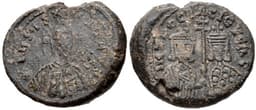
Peter I of Bulgaria
Emperor · Medieval
51.5Total
Basic Information
Born
1350
900
Died
1389
970
Era
Medieval
Medieval
Nationality
Muscovy
Bulgaria
Occupation
Emperor
Emperor
Civilization
Western
Western
Score Comparison
Military (10%)
70.0
21.2
Political (20%)
68.0
68.0
Influence (20%)
55.0
54.9
Legacy (20%)
52.0
45.0
Leadership (15%)
40.0
78.0
Strategy (15%)
55.0
25.0
TOTAL
55.5
51.5
Dmitry Donskoy — Complete Timeline
1359 AD
Became Grand Prince of MoscowPolitical Action◆ Major
Dmitry inherited the throne at age nine after his father Ivan II died. His regency was managed by Metropolitan Alexius, who secured the Mongol yarlyk for Moscow against claims from Suzdal and other rivals.
MoscowSuccessionRegency
Impact: regional
1378 AD
Battle of the Vozha RiverWar
Dmitry defeated a Mongol army led by Murza Begich on the Vozha River in Ryazan. This was the first Russian victory over a major Mongol force and a prelude to the Battle of Kulikovo.
Golden HordeRyazanPrelude
Impact: regional
1380 AD
Battle of KulikovoWar
Dmitry Donskoy led a coalition of Russian principalities to defeat the Mongol army of Mamai at Kulikovo Field near the Don River. This was the first major Russian victory over the Golden Horde, though Mongol rule continued for another century.
Golden HordeMamaiRussian Victory
Impact: regional
1382 AD
Burned Moscow to Prevent Mongol CaptureWar◆ Major
After Khan Tokhtamysh besieged Moscow, Dmitry fled to Kostroma. The Mongols sacked the city, killing thousands. Dmitry returned to rebuild but was forced to resume tribute payments to the Horde.
MoscowTokhtamyshSiege
Impact: regionaltragic
Peter I of Bulgaria — Complete Timeline
927 AD
Long reign of peace and stabilityPolitical Action◆ Major
Peter I ruled Bulgaria for over 40 years, a period marked by peace with the Byzantine Empire and internal stability. He maintained the treaty signed with Byzantium and focused on consolidating the state.
ReignPeaceBulgarian Empire
Impact: nationalconstructive
Recognition as Tsar and marriage to Byzantine princessPolitical Action◆ Major
Peter I was recognized as Tsar of Bulgaria by the Byzantine Empire and married Maria Lekapene, the granddaughter of Byzantine Emperor Romanos I. This marriage solidified the peace treaty and elevated Bulgaria's status.
MarriageDiplomacyByzantine-Bulgar Relations
Impact: regionalconstructive
This comparison has not been analyzed yet.
One-time AI generation (~1 minute). Scores and timeline are already available below.
Rankings
🥇
Dmitry DonskoyLeader
Mil: 70.0Pol: 68.0Inf: 55.0
55.5
🥈
Peter I of Bulgaria
Mil: 21.2Pol: 68.0Inf: 54.9
51.5
+4.0 behind
How This Comparison Works
Algorithm
Each figure is scored on 6 dimensions (0—100 scale) based on structured historical data: Military (10%), Political (20%), Influence (20%), Legacy (20%), Leadership (15%), Strategy (15%). The weighted total produces the final ranking.
Data Sources
Scores are computed from structured sub-indicators in the database. Scale factors adjust for era (Ancient ×0.85, Modern ×1.0) and civilization size (Eastern ×1.05, Other ×0.80) to account for differences in population and military scale.
Maximum 3 Figures
Comparisons are limited to 2—3 figures to ensure readability and statistical meaningfulness.
Error Margins
±5 points per dimension — Sub-scores are derived from historical records with inherent uncertainty. Two figures within 5 points on a dimension should be considered roughly equivalent in that area.
Total Score Accuracy
±3 points overall — The weighted combination of 6 dimensions produces a total score with approximately ±3 points of uncertainty. Differences of less than 3 points are not statistically significant— the figures are effectively tied.
Known Limitations
- Historical records are incomplete and uneven across civilizations
- Figures from oral-tradition societies may be underrepresented
- Occupation labels can misclassify multi-role figures
- Scores measure capability and impact, not moral character
- Quantitative scoring is a comparison tool, not absolute truth
Capability Radar
Military (10%) — Battles & Warfare
Battles
65
15
Win Rate
60
10
Expansion
60
5
Political (20%) — Governance & Reform
Reform
55
40
Diplomacy
65
70
Economy
50
60
Influence (20%) — Cultural & Global Reach
Cultural
60
50
Global
55
20
Legacy (20%) — Historical Impact
Historical
70
40
Longevity
65
30
Leadership (15%) — Power & Stability
Tenure
60
80
Stability
55
85
Strategy (15%) — Tactics & Innovation
Strategy
65
15
Tactics
70
10
Reform
55
10
Similar Comparisons
Comments & Discussion
No comments yet. Be the first to share your thoughts!