Loading...
This comparison has not been analyzed yet.
One-time AI generation (~1 minute). Scores and timeline are already available below.
Dmitar Zvonimir vs Igor of Kiev
Dmitar Zvonimir leads by 12.8 pts · 2 figures compared
…

Dmitar Zvonimir
Emperor · Medieval
51.8Total
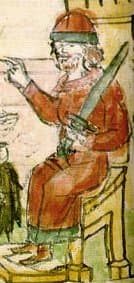
Igor of Kiev
Emperor · Medieval
39.0Total
Basic Information
Born
1040
877
Died
1089
945
Era
Medieval
Medieval
Nationality
Croatia
Kievan Rus
Occupation
Emperor
Emperor
Civilization
Western
Western
Score Comparison
Military (10%)
45.0
50.0
Political (20%)
54.7
26.4
Influence (20%)
52.5
47.9
Legacy (20%)
45.0
39.2
Leadership (15%)
65.0
34.6
Strategy (15%)
50.0
30.3
TOTAL
51.8
39.0
Dmitar Zvonimir — Complete Timeline
1075 AD
Coronation as King of CroatiaPolitical Action
Dmitar Zvonimir was crowned King of Croatia by a papal legate in Split. His coronation was a symbol of the close alliance between the Croatian kingdom and the Papacy.
CoronationPapal AllianceMedieval
Impact: regionalconstructive
Oath of Fealty to the PopePolitical Action◆ Major
Zvonimir swore an oath of fealty to Pope Gregory VII, making Croatia a vassal state of the Papacy. He promised to support papal policies and pay an annual tribute.
Papal VassalFealtyChurch-State
Impact: regional
1089 AD
Death and Succession CrisisPolitical Action
Zvonimir died without a direct heir, leading to a succession crisis. His death marked the end of the Trpimirovic dynasty's effective rule and paved the way for the eventual union of Croatia with Hungary.
Succession CrisisEnd of DynastyHungarian Union
Impact: regionaltragic
Igor of Kiev — Complete Timeline
941 AD
Igor's Campaign Against ConstantinopleWar◆ Major
Igor launched a naval attack on Constantinople. The Byzantine fleet, using Greek fire, destroyed most of Igor's ships. The campaign failed, forcing Igor to retreat and later negotiate a less favorable treaty in 944.
Byzantine-Rus WarNaval DefeatGreek Fire
Impact: regionaldestructive
944 AD
Rus'-Byzantine Treaty of 944Political Action
Following his failed campaign, Igor signed a treaty with the Byzantine Empire. The treaty renewed trade relations but imposed restrictions on Rus merchants and required Igor to provide military assistance to Byzantium.
DiplomacyTradeByzantine Empire
Impact: regional
945 AD
Murder by the DrevliansPolitical Action
Igor attempted to collect excessive tribute from the Drevlians, an East Slavic tribe. The Drevlians rebelled, captured Igor, and killed him by tying him to bent trees that tore his body apart. His death triggered Olga's revenge.
AssassinationRevoltTribute
Impact: nationaltragic
This comparison has not been analyzed yet.
One-time AI generation (~1 minute). Scores and timeline are already available below.
Rankings
🥇
Dmitar ZvonimirLeader
Mil: 45.0Pol: 54.7Inf: 52.5
51.8
🥈
Igor of Kiev
Mil: 50.0Pol: 26.4Inf: 47.9
39.0
+12.8 behind
How This Comparison Works
Algorithm
Each figure is scored on 6 dimensions (0—100 scale) based on structured historical data: Military (10%), Political (20%), Influence (20%), Legacy (20%), Leadership (15%), Strategy (15%). The weighted total produces the final ranking.
Data Sources
Scores are computed from structured sub-indicators in the database. Scale factors adjust for era (Ancient ×0.85, Modern ×1.0) and civilization size (Eastern ×1.05, Other ×0.80) to account for differences in population and military scale.
Maximum 3 Figures
Comparisons are limited to 2—3 figures to ensure readability and statistical meaningfulness.
Error Margins
±5 points per dimension — Sub-scores are derived from historical records with inherent uncertainty. Two figures within 5 points on a dimension should be considered roughly equivalent in that area.
Total Score Accuracy
±3 points overall — The weighted combination of 6 dimensions produces a total score with approximately ±3 points of uncertainty. Differences of less than 3 points are not statistically significant— the figures are effectively tied.
Known Limitations
- Historical records are incomplete and uneven across civilizations
- Figures from oral-tradition societies may be underrepresented
- Occupation labels can misclassify multi-role figures
- Scores measure capability and impact, not moral character
- Quantitative scoring is a comparison tool, not absolute truth
Capability Radar
Military (10%) — Battles & Warfare
Battles
30
20
Win Rate
30
15
Expansion
25
25
Political (20%) — Governance & Reform
Reform
40
10
Diplomacy
60
25
Economy
40
15
Influence (20%) — Cultural & Global Reach
Cultural
35
15
Global
20
10
Legacy (20%) — Historical Impact
Historical
40
20
Longevity
30
15
Leadership (15%) — Power & Stability
Tenure
55
30
Stability
45
10
Strategy (15%) — Tactics & Innovation
Strategy
25
15
Tactics
25
20
Reform
20
5
Similar Comparisons
Comments & Discussion
No comments yet. Be the first to share your thoughts!