Loading...
Dmitar Zvonimir vs Ghiyath al-Din Tughluq
Ghiyath al-Din Tughluq leads by 7.9 pts · 2 figures compared
…
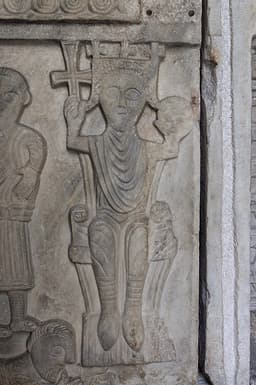
Dmitar Zvonimir
Emperor · Medieval
51.8Total
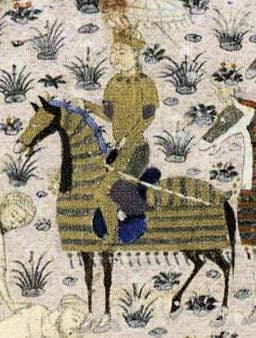
Ghiyath al-Din Tughluq
Emperor · Medieval
59.7Total
Basic Information
Born
1040
1300
Died
1089
1325
Era
Medieval
Medieval
Nationality
Croatia
India
Occupation
Emperor
Emperor
Civilization
Western
Indian
Score Comparison
Military (10%)
45.0
61.7
Political (20%)
54.7
68.0
Influence (20%)
52.5
56.4
Legacy (20%)
45.0
48.3
Leadership (15%)
65.0
74.0
Strategy (15%)
50.0
60.7
TOTAL
51.8
59.7
Dmitar Zvonimir — Complete Timeline
1075 AD
Coronation as King of CroatiaPolitical Action
Dmitar Zvonimir was crowned King of Croatia by a papal legate in Split. His coronation was a symbol of the close alliance between the Croatian kingdom and the Papacy.
CoronationPapal AllianceMedieval
Impact: regionalconstructive
Oath of Fealty to the PopePolitical Action◆ Major
Zvonimir swore an oath of fealty to Pope Gregory VII, making Croatia a vassal state of the Papacy. He promised to support papal policies and pay an annual tribute.
Papal VassalFealtyChurch-State
Impact: regional
1089 AD
Death and Succession CrisisPolitical Action
Zvonimir died without a direct heir, leading to a succession crisis. His death marked the end of the Trpimirovic dynasty's effective rule and paved the way for the eventual union of Croatia with Hungary.
Succession CrisisEnd of DynastyHungarian Union
Impact: regionaltragic
Ghiyath al-Din Tughluq — Complete Timeline
1320 AD
Founding of the Tughluq DynastyPolitical Action
Ghiyath al-Din Tughluq, then governor of Dipalpur, led a revolt against the Khilji sultan Khusrau Khan. He defeated Khusrau Khan at the Battle of Saraswati and captured Delhi, proclaiming himself sultan. This established the Tughluq dynasty.
Dynasty FoundingRevoltDelhi Sultanate
Impact: nationalconstructive
1321 AD
Construction of Tughlaqabad FortCultural
Ghiyath al-Din Tughluq founded the city of Tughlaqabad near Delhi and built a massive fort there. The fort was designed to be impregnable, with thick walls and a strategic location. It served as his capital and a symbol of his power.
Fort BuildingUrban PlanningArchitecture
constructive
1323 AD
Conquest of WarangalWar◆ Major
Ghiyath al-Din Tughluq led a campaign against the Kakatiya kingdom of Warangal. He defeated the Kakatiya ruler Prataparudra II and annexed the region to the Delhi Sultanate. This extended Tughluq control into the Deccan.
Deccan CampaignKakatiya WarTerritorial Expansion
Impact: regionaldestructive
1325 AD
Death in a Pavilion CollapseOther◆ Major
Ghiyath al-Din Tughluq was killed when a wooden pavilion collapsed on him during a victory parade near Tughlaqabad. The structure was reportedly built hastily. His son Muhammad bin Tughluq succeeded him amid suspicions of foul play.
Accidental DeathSuccessionConspiracy
Impact: nationaltragic
Expert Analysis
Origins
Dmitar Zvonimir (c. 1030–1089) was born into the Croatian Trpimirović dynasty. His early life is poorly documented, but he emerged as a prominent noble, holding the title of ban (viceroy) under King Petar Krešimir IV. He was a member of the royal court and likely received military training. His family background gave him a claim to the throne, and he was seen as a capable administrator.
Ghiyath al-Din Tughluq (c. 1320–1325) was born to a Turkic father and a Jat mother in the Punjab region of the Delhi Sultanate. His father was a slave soldier, and Tughluq rose through military ranks. He served as governor of Dipalpur under Sultan Alauddin Khalji, gaining experience in frontier defense. His mixed heritage was unusual for a sultan, but his military prowess earned him respect.
Rise to Power
Zvonimir became king in 1075 after the death of Petar Krešimir IV, who had no direct heir. Zvonimir was elected by the Croatian nobility and crowned by a papal legate in Split, securing the support of the Church. His reign was marked by a close alliance with Pope Gregory VII, to whom he swore fealty in 1075. This made Croatia a papal vassal, but it also strengthened his position against internal rivals and external threats, such as the Normans.
Tughluq rose to power by leading a rebellion against the Khilji sultan Khusrau Khan in 1320. As governor of Dipalpur, he marched on Delhi with a well-disciplined army and defeated Khusrau Khan at the Battle of Saraswati in 1320. He then captured Delhi and founded the Tughluq dynasty. His military reputation, built on successful campaigns against the Mongols and Rajput kingdoms, was key to his swift ascent.
Leadership & Governance
Zvonimir ruled Croatia as a feudal king, relying on the nobility and the Church. He implemented policies that strengthened royal authority but also alienated some nobles. His oath to the Pope required him to pay an annual tribute and support papal policies, which drained resources and created tension with the Byzantine Empire. He maintained peace with Venice through diplomacy, but his reign was relatively stable. He scored 54.7 in political acumen, reflecting his ability to navigate medieval power structures.
Tughluq was a more hands-on ruler, focusing on military expansion and administrative reform. He conquered Warangal in 1323, annexing the Kakatiya kingdom, and launched campaigns into Bengal. He built the Tughlaqabad Fort near Delhi as a symbol of his power. His leadership score of 74.0 reflects his command of armies and governance. However, his harsh treatment of subjects and heavy taxation led to unrest. He also alienated the ulema (Islamic scholars) by executing a Sufi saint, which damaged his legitimacy.
Triumph & Tragedy
Zvonimir's greatest triumph was his coronation as king with papal approval, which elevated Croatia's status in Europe. He successfully maintained independence from Byzantium and Venice. His greatest failure was his death without a direct heir, leading to a succession crisis that plunged Croatia into civil war and eventually allowed Hungary to annex the kingdom. His legacy was thus cut short.
Tughluq's triumph was founding a dynasty that ruled northern India for nearly a century. His conquests expanded the Delhi Sultanate's territory. His greatest tragedy was his death—killed by a collapsing wooden pavilion during a victory parade in 1325. This accident, possibly engineered by his son Muhammad bin Tughluq, cut short his reign after only five years. His scores in military (61.7) and strategy (60.7) reflect his effectiveness, but his legacy was overshadowed by his son's controversial rule.
Character & Destiny
Zvonimir was a pious king who prioritized alliance with the Church. His oath to the Pope shows his commitment to Christendom, but it also made him dependent on external support. He was cautious in warfare, scoring only 45.0 in military, preferring diplomacy. His character was that of a feudal lord who sought stability but failed to secure his dynasty's future. Historians view him as the last great Croatian king before the kingdom's decline.
Tughluq was ambitious and ruthless, driving himself and his armies to constant expansion. His military score of 61.7 reflects his success in battle. He was also pragmatic, as seen in his tolerance of Hindu officials. However, his authoritarian style and suspicion of rivals led to executions. His death by accident was a tragic end for a man who built a fortress meant to be impregnable. His character—determined but paranoid—shaped his destiny.
Legacy
Zvonimir is remembered in Croatia as a symbol of medieval sovereignty. The Zvonimir Crown, a national symbol, bears his name. However, his reign's brevity and the subsequent Hungarian takeover diminished his long-term impact. His decision to vassalize Croatia to the Pope set a precedent for foreign influence. His legacy score of 45.0 reflects his limited enduring influence.
Tughluq's legacy is more substantial: he founded a dynasty that ruled until 1414. His construction of Tughlaqabad Fort remains a historical monument. However, his son's disastrous policies—such as shifting the capital to Daulatabad—damaged the dynasty's reputation. Tughluq's legacy score of 48.3 is modest, as his achievements were overshadowed by later chaos. Still, his military and administrative reforms influenced subsequent rulers.
Conclusion
Ghiyath al-Din Tughluq had a greater impact than Dmitar Zvonimir, as evidenced by his higher total score (59.7 vs. 51.8). Tughluq founded a dynasty that shaped medieval India, while Zvonimir's Croatia was absorbed by Hungary. Tughluq's military conquests and administrative reforms had lasting effects, whereas Zvonimir's reign was a brief prelude to decline. Though both were medieval rulers, Tughluq's influence was more extensive and enduring. Therefore, Tughluq emerges as the more significant historical figure.
Rankings
🥇
Ghiyath al-Din TughluqLeader
Mil: 61.7Pol: 68.0Inf: 56.4
59.7
🥈
Dmitar Zvonimir
Mil: 45.0Pol: 54.7Inf: 52.5
51.8
+7.9 behind
How This Comparison Works
Algorithm
Each figure is scored on 6 dimensions (0—100 scale) based on structured historical data: Military (10%), Political (20%), Influence (20%), Legacy (20%), Leadership (15%), Strategy (15%). The weighted total produces the final ranking.
Data Sources
Scores are computed from structured sub-indicators in the database. Scale factors adjust for era (Ancient ×0.85, Modern ×1.0) and civilization size (Eastern ×1.05, Other ×0.80) to account for differences in population and military scale.
Maximum 3 Figures
Comparisons are limited to 2—3 figures to ensure readability and statistical meaningfulness.
Error Margins
±5 points per dimension — Sub-scores are derived from historical records with inherent uncertainty. Two figures within 5 points on a dimension should be considered roughly equivalent in that area.
Total Score Accuracy
±3 points overall — The weighted combination of 6 dimensions produces a total score with approximately ±3 points of uncertainty. Differences of less than 3 points are not statistically significant— the figures are effectively tied.
Known Limitations
- Historical records are incomplete and uneven across civilizations
- Figures from oral-tradition societies may be underrepresented
- Occupation labels can misclassify multi-role figures
- Scores measure capability and impact, not moral character
- Quantitative scoring is a comparison tool, not absolute truth
Capability Radar
Military (10%) — Battles & Warfare
Battles
30
65
Win Rate
30
70
Expansion
25
70
Political (20%) — Governance & Reform
Reform
40
55
Diplomacy
60
50
Economy
40
50
Influence (20%) — Cultural & Global Reach
Cultural
35
40
Global
20
30
Legacy (20%) — Historical Impact
Historical
40
50
Longevity
30
40
Leadership (15%) — Power & Stability
Tenure
55
60
Stability
45
45
Strategy (15%) — Tactics & Innovation
Strategy
25
65
Tactics
25
60
Reform
20
55
Similar Comparisons
Comments & Discussion
No comments yet. Be the first to share your thoughts!