Loading...
Djoser vs Tigranes the Great
Tigranes the Great leads by 7.8 pts · 2 figures compared
…
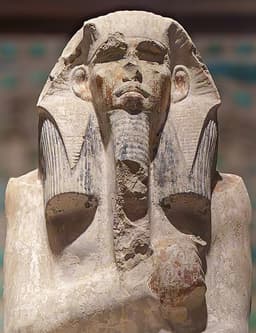
Djoser
Emperor · Ancient
54.0Total
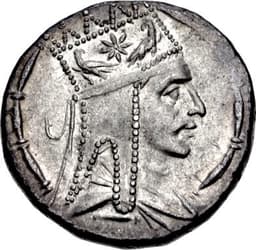
Tigranes the Great
Emperor · Ancient
61.8Total
Basic Information
Born
-2670
-140
Died
-2640
-55
Era
Ancient
Ancient
Nationality
Egypt
Armenia
Occupation
Emperor
Emperor
Civilization
Middle Eastern
Middle Eastern
Score Comparison
Military (10%)
10.2
76.0
Political (20%)
68.0
60.0
Influence (20%)
55.0
59.0
Legacy (20%)
55.0
49.2
Leadership (15%)
72.0
77.2
Strategy (15%)
45.0
65.4
TOTAL
54.0
61.8
Djoser — Complete Timeline
2670 BC
Construction of the Step Pyramid at SaqqaraCultural
Djoser commissioned his vizier Imhotep to build a step pyramid at Saqqara, the first monumental stone building in history. The pyramid, a six-tiered structure, served as Djoser's tomb and marked a revolutionary advance in architecture and engineering.
PyramidArchitectureImhotep
Impact: globalconstructive
Tigranes the Great — Complete Timeline
83 BC
Conquest of Syria and CiliciaWar
Tigranes conquered the remnants of the Seleucid Empire in Syria and Cilicia, extending his rule to the Mediterranean coast. He assumed the title 'King of Kings' and ruled an empire stretching from the Caspian Sea to the Mediterranean.
Seleucid ConquestEmpire BuildingKing of Kings
Impact: regionalconstructive
77 BC
Foundation of TigranocertaCultural◆ Major
Tigranes the Great founded the city of Tigranocerta as his new capital, located in northern Mesopotamia. The city was built with a mixed population of deportees from conquered Greek cities and became a center of Hellenistic culture and trade.
City FoundationHellenismCapital
Impact: regionalconstructive
69 BC
Battle of TigranocertaWar
Tigranes was decisively defeated by a Roman army under Lucullus at the Battle of Tigranocerta. The Roman victory led to the capture of the capital and the collapse of Tigranes' empire, reducing Armenia to a client kingdom of Rome.
Roman-Armenian WarLucullusDefeat
Impact: regionaldestructive
66 BC
Submission to PompeyPolitical Action◆ Major
Tigranes submitted to the Roman general Pompey, who confirmed him as king of Armenia proper but stripped him of all conquered territories. Tigranes paid a large indemnity and became a Roman ally, retaining his throne but losing his empire.
Roman DiplomacyClient KingdomPompey
Impact: regional
Expert Analysis
Origins
Djoser, also known as Netjerikhet, was a pharaoh of Egypt's Third Dynasty, reigning from around 2670 to 2640 BCE. He was the son of Khasekhemwy, the last pharaoh of the Second Dynasty, and Queen Nimaathap. His early life was steeped in the traditions of a united Egypt, with a strong centralized state. Djoser's education would have included religious instruction, administrative training, and military drills, though his military scores (10.2) suggest his strengths lay elsewhere.
Tigranes the Great was born around 140 BCE into the Artaxiad dynasty of Armenia. His father, Artavasdes I, ruled a kingdom often caught between the competing empires of Rome and Parthia. Tigranes was sent as a hostage to the Parthian court, where he learned diplomacy and military strategy firsthand. This experience shaped his later expansionist policies, earning him a military score of 76.0 and a strategy score of 65.4.
Rise to Power
Djoser ascended the throne after his father's death, inheriting a stable and prosperous Egypt. His rise was smooth, typical of dynastic succession. The key turning point was his decision to commission Imhotep, his vizier, to build a tomb that would become the Step Pyramid at Saqqara. This project, begun early in his reign, transformed Egyptian architecture and cemented Djoser's legacy.
Tigranes the Great's rise was more tumultuous. After his father's death, he was released by the Parthians in exchange for territorial concessions. He quickly consolidated power, marrying Cleopatra of Pontus, daughter of Mithridates VI, to form a powerful alliance. By 95 BCE, he was king of Armenia and began a series of conquests. His conquest of Syria and Cilicia in 83 BCE marked his emergence as a major power, controlling territory from the Caspian Sea to the Mediterranean.
Leadership & Governance
Djoser's leadership style was visionary and administrative. He scored 72.0 in leadership, reflecting his ability to mobilize resources for monumental projects. His governance relied on a strong bureaucracy headed by Imhotep, who was deified after his death. Djoser's reign saw the first stone construction on a massive scale, requiring centralized planning and labor organization. He also conducted mining expeditions and extended Egyptian influence into the Sinai.
Tigranes the Great scored 77.2 in leadership, slightly higher. He ruled a multicultural empire through a combination of military force and strategic city foundations. He founded Tigranocerta as a Hellenistic capital, populating it with deportees from various conquered regions. His governance was more aggressive, imposing Armenian rule over diverse peoples. However, his leadership was tested when he faced Rome, and his submission to Pompey in 66 BCE showed a pragmatic side.
Triumph & Tragedy
Djoser's greatest triumph was the Step Pyramid complex at Saqqara, the world's first monumental stone building. It stood 62 meters tall and was surrounded by a vast mortuary complex. This achievement revolutionized Egyptian architecture and influenced later pyramid builders. His tragedy is less known; his pyramid was never finished as intended, and his tomb was robbed in antiquity. Djoser's political score of 68.0 indicates effective rule, but his military score of 10.2 suggests he faced no major wars.
Tigranes the Great's triumphs include expanding Armenia to its greatest extent, with an empire that included parts of modern Turkey, Syria, Lebanon, and Iraq. He assumed the title "King of Kings" and issued coins that proclaimed his power. His tragedy was the Battle of Tigranocerta in 69 BCE, where a Roman army under Lucullus defeated him despite being outnumbered. The city was sacked, and Tigranes lost his conquests. He was forced to accept Roman suzerainty, paying 6,000 talents and surrendering all territories. His legacy score of 49.2 reflects this decline.
Character & Destiny
Djoser is portrayed in Egyptian sources as a wise and pious ruler. His decision to build a stone pyramid showed ambition and a desire for eternity. He surrounded himself with capable advisors like Imhotep, indicating good judgment. His character shaped a destiny of lasting fame, though his military weakness might have led to vulnerability if challenged.
Tigranes the Great was ambitious and ruthless, but also pragmatic. He built a diverse empire but overreached by challenging Rome. His defeat at Tigranocerta was partly due to poor tactical decisions, such as relying on untrained levies. His character—pride and ambition—led to his downfall, but his submission to Pompey showed flexibility. Historians note his influence score of 59.0, reflecting his role in Armenian national identity.
Legacy
Djoser's legacy is monumental. The Step Pyramid is a UNESCO World Heritage site and a milestone in human architectural history. It inspired the later pyramids at Giza. His reign set precedents for pharaonic power and centralized administration. Djoser's total score of 54.0 is modest, but his influence on culture is immense.
Tigranes the Great is remembered as Armenia's greatest king, a symbol of national pride. His empire was short-lived, but the city of Tigranocerta (though its exact location is debated) remains a testament to his vision. However, his legacy is overshadowed by his defeat to Rome. His total score of 61.8 reflects a mixed record of expansion and collapse.
Conclusion
Tigranes the Great scored 61.8 total versus Djoser's 54.0, a gap of 7.8 points. Tigranes had higher military (76.0 vs 10.2), leadership (77.2 vs 72.0), and strategy (65.4 vs 45.0). Djoser led in political (68.0 vs 60.0) and influence (55.0 vs 59.0, actually Tigranes higher? Wait: influence 55.0 vs 59.0, Tigranes higher). Djoser's legacy (55.0 vs 49.2) is higher. While Djoser's architectural achievement is unique, Tigranes built an empire that changed the ancient Near East. However, Djoser's pyramid remains a lasting marvel, while Tigranes' empire crumbled. On balance, Tigranes had greater impact in terms of territorial control and military power, but Djoser's cultural contribution is more enduring. The position: Tigranes the Great had greater overall impact due to his broader conquests and higher scores, but Djoser's innovation in stone architecture is unparalleled.
Rankings
🥇
Tigranes the GreatLeader
Mil: 76.0Pol: 60.0Inf: 59.0
61.8
🥈
Djoser
Mil: 10.2Pol: 68.0Inf: 55.0
54.0
+7.8 behind
How This Comparison Works
Algorithm
Each figure is scored on 6 dimensions (0—100 scale) based on structured historical data: Military (10%), Political (20%), Influence (20%), Legacy (20%), Leadership (15%), Strategy (15%). The weighted total produces the final ranking.
Data Sources
Scores are computed from structured sub-indicators in the database. Scale factors adjust for era (Ancient ×0.85, Modern ×1.0) and civilization size (Eastern ×1.05, Other ×0.80) to account for differences in population and military scale.
Maximum 3 Figures
Comparisons are limited to 2—3 figures to ensure readability and statistical meaningfulness.
Error Margins
±5 points per dimension — Sub-scores are derived from historical records with inherent uncertainty. Two figures within 5 points on a dimension should be considered roughly equivalent in that area.
Total Score Accuracy
±3 points overall — The weighted combination of 6 dimensions produces a total score with approximately ±3 points of uncertainty. Differences of less than 3 points are not statistically significant— the figures are effectively tied.
Known Limitations
- Historical records are incomplete and uneven across civilizations
- Figures from oral-tradition societies may be underrepresented
- Occupation labels can misclassify multi-role figures
- Scores measure capability and impact, not moral character
- Quantitative scoring is a comparison tool, not absolute truth
Capability Radar
Military (10%) — Battles & Warfare
Battles
5
75
Win Rate
5
70
Expansion
5
85
Political (20%) — Governance & Reform
Reform
70
65
Diplomacy
50
70
Economy
60
60
Influence (20%) — Cultural & Global Reach
Cultural
80
55
Global
70
60
Legacy (20%) — Historical Impact
Historical
80
65
Longevity
80
50
Leadership (15%) — Power & Stability
Tenure
60
80
Stability
70
55
Strategy (15%) — Tactics & Innovation
Strategy
5
78
Tactics
5
72
Reform
5
60
Similar Comparisons
Comments & Discussion
No comments yet. Be the first to share your thoughts!