Loading...
Liu Yuan vs Tigranes the Great
Tigranes the Great leads by 12.7 pts · 2 figures compared
…

Liu Yuan
Emperor · Ancient
49.1Total
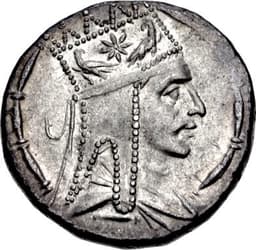
Tigranes the Great
Emperor · Ancient
61.8Total
Basic Information
Born
251
-140
Died
310
-55
Era
Ancient
Ancient
Nationality
China
Armenia
Occupation
Emperor
Emperor
Civilization
Eastern
Middle Eastern
Score Comparison
Military (10%)
45.0
76.0
Political (20%)
46.6
60.0
Influence (20%)
47.9
59.0
Legacy (20%)
41.7
49.2
Leadership (15%)
61.1
77.2
Strategy (15%)
60.0
65.4
TOTAL
49.1
61.8
Liu Yuan — Complete Timeline
304 AD
Proclaimed himself King of HanPolitical Action◆ Major
Liu Yuan declared himself King of Han, reviving the Han dynasty name and establishing the Han Zhao kingdom in northern China. This marked the beginning of the Sixteen Kingdoms period.
Sixteen KingdomsHan ZhaoXiongnu
Impact: regional
307 AD
Battle of YeWar
Liu Yuan's forces captured the city of Ye from the Western Jin, a major victory that expanded Han Zhao territory and weakened Jin control in the north.
Sixteen KingdomsBattleWestern Jin
Impact: regional
Tigranes the Great — Complete Timeline
83 BC
Conquest of Syria and CiliciaWar
Tigranes conquered the remnants of the Seleucid Empire in Syria and Cilicia, extending his rule to the Mediterranean coast. He assumed the title 'King of Kings' and ruled an empire stretching from the Caspian Sea to the Mediterranean.
Seleucid ConquestEmpire BuildingKing of Kings
Impact: regionalconstructive
77 BC
Foundation of TigranocertaCultural◆ Major
Tigranes the Great founded the city of Tigranocerta as his new capital, located in northern Mesopotamia. The city was built with a mixed population of deportees from conquered Greek cities and became a center of Hellenistic culture and trade.
City FoundationHellenismCapital
Impact: regionalconstructive
69 BC
Battle of TigranocertaWar
Tigranes was decisively defeated by a Roman army under Lucullus at the Battle of Tigranocerta. The Roman victory led to the capture of the capital and the collapse of Tigranes' empire, reducing Armenia to a client kingdom of Rome.
Roman-Armenian WarLucullusDefeat
Impact: regionaldestructive
66 BC
Submission to PompeyPolitical Action◆ Major
Tigranes submitted to the Roman general Pompey, who confirmed him as king of Armenia proper but stripped him of all conquered territories. Tigranes paid a large indemnity and became a Roman ally, retaining his throne but losing his empire.
Roman DiplomacyClient KingdomPompey
Impact: regional
Expert Analysis
Origins
**Liu Yuan** (c. 251–310 AD) was a Xiongnu noble, descendant of the southern Xiongnu chieftains who had submitted to the Han dynasty. Born in what is now Shanxi, China, he was raised as a hostage in the Jin court, receiving a Confucian education. His father, Liu Bao, was a Xiongnu leader, and his mother was a Xiongnu noblewoman. Liu Yuan was fluent in Chinese classics and martial arts, positioning him as a bridge between nomadic and sedentary cultures.
**Tigranes the Great** (c. 140–55 BC) was born into the Artaxiad dynasty of Armenia. His father, Artavasdes I, was king, but Tigranes was given as a hostage to the Parthians after a defeat. He spent years at the Parthian court, learning their military and political systems. Upon release, he claimed the Armenian throne in 95 BC, beginning his expansionist reign.
Rise to Power
Liu Yuan's rise began during the weakening of the Western Jin dynasty. In 304 AD, during the War of the Eight Princes, he leveraged his Xiongnu heritage and Chinese education to rally Xiongnu tribes. He proclaimed himself King of Han, reviving the Han dynasty name to gain legitimacy among Chinese subjects. His forces captured the city of Ye in 307 AD, a major victory that expanded his territory and weakened Jin control. He established his capital at Lishi (modern Shanxi) and later at Pingyang.
Tigranes the Great's rise was swift after his return from Parthian captivity. In 95 BC, he became king and immediately began campaigns. He conquered Sophene, then turned south, attacking the Parthians while they were distracted. By 83 BC, he had conquered the remnants of the Seleucid Empire in Syria and Cilicia, extending his rule to the Mediterranean. He assumed the title 'King of Kings' and founded the city of Tigranocerta as his capital in northern Mesopotamia. His empire stretched from the Caspian Sea to the Mediterranean, encompassing parts of modern Armenia, Turkey, Syria, Lebanon, and Iran.
Leadership & Governance
Liu Yuan's leadership was characterized by a blend of Xiongnu tribal customs and Chinese bureaucratic models. He adopted the Chinese title of Emperor (Huangdi) and established a court with Chinese-style ministries. He promoted agriculture and trade, but his rule remained heavily reliant on Xiongnu military support. He scored 61.1 in leadership and 60.0 in strategy, reflecting his ability to navigate dual identities. However, his political score of 46.6 indicates limited success in consolidating a stable state.
Tigranes the Great ruled as an absolute monarch with a Hellenistic flair. He minted coins with his image, built Greek-style cities, and promoted cultural exchange. His governance was decentralized, allowing local satraps considerable autonomy. He scored 77.2 in leadership and 65.4 in strategy, showing stronger military and administrative skills. His political score of 60.0 reflects his ability to manage a multi-ethnic empire. However, his overreliance on conquest without solidifying internal cohesion became a weakness.
Triumph & Tragedy
Liu Yuan's greatest triumph was founding the Han Zhao kingdom, which became a major power in northern China. He successfully revived the Han dynasty name, attracting Chinese support. His capture of Ye was a strategic victory that destabilized the Jin. However, his greatest failure was his inability to fully conquer the Jin. His death in 310 AD led to internal succession struggles, and his kingdom eventually collapsed. His military score of 45.0 reflects limited battlefield success compared to his peers.
Tigranes the Great's triumph was building the largest Armenian empire in history. His conquest of Syria and Cilicia brought immense wealth and prestige. The foundation of Tigranocerta showcased his ambition. However, his tragedy came with the Roman intervention. At the Battle of Tigranocerta in 69 BC, he was decisively defeated by Lucullus, losing his capital. He later submitted to Pompey in 66 BC, forced to surrender all conquered territories except Armenia proper. His military score of 76.0 reflects his early successes but also his ultimate defeat.
Character & Destiny
Liu Yuan was pragmatic and adaptable, using Confucian rhetoric to legitimize his rule. He balanced Xiongnu and Chinese elements, but his dual identity created tensions. His decision to proclaim himself King of Han was a masterstroke of propaganda, but it also tied him to Chinese expectations. His character was cautious; he avoided direct confrontation with Jin armies, preferring guerrilla tactics. This caution limited his conquests but preserved his forces.
Tigranes was ambitious and bold, driven by a vision of Armenian greatness. He was a charismatic leader who inspired loyalty among his troops. However, his arrogance led him to underestimate Rome. He refused to hand over his father-in-law Mithridates VI of Pontus to the Romans, triggering war. His stubbornness in battle, despite advice, contributed to his defeat. Historians note that his character combined vision with recklessness, shaping his destiny of a great empire quickly lost.
Legacy
Liu Yuan's legacy is mixed. He is remembered as the founder of the Han Zhao kingdom, one of the Sixteen Kingdoms. His use of the Han name influenced later sinicized barbarian rulers. However, his kingdom lasted only 26 years, and his impact on Chinese history is minor compared to other dynasties. He scored 47.9 in influence and 41.7 in legacy, reflecting his limited long-term effect.
Tigranes the Great is a national hero in Armenia, symbolizing a golden age of Armenian power. His empire established Armenia as a major player in the ancient Near East. The city of Tigranocerta, though destroyed, remains an archaeological site. His legacy is celebrated in Armenian culture, and he is often compared to other great empire-builders. He scored 59.0 in influence and 49.2 in legacy, indicating a stronger but still limited impact due to the brevity of his empire.
Conclusion
Tigranes the Great had a greater impact than Liu Yuan. His military score of 76.0 versus Liu Yuan's 45.0, and his leadership score of 77.2 versus 61.1, reflect his superior ability to build and command an empire. While Liu Yuan founded a kingdom, Tigranes created a multi-ethnic empire that challenged Rome. Tigranes's influence on Armenian identity and his role in ancient geopolitics outweigh Liu Yuan's regional significance. The 12.7-point total score gap (61.8 vs 49.1) supports this conclusion. Liu Yuan's achievements were notable but ultimately overshadowed by Tigranes's grander scale and enduring national legacy.
Rankings
🥇
Tigranes the GreatLeader
Mil: 76.0Pol: 60.0Inf: 59.0
61.8
🥈
Liu Yuan
Mil: 45.0Pol: 46.6Inf: 47.9
49.1
+12.7 behind
How This Comparison Works
Algorithm
Each figure is scored on 6 dimensions (0—100 scale) based on structured historical data: Military (10%), Political (20%), Influence (20%), Legacy (20%), Leadership (15%), Strategy (15%). The weighted total produces the final ranking.
Data Sources
Scores are computed from structured sub-indicators in the database. Scale factors adjust for era (Ancient ×0.85, Modern ×1.0) and civilization size (Eastern ×1.05, Other ×0.80) to account for differences in population and military scale.
Maximum 3 Figures
Comparisons are limited to 2—3 figures to ensure readability and statistical meaningfulness.
Error Margins
±5 points per dimension — Sub-scores are derived from historical records with inherent uncertainty. Two figures within 5 points on a dimension should be considered roughly equivalent in that area.
Total Score Accuracy
±3 points overall — The weighted combination of 6 dimensions produces a total score with approximately ±3 points of uncertainty. Differences of less than 3 points are not statistically significant— the figures are effectively tied.
Known Limitations
- Historical records are incomplete and uneven across civilizations
- Figures from oral-tradition societies may be underrepresented
- Occupation labels can misclassify multi-role figures
- Scores measure capability and impact, not moral character
- Quantitative scoring is a comparison tool, not absolute truth
Capability Radar
Military (10%) — Battles & Warfare
Battles
45
75
Win Rate
40
70
Expansion
55
85
Political (20%) — Governance & Reform
Reform
35
65
Diplomacy
50
70
Economy
30
60
Influence (20%) — Cultural & Global Reach
Cultural
30
55
Global
15
60
Legacy (20%) — Historical Impact
Historical
40
65
Longevity
20
50
Leadership (15%) — Power & Stability
Tenure
40
80
Stability
25
55
Strategy (15%) — Tactics & Innovation
Strategy
55
78
Tactics
50
72
Reform
30
60
Similar Comparisons
Comments & Discussion
No comments yet. Be the first to share your thoughts!