Loading...
This comparison has not been analyzed yet.
One-time AI generation (~1 minute). Scores and timeline are already available below.
Dickon Mitchell vs Hammer DeRoburt
Hammer DeRoburt leads by 12.1 pts · 2 figures compared
…

Dickon Mitchell
Politician · Modern
39.2Total
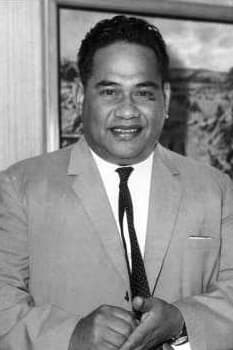
Hammer DeRoburt
Politician · Modern
51.3Total
Basic Information
Born
1977
1922
Died
—
—
Era
Modern
Modern
Nationality
Grenada
Nauru
Occupation
Politician
Politician
Civilization
Other
Other
Score Comparison
Military (10%)
27.0
17.2
Political (20%)
32.2
68.0
Influence (20%)
46.3
51.8
Legacy (20%)
35.8
45.0
Leadership (15%)
45.0
74.0
Strategy (15%)
43.9
41.0
TOTAL
39.2
51.3
Dickon Mitchell — Complete Timeline
2022 AD
Elected to the Grenadian ParliamentPolitical Action
Dickon Mitchell was elected to the Grenadian Parliament as a candidate for the National Democratic Congress (NDC). He won the St. George North West constituency.
ElectionParliamentNDC
constructive
Became Prime Minister of GrenadaPolitical Action◆ Major
Mitchell led the NDC to a landslide victory in the general election, defeating the incumbent New National Party. He became Prime Minister at age 45, one of the youngest in Grenada's history.
Prime MinisterElection VictoryYouth
Impact: nationalconstructive
2023 AD
Announced Economic ReformsReform
Mitchell's government announced economic reforms including fiscal consolidation and investment in renewable energy. These measures aimed to reduce national debt and promote sustainable growth.
Economic ReformFiscal PolicyRenewable Energy
Impact: nationalconstructive
Hammer DeRoburt — Complete Timeline
1967 AD
Negotiated phosphate royalty agreement with AustraliaPolitical Action◆ Major
Hammer DeRoburt led negotiations with the Australian government, the British Phosphate Commissioners, and New Zealand for control of Nauru's phosphate industry. The resulting agreement granted Nauru ownership of the phosphate operations and a significant increase in royalties, providing the nation with substantial revenue.
PhosphateNegotiationEconomic Independence
Impact: nationalconstructive
1968 AD
Established the Nauru Phosphate Royalties TrustReform◆ Major
President DeRoburt established the Nauru Phosphate Royalties Trust to manage the country's phosphate income for long-term investment and future sustainability. The trust invested in overseas real estate and other assets, aiming to secure Nauru's economy after phosphate depletion.
Economic PolicyTrust FundSustainability
Impact: nationalconstructive
Became first President of NauruPolitical Action◆ Major
Hammer DeRoburt became the first President of Nauru upon its independence from Australia. He led the country through its early years as a sovereign nation, overseeing the management of its phosphate wealth, which was the island's primary economic resource.
IndependenceNauruFirst President
Impact: nationalconstructive
1976 AD
Re-elected President multiple timesPolitical Action
Hammer DeRoburt was re-elected President of Nauru several times, dominating the country's politics for much of its early independence. His long tenure was marked by both stability and criticism over his centralized control of the phosphate wealth and political opposition.
Nauru PoliticsRe-electionLong Tenure
Impact: national
1989 AD
Ousted as President in vote of no confidencePolitical Action◆ Major
Hammer DeRoburt was removed from the presidency by a vote of no confidence in the Parliament of Nauru. This followed years of economic mismanagement and declining phosphate revenues, leading to political instability and the rise of new leaders like Bernard Dowiyogo.
Nauru PoliticsVote of No ConfidencePolitical Change
Impact: national
This comparison has not been analyzed yet.
One-time AI generation (~1 minute). Scores and timeline are already available below.
Rankings
🥇
Hammer DeRoburtLeader
Mil: 17.2Pol: 68.0Inf: 51.8
51.3
🥈
Dickon Mitchell
Mil: 27.0Pol: 32.2Inf: 46.3
39.2
+12.1 behind
How This Comparison Works
Algorithm
Each figure is scored on 6 dimensions (0—100 scale) based on structured historical data: Military (10%), Political (20%), Influence (20%), Legacy (20%), Leadership (15%), Strategy (15%). The weighted total produces the final ranking.
Data Sources
Scores are computed from structured sub-indicators in the database. Scale factors adjust for era (Ancient ×0.85, Modern ×1.0) and civilization size (Eastern ×1.05, Other ×0.80) to account for differences in population and military scale.
Maximum 3 Figures
Comparisons are limited to 2—3 figures to ensure readability and statistical meaningfulness.
Error Margins
±5 points per dimension — Sub-scores are derived from historical records with inherent uncertainty. Two figures within 5 points on a dimension should be considered roughly equivalent in that area.
Total Score Accuracy
±3 points overall — The weighted combination of 6 dimensions produces a total score with approximately ±3 points of uncertainty. Differences of less than 3 points are not statistically significant— the figures are effectively tied.
Known Limitations
- Historical records are incomplete and uneven across civilizations
- Figures from oral-tradition societies may be underrepresented
- Occupation labels can misclassify multi-role figures
- Scores measure capability and impact, not moral character
- Quantitative scoring is a comparison tool, not absolute truth
Capability Radar
Military (10%) — Battles & Warfare
Battles
25
21
Win Rate
31
22
Expansion
28
25
Political (20%) — Governance & Reform
Reform
20
40
Diplomacy
25
45
Economy
20
55
Influence (20%) — Cultural & Global Reach
Cultural
10
20
Global
5
30
Legacy (20%) — Historical Impact
Historical
10
40
Longevity
5
30
Leadership (15%) — Power & Stability
Tenure
15
60
Stability
20
30
Strategy (15%) — Tactics & Innovation
Strategy
36
33
Tactics
34
35
Reform
43
36
Similar Comparisons
Comments & Discussion
No comments yet. Be the first to share your thoughts!