Loading...
This comparison has not been analyzed yet.
One-time AI generation (~1 minute). Scores and timeline are already available below.
Di Yi of Shang vs Philip V of Macedon
Philip V of Macedon leads by 6.6 pts · 2 figures compared
…
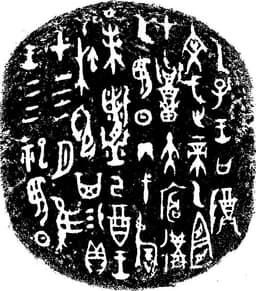
Di Yi of Shang
Emperor · Ancient
43.1Total

Philip V of Macedon
Emperor · Ancient
49.7Total
Basic Information
Born
-1020
-238
Died
—
-179
Era
Ancient
Ancient
Nationality
Shang China
Macedon
Occupation
Emperor
Emperor
Civilization
Eastern
Western
Score Comparison
Military (10%)
55.0
45.0
Political (20%)
29.3
48.0
Influence (20%)
46.3
50.2
Legacy (20%)
37.5
43.3
Leadership (15%)
41.5
64.0
Strategy (15%)
60.0
50.0
TOTAL
43.1
49.7
Di Yi of Shang — Complete Timeline
1020 BC
Conflict with the ZhouWar◆ Major
Di Yi engaged in military conflict with the Zhou, a vassal state in the Wei River valley. The Zhou, under King Wen, began to challenge Shang authority, and Di Yi's campaigns failed to suppress their growing power.
Military ConflictZhou RebellionShang Decline
Impact: regional
Marriage alliance with the Ji clanPolitical Action
Di Yi arranged a marriage between his daughter and the Zhou ruler King Wen, attempting to secure peace through alliance. This diplomatic move temporarily eased tensions but did not prevent the eventual Zhou conquest.
DiplomacyMarriage AllianceZhou Relations
Impact: regional
Philip V of Macedon — Complete Timeline
214 BC
First Macedonian WarWar◆ Major
Philip V allied with Carthage after Rome's defeat at Cannae, initiating the First Macedonian War against Rome. The war was indecisive, ending with the Peace of Phoenice in 205 BC, but it set the stage for future conflicts.
Roman-Macedonian WarsCarthaginian Alliance
Impact: regional
197 BC
Battle of CynoscephalaeWar
Philip V's Macedonian phalanx was decisively defeated by the Roman legions under Titus Quinctius Flamininus at Cynoscephalae. This battle ended the Second Macedonian War, forced Macedon to surrender its Greek possessions, and established Roman dominance in Greece.
Second Macedonian WarRoman ConquestPhalanx vs Legion
Impact: regionaldestructive
Treaty of TempePolitical Action◆ Major
After Cynoscephalae, Philip V signed the Treaty of Tempe, agreeing to pay war reparations, surrender his fleet, and withdraw from all Greek cities. He was allowed to keep Macedon but became a Roman ally, ending Macedonian expansion.
TreatyRoman HegemonyMacedonian Decline
Impact: regionaldestructive
This comparison has not been analyzed yet.
One-time AI generation (~1 minute). Scores and timeline are already available below.
Rankings
🥇
Philip V of MacedonLeader
Mil: 45.0Pol: 48.0Inf: 50.2
49.7
🥈
Di Yi of Shang
Mil: 55.0Pol: 29.3Inf: 46.3
43.1
+6.6 behind
How This Comparison Works
Algorithm
Each figure is scored on 6 dimensions (0—100 scale) based on structured historical data: Military (10%), Political (20%), Influence (20%), Legacy (20%), Leadership (15%), Strategy (15%). The weighted total produces the final ranking.
Data Sources
Scores are computed from structured sub-indicators in the database. Scale factors adjust for era (Ancient ×0.85, Modern ×1.0) and civilization size (Eastern ×1.05, Other ×0.80) to account for differences in population and military scale.
Maximum 3 Figures
Comparisons are limited to 2—3 figures to ensure readability and statistical meaningfulness.
Error Margins
±5 points per dimension — Sub-scores are derived from historical records with inherent uncertainty. Two figures within 5 points on a dimension should be considered roughly equivalent in that area.
Total Score Accuracy
±3 points overall — The weighted combination of 6 dimensions produces a total score with approximately ±3 points of uncertainty. Differences of less than 3 points are not statistically significant— the figures are effectively tied.
Known Limitations
- Historical records are incomplete and uneven across civilizations
- Figures from oral-tradition societies may be underrepresented
- Occupation labels can misclassify multi-role figures
- Scores measure capability and impact, not moral character
- Quantitative scoring is a comparison tool, not absolute truth
Capability Radar
Military (10%) — Battles & Warfare
Battles
40
55
Win Rate
30
40
Expansion
25
45
Political (20%) — Governance & Reform
Reform
20
40
Diplomacy
25
50
Economy
25
45
Influence (20%) — Cultural & Global Reach
Cultural
20
30
Global
15
30
Legacy (20%) — Historical Impact
Historical
25
40
Longevity
20
30
Leadership (15%) — Power & Stability
Tenure
30
60
Stability
20
35
Strategy (15%) — Tactics & Innovation
Strategy
40
55
Tactics
35
60
Reform
20
50
Similar Comparisons
Comments & Discussion
No comments yet. Be the first to share your thoughts!