Loading...
Di Yi of Shang vs Napoleon Bonaparte
Napoleon Bonaparte leads by 27.8 pts · 2 figures compared
…
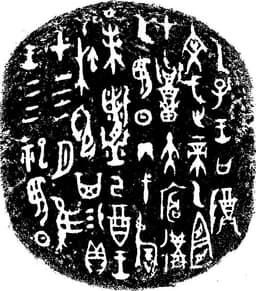
Di Yi of Shang
Emperor · Ancient
43.1Total

Napoleon Bonaparte
General · Modern
70.9Total
Basic Information
Born
-1020
1769
Died
—
1821
Era
Ancient
Modern
Nationality
Shang China
France
Occupation
Emperor
General
Civilization
Eastern
Western
Score Comparison
Military (10%)
55.0
94.0
Political (20%)
29.3
72.0
Influence (20%)
46.3
40.0
Legacy (20%)
37.5
80.0
Leadership (15%)
41.5
78.0
Strategy (15%)
60.0
90.0
TOTAL
43.1
70.9
Di Yi of Shang — Complete Timeline
1020 BC
Conflict with the ZhouWar◆ Major
Di Yi engaged in military conflict with the Zhou, a vassal state in the Wei River valley. The Zhou, under King Wen, began to challenge Shang authority, and Di Yi's campaigns failed to suppress their growing power.
Military ConflictZhou RebellionShang Decline
Impact: regional
Marriage alliance with the Ji clanPolitical Action
Di Yi arranged a marriage between his daughter and the Zhou ruler King Wen, attempting to secure peace through alliance. This diplomatic move temporarily eased tensions but did not prevent the eventual Zhou conquest.
DiplomacyMarriage AllianceZhou Relations
Impact: regional
Napoleon Bonaparte — Complete Timeline
1799 AD
Coup of 18 BrumaireOther◆ Major
Napoleon Bonaparte, with support from his brother Lucien and key political figures, overthrew the Directory in a bloodless coup. He established the Consulate with himself as First Consul, effectively becoming the ruler of France. This event ended the French Revolution's most unstable period.
French RevolutionCoupRise to Power
Impact: regional
1804 AD
Promulgation of the Napoleonic CodeOther◆ Major
Napoleon enacted the Civil Code of the French, known as the Napoleonic Code, a comprehensive set of laws that replaced the fragmented feudal legal systems. The code established legal equality, protected property rights, and secularized law. It became the basis for legal systems in many European and world countries.
Legal ReformNapoleonic CodeCivil Law
Impact: globalconstructive
1805 AD
Battle of AusterlitzWar◆ Major
Napoleon's Grande Arm
Napoleonic WarsBattleDecisive Victory
Impact: global
1812 AD
Invasion of RussiaWar◆ Major
Napoleon led the Grande Arm
Napoleonic WarsInvasionDisaster
Impact: globaldestructive
1815 AD
Battle of WaterlooWar◆ Major
Napoleon's French army was defeated by the combined forces of the Duke of Wellington's Anglo-Allied army and Gebhard Leberecht von Bl
Napoleonic WarsBattleFinal Defeat
Impact: globaldestructive
Expert Analysis
di-yi-of-shang-vs-napoleon-bonaparte
# The Emperor and the Conqueror: Two Paths to Power, Two Destinies
On a bitter winter morning in December 1805, Napoleon Bonaparte stood on the frozen fields of Austerlitz, watching his Grand Army crush the combined forces of Russia and Austria. The sun, breaking through the mist, seemed to shine only for him. Two thousand years earlier and half a world away, Di Yi of Shang faced a different kind of dawn—not of military glory, but of creeping dread. His vassals in the Wei River valley were sharpening their bronze blades, and no marriage alliance could soften their ambition. These two rulers, separated by millennia and continents, faced the same fundamental question: how does a leader hold power? Their answers—and their fates—could not have been more different.
Origins
Napoleon Bonaparte was born in 1769 on the Mediterranean island of Corsica, a place that had only recently become French. His family belonged to the minor nobility, but they were poor, and young Napoleon spoke French with a thick Italian accent that marked him as an outsider. The French Revolution, erupting when he was twenty, shattered the old world of kings and aristocrats. For a brilliant, ambitious young man of modest means, it was an unprecedented opportunity. The Revolution declared that careers should be open to talent—and Napoleon had talent in abundance.
Di Yi, by contrast, was born into the oldest ruling dynasty in Chinese history. The Shang kings claimed descent from Heaven itself, and their authority was absolute—at least in theory. But by the time Di Yi took the throne around 1020 BCE, the Shang dynasty had ruled for nearly six centuries. The bronze ritual vessels still gleamed in the ancestral temples, but the kingdom was fraying at the edges. Di Yi inherited a system where power depended on the loyalty of vassal states, and that loyalty could no longer be taken for granted.
Rise to Power
Napoleon’s ascent was meteoric and violent. At twenty-four, he drove the British out of Toulon and was promoted to brigadier general. At twenty-six, he suppressed a royalist uprising in Paris with a "whiff of grapeshot"—a single, brutal volley that cleared the streets. At thirty, he led a ragged army across the Alps and conquered Italy. Each victory was a stepping stone; each defeat (and there were few) was quickly forgotten. He was not born to power; he seized it, day by day, battle by battle.
Di Yi’s path was the opposite. He did not rise; he inherited. The Shang throne was his by birthright, and his authority was woven into ritual and tradition. But inheritance is a fragile thing. It gives you a crown, but not the strength to keep it. When Di Yi looked east, he saw the Zhou, a vassal state in the Wei River valley, growing stronger. Their leader, King Wen, was a man of cunning and patience. Di Yi knew that the Zhou were a threat, but he could not simply destroy them—they were too powerful, and the Shang army was no longer the force it had been.
Leadership & Governance
Napoleon governed with a blend of iron discipline and visionary reform. He centralized the French state, created the Napoleonic Code—a legal system that enshrined equality before the law and protected property rights—and established a meritocratic bureaucracy. He was a military genius, scoring a 94 in strategy, but he was also a political animal, scoring 75 in political acumen. He understood that power required institutions, not just victories. He built schools, roads, and a banking system. He made peace with the Catholic Church while keeping the state supreme. For a time, his system worked brilliantly.
Di Yi ruled through tradition and alliance. He scored only 32.9 in military ability and 48.4 in political skill—not because he was incompetent, but because his world was different. In ancient China, a king’s power was ritual as much as military. He performed sacrifices to the ancestors, consulted oracle bones, and maintained the cosmic order. When he faced the Zhou threat, his response was diplomatic: he arranged a marriage between his daughter and King Wen. It was a classic Shang strategy—bind your enemies with family ties. But the Zhou were not bound by sentiment. They accepted the bride, and continued their preparations for war.
Triumph & Tragedy
Napoleon’s greatest triumph was Austerlitz, where he destroyed the Third Coalition and reshaped Europe. His empire stretched from Spain to Poland. He placed his brothers on thrones and redrew borders with a stroke of his pen. But his greatest tragedy was hubris. He invaded Russia in 1812 with 600,000 men; fewer than 100,000 returned. He was exiled to Elba, escaped, raised another army, and was crushed at Waterloo in 1815. The man who had conquered Europe died alone on a remote Atlantic island, his empire reduced to bitter memories.
Di Yi’s tragedy was quieter but no less profound. He fought the Zhou, but the historical record is fragmentary. What we know is that he died before the final blow fell. That task fell to his son, Di Xin—better known as the last Shang king, the tyrant who supposedly drowned in his own palace as the Zhou armies stormed the capital. Di Yi’s marriage alliance bought time, but not salvation. He could not stop the cycle of decline. The Shang dynasty, after six centuries, was doomed.
Character & Destiny
Napoleon was driven by an insatiable will. He once said, "Impossible is a word to be found only in the dictionary of fools." His personality was a weapon—charismatic, ruthless, and endlessly ambitious. He believed he could shape history by sheer force of will. And for a time, he did. But the same will that drove him to Austerlitz drove him to Moscow. His destiny was self-made, and self-destroyed.
Di Yi was a traditionalist. He ruled as his ancestors had ruled, trusting in ritual and alliance. His personality was cautious, conservative, perhaps fatalistic. He did not seek to reshape the world; he sought to preserve it. But in a time of change, preservation is not enough. His destiny was shaped not by his actions, but by forces beyond his control—the rise of the Zhou, the decay of the Shang, the slow turning of history’s wheel.
Legacy
Napoleon’s legacy is immense. The Napoleonic Code influenced legal systems across Europe and the Americas. His military innovations—mass conscription, rapid movement, decisive battle—changed warfare forever. He is remembered as both hero and tyrant, a man who liberated and enslaved in equal measure. His total score of 82.4 reflects a figure of towering achievement and catastrophic failure.
Di Yi’s legacy is faint. He scored 49.7 overall, a forgotten king in a dying dynasty. He is remembered, if at all, as a footnote—the penultimate Shang ruler who tried to hold back the tide. His marriage alliance is a historical curiosity, his campaigns a dim echo. The Zhou dynasty that overthrew his son would last eight centuries. The Shang, for all their bronze and bone, became a memory.
Conclusion
Two rulers, two worlds. Napoleon Bonaparte, the Corsican outsider who remade Europe in his image, and Di Yi, the Shang king who could not save his dynasty. One rose from nothing to everything; the other fell from everything to nothing. But perhaps the deepest difference is this: Napoleon believed he could control his fate, while Di Yi believed he could only fulfill it. In the end, both were wrong. History is not a story of will or fate, but of the collision between them—and the men who stand, for a moment, in the storm.
Rankings
🥇
Napoleon BonaparteLeader
Mil: 94.0Pol: 72.0Inf: 40.0
70.9
🥈
Di Yi of Shang
Mil: 55.0Pol: 29.3Inf: 46.3
43.1
+27.8 behind
How This Comparison Works
Algorithm
Each figure is scored on 6 dimensions (0—100 scale) based on structured historical data: Military (10%), Political (20%), Influence (20%), Legacy (20%), Leadership (15%), Strategy (15%). The weighted total produces the final ranking.
Data Sources
Scores are computed from structured sub-indicators in the database. Scale factors adjust for era (Ancient ×0.85, Modern ×1.0) and civilization size (Eastern ×1.05, Other ×0.80) to account for differences in population and military scale.
Maximum 3 Figures
Comparisons are limited to 2—3 figures to ensure readability and statistical meaningfulness.
Error Margins
±5 points per dimension — Sub-scores are derived from historical records with inherent uncertainty. Two figures within 5 points on a dimension should be considered roughly equivalent in that area.
Total Score Accuracy
±3 points overall — The weighted combination of 6 dimensions produces a total score with approximately ±3 points of uncertainty. Differences of less than 3 points are not statistically significant— the figures are effectively tied.
Known Limitations
- Historical records are incomplete and uneven across civilizations
- Figures from oral-tradition societies may be underrepresented
- Occupation labels can misclassify multi-role figures
- Scores measure capability and impact, not moral character
- Quantitative scoring is a comparison tool, not absolute truth
Capability Radar
Military (10%) — Battles & Warfare
Battles
40
95
Win Rate
30
90
Expansion
25
95
Political (20%) — Governance & Reform
Reform
20
95
Diplomacy
25
80
Economy
25
85
Influence (20%) — Cultural & Global Reach
Cultural
20
85
Global
15
90
Legacy (20%) — Historical Impact
Historical
25
95
Longevity
20
90
Leadership (15%) — Power & Stability
Tenure
30
85
Stability
20
70
Strategy (15%) — Tactics & Innovation
Strategy
40
95
Tactics
35
98
Reform
20
92
Similar Comparisons
Comments & Discussion
TheIronChariot6/17/2026
Saying Di Yi lost because he didn't win enough battles misses the point. Military historians focus on Austerlitz as a masterpiece, but Di Yi's problem was structural: Shang relied on unstable coalitions of bronze-armed vassals, while Napoleon's meritocratic army gave him tactical flexibility. Di Yi wasn't a bad general—he just inherited a broken system where loyalty was rented, not earned. Napoleon's victories built an empire; Di Yi's defensive campaigns just delayed the inevitable Zhou coup. Di
青铜短剑6/17/2026
说帝乙输在军事?太外行了。拿破仑的奥斯特里茨是天才秀,可帝乙面对的是商朝晚期那套青铜器联盟体系——诸侯随时反水,你打胜仗也没用。拿破仑用大炮和职业军队碾压对手,帝乙只能用战车和贵族私兵。他守住了商朝三十多年没崩,已经是极限了。拿两个完全不同的战争逻辑硬比,只会显得不懂古代军事史。
甲骨文遗民6/17/2026
历史爱好者总是把帝乙和拿破仑放一起,咋不想想年代差了两千年?拿破仑有火药、印刷术、民族主义,帝乙只有龟甲占卜和青铜爵。商朝晚期连文字记录都不完整,靠甲骨文拼凑出来的"失败"故事,你敢信?帝乙嫁女给周文王,明明是外交高手,结果被后世写成无能。拿破仑的滑铁卢没人洗,帝乙的"罪己诏"全是后人编的,这公平吗?
CorsicanGhost6/17/2026
Both men gambled with power and lost—but their currencies differed. Napoleon spent his capital on endless wars, burning through France's youth until even Austerlitz felt hollow. Di Yi spent his on ritual and marriage alliances, trying to bind enemies with bronze and bloodlines. The real lesson? No system tolerates a leader who runs out of resources. Napoleon's hubris bankrupted his empire; Di Yi's conservatism couldn't buy enough loyalty. They're mirror images of the same trap: success breeds bl
法家门徒6/17/2026
拿破仑用大炮和法典,帝乙用祭祀和联姻
SharpMind766/17/2026
The analysis romanticizes both leaders, but let's talk facts. Napoleon's 600,000-man Grande Armée of 1812 had a logistical nightmare that killed more soldiers than Russians—cavalry horses died of starvation before seeing battle. Di Yi's Shang dynasty fielded maybe 10,000 troops per campaign, with bronze blades that broke after one engagement. The "comparison" ignores scale: population, resources, technology. It's like comparing a F1 car to a chariot—both move, but the context is everything. My v